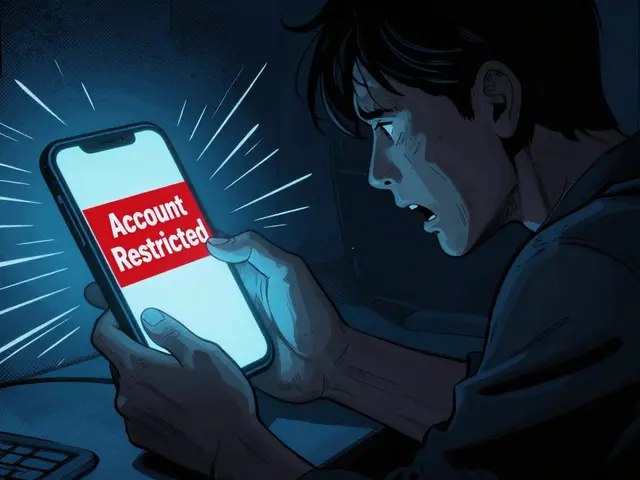
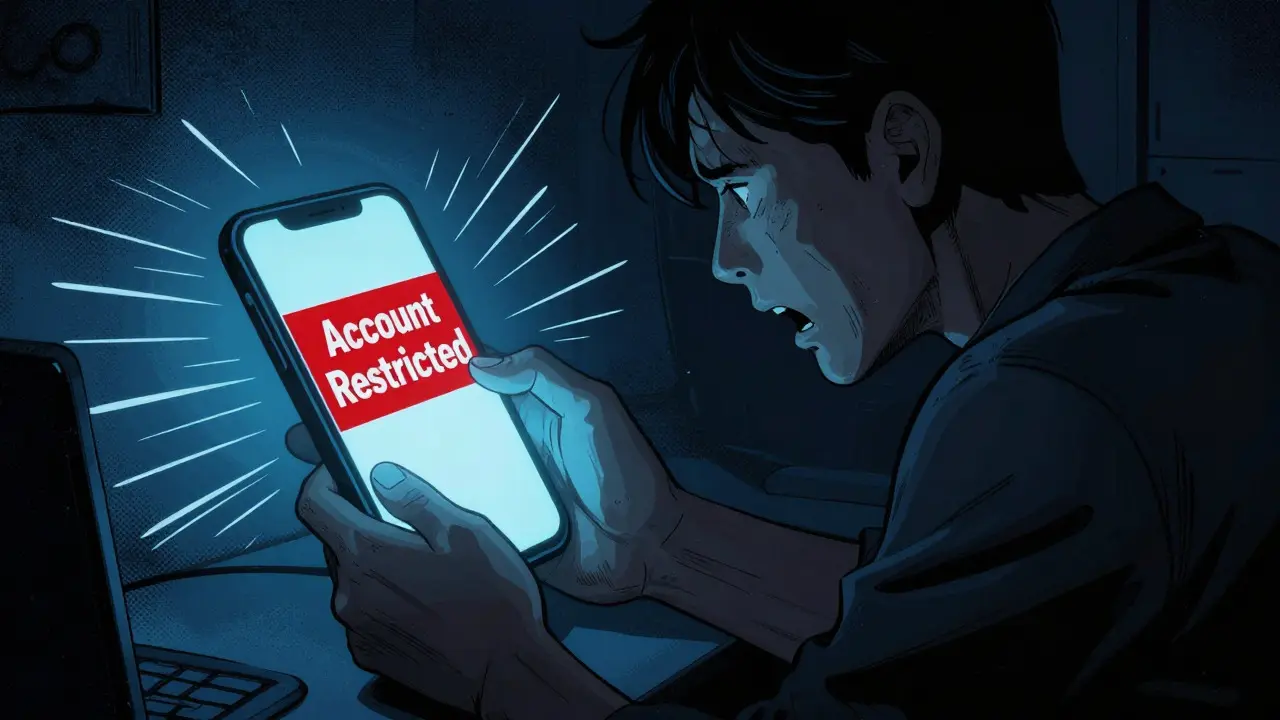
Imagine logging into your banking app to pay rent, only to see a red banner: "Account Restricted." You haven't stolen anything. You haven't laundered money for a cartel. You just sent some Bitcoin from a personal wallet to your exchange, and then tried to cash out to your checking account. Suddenly, your access is gone. This isn't a glitch; it's the new normal for cryptocurrency users in 2026.
The friction between decentralized digital assets and traditional banking infrastructure has reached a breaking point. Banks are no longer just cautious about crypto; they are aggressively policing it. If you hold digital assets, understanding why banks freeze accounts-and how to prevent it-is no longer optional. It is essential for financial survival.
The New Regulatory Reality: The GENIUS Act
To understand why your bank froze your funds, you have to look at the law that changed the game. In mid-2025, the United States passed the GENIUS Act, formally known as the Guiding and Establishing National Innovation for U.S. Stablecoins Act. This legislation did not just regulate stablecoins; it gave banks a legal hammer to crack down on ambiguous crypto transactions.
Before this act, banks operated in a gray area. Now, the GENIUS Act defines a "lawful order" broadly. It allows regulators to issue writs or commands that require institutions to seize, freeze, or prevent the transfer of payment stablecoins. While the act was designed to protect consumers by regulating stablecoin issuers, its enforcement mechanisms have trickled down to individual retail accounts.
Simultaneously, the Federal Deposit Insurance Corporation (FDIC) rescinded its old restrictive guidance in April 2025. They issued new clarification allowing banks to engage in crypto activities without prior approval, but with a catch: they must maintain "adequate risk management practices." In plain English, banks can now handle crypto if they want to, but they will be punished if they miss a single suspicious transaction. The result? Over-compliance. Banks would rather freeze your account by mistake than face a federal fine for letting illicit funds slip through.
How Banks Catch You: KYT and Blockchain Analysis
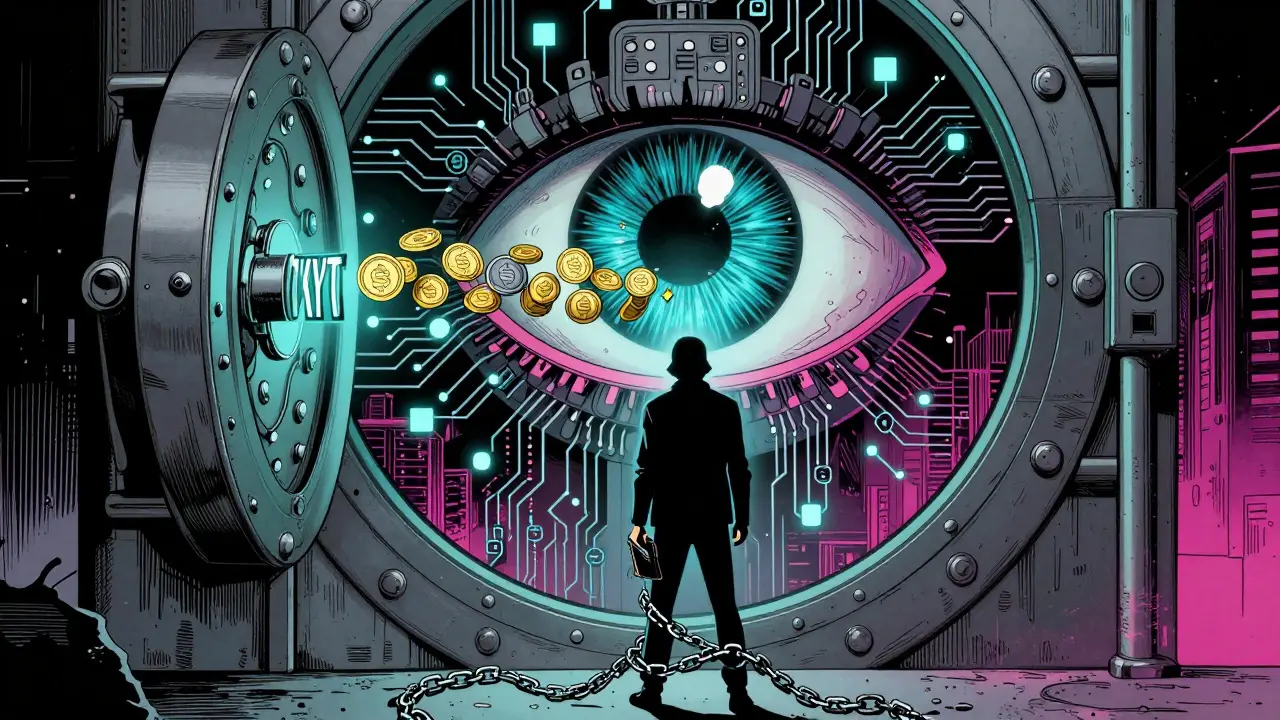
Banks don't manually review every transaction. They rely on automated systems called Know Your Transaction (KYT) tools. These systems scan the blockchain history of every address involved in your transfer. Here is where most people get caught off guard.
Blockchain is transparent. If you receive Bitcoin from an address that previously interacted with a darknet market, a sanctioned entity, or a mixing service like Tornado Cash, your address gets flagged. Even if you bought that Bitcoin legitimately from a friend who bought it from someone else, the "taint" travels with the coins. This is known as indirect exposure.
| Trigger Type | Description | Risk Level |
|---|---|---|
| Source of Funds | Large deposits without clear documentation of origin. | High |
| Blockchain Taint | Receiving crypto from addresses linked to mixers or darknets. | Critical |
| Velocity | High frequency of small transfers mimicking structuring. | Medium | r>
| New Account Activity | Immediate large crypto off-ramping after opening an account. | High |
When a KYT system flags your transaction, it doesn't ask questions. It triggers an alert. Your account goes into "review" status, which often means frozen assets. You might lose access to your funds for weeks while a compliance officer tries to trace the lineage of your crypto back to a clean source.
The Off-Ramp Bottleneck
The biggest pain point for users in 2026 is not buying crypto; it is selling it. Moving money from a centralized exchange like Coinbase or Binance to your traditional bank account is where the rubber meets the road. Banks are increasingly requiring extensive documentation before they credit your account or allow withdrawals.
You may be asked to provide:
- Proof of purchase (invoices from exchanges).
- Tax returns showing capital gains income.
- A letter explaining the purpose of the transaction.
- Identification of the counterparty (who sent you the money).
If you cannot provide these documents instantly, your funds sit in limbo. For merchants accepting crypto payments, this risk is even higher. You become responsible for your customers' transaction histories. If one of your buyers used dirty money, your business account could be frozen. This shifts the burden of Anti-Money Laundering (AML) compliance from the sender to the recipient.
Comparison: US vs. Global Regulations
The United States has implemented one of the strictest frameworks globally. While the European Union introduced Markets in Crypto-Assets (MiCA), the US approach under the GENIUS Act extends enforcement authority directly to traditional banks. MiCA focuses heavily on exchange-level compliance, whereas the US framework scrutinizes the entire chain of custody, including bank accounts.
This creates a bifurcated market. Large institutions like JPMorgan Chase and Bank of America are exploring joint stablecoin ventures because they have the resources to build robust compliance teams. Individual users, however, face increased scrutiny. The gap between institutional clarity and retail chaos is widening.

How to Protect Your Account
You cannot control the blockchain's history, but you can control how you interact with your bank. Here are practical steps to reduce the risk of a freeze:
- Use Clean Sources Only: Buy crypto from reputable, regulated exchanges. Avoid peer-to-peer (P2P) trades unless you know the person personally. P2P markets are hotbeds for tainted funds.
- Keep Detailed Records: Maintain a spreadsheet of every crypto transaction. Include dates, amounts, exchange names, and transaction hashes. When your bank asks for proof, you should be able to email it within minutes.
- Avoid Mixing Services: Never use privacy coins or mixers if you plan to cash out to a traditional bank. These are automatic red flags for compliance algorithms.
- Separate Your Finances: Consider using a dedicated bank account for crypto-related transactions. Keep your salary and daily expenses in a separate account. If the crypto account gets frozen, your life doesn't stop.
- Communicate Proactively: If you are making a large deposit, call your bank beforehand. Tell them what is coming and why. Pre-notification can sometimes bypass automated flags.
The Future of Crypto Banking
The trend is moving toward stricter oversight, not looser. The FDIC expects banks to maintain safe and sound operations consistent with all applicable laws. This means compliance costs will rise, and banks will pass those costs onto consumers through tighter restrictions.
Some experts predict that individual users will increasingly turn to Decentralized Finance (DeFi) platforms to avoid traditional banking altogether. However, DeFi lacks the consumer protections of insured bank accounts. You trade security for freedom. For most people, the middle ground-using regulated exchanges and maintaining impeccable records-is the safest path forward.
Remember, the goal of these regulations is to prevent financial crime. But in practice, they often catch innocent users in the net. By understanding the mechanics of KYT systems and the implications of the GENIUS Act, you can navigate this landscape with confidence. Don't wait until your account is frozen to start keeping better records. Start today.
How long does a bank account freeze last for crypto?
There is no standard timeframe. Simple freezes might last 10-30 days while the bank reviews documentation. Complex cases involving significant sums or unclear sources can take months or even lead to permanent account closure. The duration depends on the bank's internal compliance team and the complexity of the transaction history.
Can I sue my bank for freezing my crypto account?
It is difficult. Most bank agreements include clauses that give them broad discretion to restrict services for risk management purposes. Unless you can prove negligence or violation of specific consumer protection laws, lawsuits rarely succeed. It is more effective to resolve the issue through the bank's compliance department.
What is the GENIUS Act and how does it affect me?
The GENIUS Act is a 2025 US law regulating stablecoins. It empowers regulators to issue orders freezing crypto assets. For individuals, it means banks have clearer legal authority to freeze accounts associated with crypto transactions that appear suspicious or lack proper documentation.
Is it safer to use DeFi instead of banks?
DeFi avoids bank freezes because there is no central authority to block your funds. However, DeFi carries different risks: smart contract bugs, hacking, and user error (losing private keys). There is no insurance like FDIC coverage. Choose based on your risk tolerance and technical expertise.
Will my account be closed if I use crypto?
Not necessarily. Many banks allow crypto transactions if they are documented and low-risk. However, frequent large transfers, use of unregulated exchanges, or receiving tainted funds increases the likelihood of account termination. Consistency and transparency are key.