
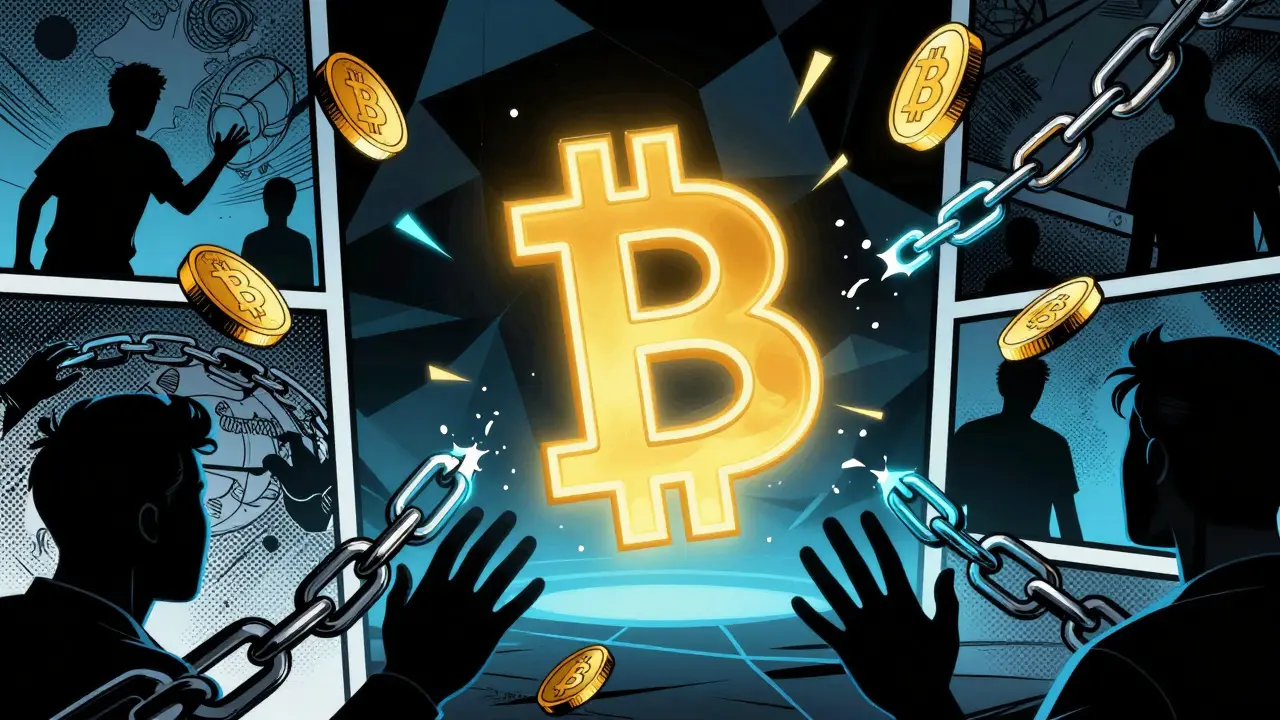
Money has always been weird. Think about it. You hand over green paper, and you get food, gas, or clothes in return. Nobody argues that the paper itself is worth much. Its value comes from collective trust. Cryptocurrencyis a digital asset that uses cryptography for security and functions as a medium of exchange independent of a central bank. Yet, when people talk about crypto, they often ask where the value actually sits. Is it just hype? A bubble waiting to burst? Or is there something real driving the price of Bitcoin and Ethereum?
The short answer is yes, there is substance. It's not just magic internet money. There are hard economic rules and technological realities underpinning these assets. Unlike a lottery ticket, which relies purely on chance, crypto combines technology with economics to create something people actually want to hold. If you've been scratching your head wondering why anyone would pay thousands for a number on a screen, the answer lies in a mix of math, scarcity, and community.
The Power of Scarcity and Supply Rules
The biggest misunderstanding people have is thinking value comes from how much a coin is traded today. In reality, the ceiling is often set before the first coin is even mined. Most traditional currencies don't have limits. Governments can print more dollars or euros whenever they want, which creates inflation. Your savings lose purchasing power over time.
Crypto changes this game through hard-coded scarcity. Bitcoin, the first and largest cryptocurrency, has a maximum supply of 21 million coins. That number is written into its core protocol. No central committee can decide tomorrow that we need 22 million instead. This fixed supply mimics gold, a resource limited by nature. When you combine a finite supply with growing demand, basic economics suggests the price goes up.
| Currency Type | Supply Limit | Issuer Control | Inflation Risk |
|---|---|---|---|
| Fiat Money (USD/EUR) | Unlimited | Central Bank | High |
| Bitcoin | 21 Million | Protocol Code | None (Capped) |
| Ethereum | Inflation Controlled | Decentralized Consensus | Low |
This mechanic isn't unique to Bitcoin alone, though it's the most famous example. Other tokens might have different issuance models, but the principle remains: transparency in supply builds trust. You don't need to trust a CEO; you verify the code yourself. The Reserve Bank of Australia notes that while cryptos lack "intrinsic" value backed by law, their market value is driven by this consensus of scarcity. People agree it's rare, and therefore, it holds value.
Technology as Value Driver
Beyond just being a store of value, cryptocurrencies provide utility. They run on a distributed ledger technology known as the blockchain. Blockchainis a decentralized digital ledger that records transactions across many computers so that the record cannot be altered retroactively. This isn't just buzzwords. Solving the problem of verifying ownership without a middleman is a massive technical achievement.
If you send money via Western Union or a bank, you rely on them to process the transfer. They charge fees, they keep hours, and they can freeze accounts. Crypto networks operate 24/7. Transactions settle directly between peers. The cost is significantly lower, often just a few cents for small transfers compared to percentages taken by banks. For businesses doing international trade, saving that friction is direct value.
Security also plays a huge role. Data on a blockchain is secured using cryptographic hashing. To tamper with the history of transactions, a hacker would need more computing power than exists on Earth to break the consensus. This reliability means companies and individuals trust the system with real assets. As long as people believe the network won't fail, the assets on it remain valuable.
Utility and Network Effects
A common question is whether a specific coin actually does anything useful. For some, like Ethereuma decentralized platform that runs smart contracts: applications that run exactly as programmed, the answer is clear. Ethereum isn't just money; it's an engine. Developers build applications on top of it. These applications power DeFi (Decentralized Finance), which offers lending, borrowing, and trading services without banks.
The value here scales with adoption. Think of it like a social media platform. Facebook becomes more useful as more friends join. Similarly, a blockchain becomes more valuable as more users interact with it. This is known as the Metcalfe Law. If an ecosystem hosts millions of users building and spending digital goods, the native token often captures a portion of that value because it's used to pay for transaction fees or governance.
- Smart Contracts: Self-executing contracts with terms directly written into code.
- NFTs (Non-Fungible Tokens): Unique digital assets proving ownership of art, collectibles, or access rights.
- Governance: Token holders voting on future protocol upgrades.
When projects deliver these tools, the demand for their currency rises not just for speculation, but for actual usage. Users need the token to interact with the software. Without this utility, coins risk becoming speculative shells. Fundamental analysis experts look at active addresses and transaction volume to gauge this health, rather than just price charts.

Market Sentiment and Speculation
You can't ignore the human factor. Crypto markets are open 24 hours a day, 7 days a week, which allows for immediate price discovery. However, this accessibility invites high volatility. News cycles move prices faster than stock markets ever could. Regulatory headlines, celebrity endorsements, or macroeconomic fears cause rapid swings.
This speculation adds liquidity. Traders provide the fuel for price movements, making it easy for long-term holders to enter or exit positions. While it introduces noise, liquidity is a feature. It ensures there's always a buyer when you want to sell. Institutional adoption further anchors this. When major financial firms like Charles Schwab begin offering crypto products, it signals that the asset class is maturing, moving away from fringe gambling toward regulated investment infrastructure.
Sentiment also drives what analysts call the "store of value" narrative. During times of high inflation in fiat economies, investors look for alternatives that can't be debased. This hedging behavior injects significant capital into the space, often decoupling crypto valuations from local currency devaluation.
Differences from Traditional Money
To truly grasp why crypto has value, you have to see the contrast with the status quo. Traditional money relies on legal tender laws. You are forced to accept the dollar for debts. Crypto accepts no government mandate. Its acceptance is voluntary and global.
There is also the issue of censorship resistance. With a credit card, the issuer can block a transaction. With cash, physical logistics matter. Crypto sits in a private digital wallet controlled solely by the owner (usually). If the internet connection is available, the funds move. This appeals to those who value sovereignty over their finances. While governments are introducing Central Bank Digital Currencies (CBDCs) to compete, the decentralized nature of public chains remains the primary differentiator driving intrinsic value for privacy-conscious users.
Furthermore, the composition of the holder base is shifting. Early days were dominated by retail enthusiasts. Today, large corporations holding Bitcoin on balance sheets act as stability buffers. They aren't selling into every dip, absorbing volatility and providing a floor for value based on corporate treasury strategy rather than day trading.

Risks and Long-Term Outlook
No discussion of value is complete without risks. Volatility remains the main barrier to mass adoption. Daily fluctuations make using crypto for everyday groceries difficult for now. Regulatory uncertainty also looms; bans on mining or exchanges in specific regions can impact local prices, though global markets tend to decouple over time.
Despite this, the trajectory points toward integration. Payment processors are adding crypto rails. Custody solutions are improving security. The total market cap has grown exponentially since 2009. The technology is solving real problems-speed, cost, and transparency-that legacy systems struggle with. If you view value as the sum of these solved problems plus the scarcity premium, the foundation is solid.
The future depends on utility scaling. Layer 2 solutions are currently fixing speed issues. Environmental concerns regarding proof-of-work mining are being addressed through greener energy sources or alternative consensus mechanisms. As these hurdles clear, the gap between crypto and traditional finance shrinks, stabilizing the perceived value for the average person.
Frequently Asked Questions
Does cryptocurrency have intrinsic value?
Unlike fiat currency, crypto doesn't have "legal" value mandated by government. Its intrinsic value comes from its utility as a digital medium of exchange, security features, and scarcity. Experts argue it is worth what the market agrees upon due to these technological attributes.
What drives the price of Bitcoin specifically?
Bitcoin price is driven largely by supply-demand dynamics. With a capped supply of 21 million coins, any increase in demand from investors, institutions, or nations results in price appreciation. It is also seen as a hedge against inflation.
Is cryptocurrency safer than bank money?
Not necessarily. Banks offer deposit insurance (like FDIC in the US). Crypto puts security responsibility on the user. Losing your private keys usually means losing your funds forever, whereas lost passwords can be reset in banking.
Do regulations affect crypto value?
Yes, regulation clarity tends to support value. Clear rules attract institutional investors who need compliance safety. Conversely, hostile regulations or bans in major economies can cause temporary price drops due to fear.
How do I analyze if a coin has value?
Look for utility (does it solve a problem?), developer activity (are people working on it?), and adoption metrics (user counts, transaction volume). Speculative coins often lack active development teams or whitepapers with clear goals.
Alex Lo
March 31 2026The thing about crypto is that it changes everything we know about money. People think its just a scam but that isnt true when you look closer at the tech. Bitcoin limits supply which makes it rare like gold in the earth. Most governments print cash whenever they want to spend more money on projects. That makes the dollar lose value over time which hurts regular people saving up. With blockchain everyone can see the ledger so trust is built into code. You dont need a bank to tell you what the balance is really worth anymore. Transactions happen fast and cheap compared to wire transfers taking days. Security is strong because hacking the whole network requires impossible power levels. Ethereum adds smart contracts which lets apps run without middlemen controlling data. This opens up markets for things like lending without banks asking for credit scores. Adoption is growing slowy but surely as companies realize the efficiency gains. Volatility scares people but history shows innovation always has shaky starts before stability. Regulation is coming but it will likely help legitimize the asset class further. We need to educate ourselves on private keys and storage safety measures. The future looks bright for decentralized systems replacing old legacy financial structures
Ashley Stump
March 31 2026This is clearly just a pump scheme for desperate scammers to wash their hands clean.
Jay Starr
April 2 2026I feel like you are dismissing the real potential of decentralization too harshly without understanding the underlying mechanics. It feels personal when someone ignores the hard work put into building secure protocols.
Joy Crawford
April 4 2026i really feel like this explains why i cant buy anything with my savings :/ but maybe holding is good :) trust me crypto is magic !
Matt Bridger
April 6 2026The economic theory presented here lacks nuance regarding fiat currency inflation mechanisms and market liquidity assumptions made by retail investors who lack sophisticated analysis tools
Justin Smith
April 8 2026The security implications of proof-of-work consensus models remain superior to traditional centralized database architectures for transaction integrity purposes.
Callis MacEwan
April 8 2026You are ignoring the energy consumption metrics that destroy the environmental argument entirely while focusing on supply cap fantasy
Lisa Walton
April 9 2026Of course you would ignore environmental costs since you profit from the price action manipulation inherent in this sector
Sean Carr
April 11 2026Have you considered using cold storage solutions to mitigate the risks mentioned here effectively?
Beverly Menezes
April 11 2026I think it is good to be careful about losing your password because then you lose everything forever
joshua kutcher
April 13 2026That is a very important point to remember when starting out with digital assets and securing your funds properly
Tiffany Selchow
April 13 2026Only foreign agents and criminals use this garbage technology to hide their money from the tax man
Wade Berlin
April 13 2026The irony of claiming censorship resistance is lost when you complain about taxes regulating the system
Elizabeth Akers
April 15 2026its cool how people are trading everywhere now and its easy to send money anywhere
Alex Kuzmenko
April 16 2026I agree with you that ease of use is key for adoption and we shud focus on making interfaces simpler for users
Disha Patil
April 16 2026Why does nobody talk about the fact that banks are printing money faster than ever and ruining everyone else
athalia georgina
April 17 2026i think u r right abt banks being bad for our savings acctz lately
Colin Finch
April 18 2026The essence of currency lies in collective belief systems that transcend physical materiality in modern economies
Leah Lara
April 18 2026Not much to add here
Michael Nadeau
April 19 2026While brevity is efficient, depth is required for true comprehension of monetary dynamics in this era
Lisa Miller
April 19 2026We should all stay positive about the progress being made in financial technology and keep learning every day