Have you ever stumbled upon a cryptocurrency with a name that sounds familiar but feels strangely empty when you dig deeper? That’s exactly what happens when you look into Single Finance, known by its ticker SINGLE. It’s a decentralized finance (DeFi) project launched in 2022 on the Cronos blockchain, promising yield farming and governance rights. But here’s the catch: as of mid-2026, this token is trading at fractions of a cent, with near-zero market capitalization and extremely low liquidity. If you’re wondering whether SINGLE is a hidden gem or a dead end, you need to understand not just what it is, but why it struggles to gain traction in a crowded market.
This isn’t just another glossary definition. We’re going to break down how Single Finance works, where you can trade it, and-most importantly-the red flags every investor should spot before putting money into such a niche asset. Whether you’re a seasoned DeFi farmer or a curious beginner, understanding the mechanics behind SINGLE will help you make smarter decisions about your crypto portfolio.
The Basics: What Is Single Finance?
At its core, Single Finance is a protocol built for yield farming and community governance within the Cronos ecosystem. Think of it as a platform where users can lock up their assets to earn rewards, similar to how you’d put money in a high-yield savings account, except the interest rates are determined by smart contracts rather than banks. The SINGLE token serves two main purposes: it acts as the reward mechanism for farmers and gives holders a voice in how the protocol evolves through voting.
Launched in 2022, Single Finance rode the wave of initial interest in alternative blockchains like Cronos, which was gaining popularity due to its association with Crypto.com. However, unlike major DeFi protocols such as Aave or Uniswap, Single Finance never achieved mainstream adoption. Its total supply stands at approximately 998 million tokens, yet the circulating supply has been reported as zero in some data aggregators. This discrepancy usually points to complex token vesting schedules, locked liquidity pools, or simply a lack of active distribution mechanisms.
The project operates entirely on the Cronos Chain, an Ethereum-compatible blockchain. This means developers could easily port existing Ethereum tools to Cronos, lowering entry barriers. For users, this translates to faster transaction speeds and significantly lower gas fees compared to Ethereum mainnet. While these technical advantages are real, they don’t automatically translate to success if no one is using the platform.
Market Reality: Price, Volume, and Liquidity Issues
Let’s talk numbers, because they tell a stark story. As of late 2025 and early 2026, the SINGLE token trades between $0.000174 and $0.000239 USD. To put that in perspective, you would need over 4,000 SINGLE tokens just to equal one US dollar. More concerning is the trend: the token has suffered massive declines, dropping nearly 56% over a 90-day period in recent months. Such volatility isn’t uncommon in crypto, but combined with tiny trading volumes, it signals severe illiquidity.
| Metric | Value / Status | Implication for Investors |
|---|---|---|
| Current Price Range | $0.000174 - $0.000239 USD | Extremely low value; requires large quantities for meaningful investment |
| 24-Hour Trading Volume | ~$18,000 USD | Very low activity; difficult to enter/exit positions without slippage |
| Market Capitalization | Effectively $0 USD | Lack of institutional interest; high risk of abandonment |
| Primary Exchanges | Gate.io, VVS Finance | Limited accessibility; mostly confined to Cronos ecosystem users |
| Price Trend (90 Days) | -56.08% | Strong downward pressure; potential loss of principal |
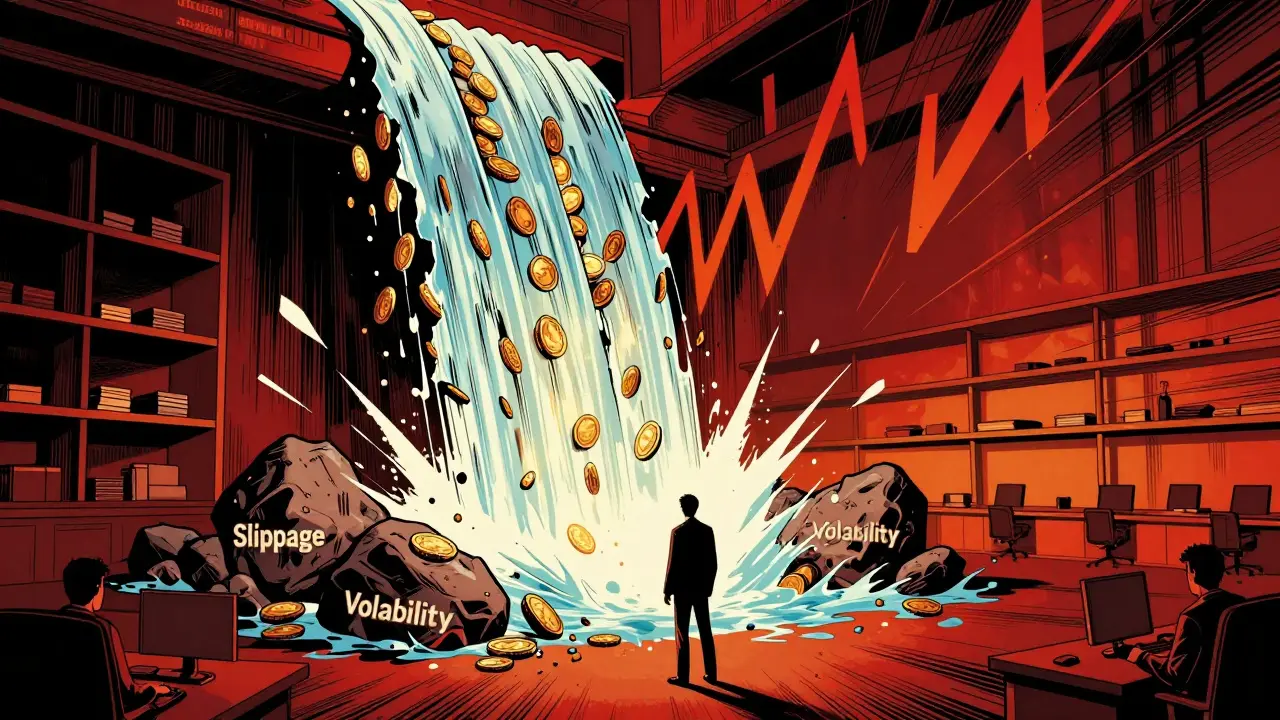
The trading volume is particularly alarming. With only around $18,000 changing hands daily, the market is incredibly thin. Imagine trying to sell a house in a neighborhood where only one person buys homes per year-you might have to drastically reduce your asking price just to find a buyer. In crypto terms, this is called “slippage.” If you try to sell a significant amount of SINGLE tokens, you could crash the price further, losing more value than you anticipated.
Liquidity depth analysis reveals even starker realities. On VVS Finance, a prominent decentralized exchange on Cronos, the SINGLE/USDC pair shows less than $510 in liquidity within a ±2% price range. That’s barely enough to cover a single medium-sized trade. Most of the remaining liquidity sits in SINGLE/VVS pairs, indicating that traders are primarily swapping between native Cronos tokens rather than converting to stablecoins like USDT or USDC. This isolation limits the token’s utility outside the immediate Cronos circle.
Where Can You Trade SINGLE?
If you decide to proceed despite the risks, knowing where to buy or sell SINGLE is crucial. The token is listed on a handful of platforms, but options are limited compared to top-tier cryptocurrencies.
- Gate.io: This centralized exchange offers the highest trading volume for SINGLE, primarily via the SINGLE/USDT pair. Gate.io is well-known for listing smaller-cap altcoins, making it a go-to for speculative traders. However, always verify the specific trading pair available, as some may be suspended during low-volume periods.
- VVS Finance: As a decentralized exchange (DEX) native to Cronos, VVS allows peer-to-peer trading without intermediaries. Here, you’ll find pairs like SINGLE/USDC and SINGLE/VVS. Using VVS requires connecting a Web3 wallet compatible with Cronos, such as MetaMask configured for the Cronos network.
- Crypto.com Exchange: Occasionally, SINGLE appears here due to Cronos integration, but availability fluctuates based on internal risk assessments.
It’s worth noting that major exchanges like Coinbase or Kraken do not list SINGLE. This absence reinforces its status as a micro-cap asset with minimal regulatory scrutiny or institutional backing. Always double-check current listings directly on the exchange websites, as delistings happen frequently for low-volume tokens.
How Does Single Finance Work? Yield Farming & Governance
Understanding the mechanics helps explain why someone might still use Single Finance. The primary function is yield farming. Users deposit assets into liquidity pools provided by the protocol. In return, they receive SINGLE tokens as rewards. These rewards incentivize users to provide liquidity, ensuring there’s enough capital for others to trade against.
However, yield farming carries inherent risks. Impermanent loss occurs when the price of deposited assets changes relative to each other. If SINGLE’s price drops while the paired asset stays stable, you could end up with less value than if you had simply held the original assets. Given SINGLE’s recent 56% decline, impermanent loss would be substantial for anyone who farmed heavily during the peak.
Governance is the second pillar. Holding SINGLE tokens theoretically grants voting power on protocol upgrades, fee structures, and new feature implementations. But effective governance requires active participation. With such a small user base, votes may be concentrated among a few whales, leading to centralization issues despite the “decentralized” label. Without transparent proposal records or active forums, it’s hard to assess whether governance is truly functional or merely symbolic.
Risks and Red Flags Every Investor Should Know
Before allocating any funds to Single Finance, consider these critical risks:
- Extreme Illiquidity: Low trading volume means you might not be able to exit your position quickly or at a fair price. Slippage can eat away profits instantly.
- Price Volatility: Micro-cap tokens often experience wild swings based on minor news or whale movements. A 50% drop in a month is not unusual for SINGLE.
- Lack of Development Updates: There is scant public information about ongoing development, roadmap milestones, or team announcements. Silent projects often signal stagnation or abandonment.
- Smart Contract Risk: Like all DeFi protocols, Single Finance relies on code. Audits are essential, but details about security audits for SINGLE are not widely publicized. Unaudited contracts pose a direct threat of hacks or exploits.
- Ecosystem Dependency: SINGLE’s fate is tied closely to Cronos. If Cronos loses relevance or faces technical issues, SINGLE suffers disproportionately due to its narrow focus.
Additionally, the reported circulating supply of zero raises questions. Are tokens locked indefinitely? Is distribution stalled? Transparency is key in DeFi, and opacity breeds distrust. Always check official documentation or GitHub repositories for clarity on tokenomics.
Is Single Finance Worth Your Attention?
For most investors, the answer is likely no. Single Finance lacks the liquidity, community engagement, and developmental momentum needed to compete with established DeFi giants. Its position as a niche yield farming tool on Cronos offers little advantage over larger, more secure alternatives like VVS Finance itself or PancakeSwap on BNB Chain.
That said, if you’re deeply embedded in the Cronos ecosystem and seek experimental opportunities, SINGLE might serve as a learning tool. Use only funds you can afford to lose entirely. Treat it as tuition for understanding DeFi dynamics, not as an investment strategy. Monitor social channels and official announcements closely-if activity picks up, reassess. Otherwise, expect continued dormancy.
In the broader context of cryptocurrency, projects like Single Finance highlight the importance of due diligence. Not every token with a clever name or technical foundation deserves attention. Focus on metrics that matter: consistent volume, clear utility, active development, and transparent governance. Anything less is gambling, not investing.
What is the current price of Single Finance (SINGLE)?
As of mid-2026, SINGLE trades between $0.000174 and $0.000239 USD. Prices vary slightly across exchanges like Gate.io and VVS Finance due to low liquidity and fragmented order books.
Is Single Finance a scam?
There is no definitive evidence labeling Single Finance as a scam. It maintains listings on reputable platforms like CoinMarketCap and Gate.io. However, its low activity, unclear token distribution, and lack of development updates raise significant red flags regarding viability and trustworthiness.
Where can I buy SINGLE tokens?
You can purchase SINGLE on Gate.io (centralized) and VVS Finance (decentralized). Ensure your wallet supports the Cronos network for DEX transactions. Always verify live listings before attempting trades.
Why is the circulating supply of SINGLE reported as zero?
This likely indicates that tokens are locked in vesting contracts, staking pools, or treasury reserves. Alternatively, data aggregators may struggle to track accurate circulation due to poor reporting from the project team. Check official whitepapers for precise tokenomics.
Does Single Finance offer good yields?
Historically, yield farming offered high returns, but current yields for SINGLE are uncertain due to declining usage and token devaluation. High nominal APRs often mask underlying risks like impermanent loss and protocol insolvency. Assume yields are negligible unless proven otherwise.
How does Single Finance compare to other Cronos DeFi projects?
Compared to leaders like VVS Finance or MM Finance, Single Finance lags significantly in TVL (Total Value Locked), user count, and trading volume. It occupies a marginal niche with no distinct competitive advantage, making it inferior for both safety and profitability.