

Imagine buying a ticket to a fight, but the receipt says you just invested in real estate. That’s the confusing reality of RIZE, a cryptocurrency that seems to have two different personalities. One day it’s the official coin for the Palm Beach Punishers combat sports team; the next, it’s pitching itself as a serious tool for tokenizing real-world assets like houses and gold. This identity crisis isn’t just a marketing glitch-it’s the core issue every potential investor needs to understand before putting a single dollar into this Solana-based token.
The Dual Narrative: Sports Fan Token or Asset Tokenizer?
Most cryptocurrencies pick a lane. Bitcoin stores value, Ethereum powers apps, and Solana speeds up transactions. RIZE tries to do two very different things at once, which creates immediate red flags for anyone doing due diligence. According to data from Blockspot.io and Coinpedia, RIZE is marketed as the digital currency for the Palm Beach Punishers, a combat sports organization linked to the Rize Fighting Championship. The pitch here is straightforward: use RIZE tokens to buy tickets, support fighters, and access exclusive MMA events. It sounds like the model used by Chiliz ($CHZ), which has successfully partnered with major football clubs.
But then there’s the other story. Reports from BTCC and some AI-driven market analyses describe RIZE as a utility token for the T-RIZE platform, designed specifically for Real-World Asset (RWA) tokenization. In this version of the narrative, RIZE competes with established platforms like Centrifuge ($CFG) and Goldfinch ($GFI). These projects allow users to put physical assets on the blockchain to unlock liquidity. So, is RIZE a fan engagement tool for UFC fans, or is it financial infrastructure for property investors? Currently, the project hasn’t clearly resolved which identity takes precedence, leaving users guessing.
| Feature | RIZE (RIZE) | Chiliz (CHZ) | Centrifuge (CFG) |
|---|---|---|---|
| Primary Use Case | Sports Tickets / RWA Tokenization (Conflicting) | Fan Engagement & Voting | Real-World Asset Financing |
| Blockchain | Solana | Ethereum / Flow | Ethereum / Polkadot |
| Market Cap (Approx.) | $9.78 Million | $438 Million | Varies (High TVL) |
| Verified Partnerships | Palm Beach Punishers (Unverified by Auditors) | 150+ Global Sports Teams | Institutional Lenders |
| Risk Rating | High (Centralized Supply) | Moderate | Low-Moderate |
Technical Specs: Fast, Cheap, But Centralized
Under the hood, RIZE operates on the Solana blockchain. If you’ve ever tried to send Ethereum during a gas spike, you know why Solana is attractive. Transactions on Solana average about 0.4 seconds and cost less than $0.00025. For a user trying to buy a $20 drink at a stadium, this speed and low fee are essential. You’ll need a wallet compatible with SPL tokens, such as Phantom or Solflare, to interact with RIZE.
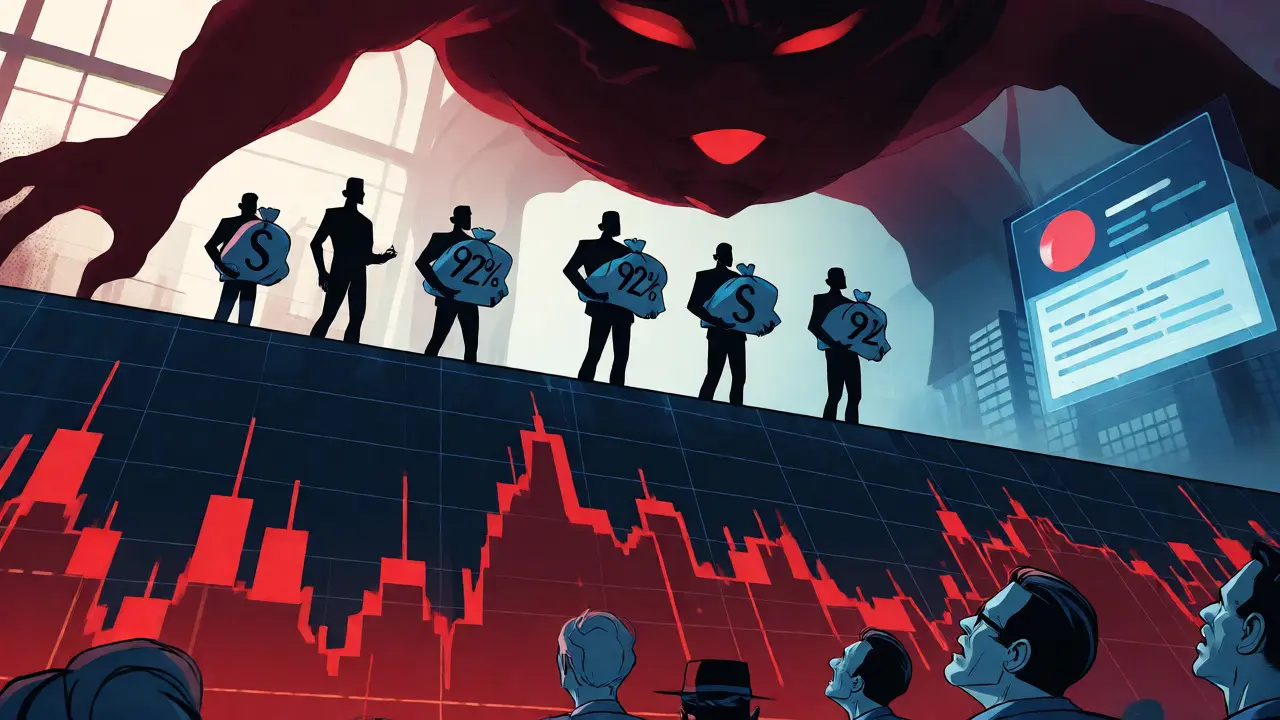
However, technical efficiency doesn’t equal safety. A report from CertiK, a leading blockchain security firm, highlighted significant concerns regarding centralization. As of late 2025, approximately 92% of the circulating supply was held in just five wallets. This level of concentration means that a small group of holders can drastically influence the price. If one of those whales decides to sell, the market cap-which sits around $9.78 million-could evaporate quickly. Unlike Bitcoin, where millions of nodes secure the network, RIZE’s economic security relies heavily on trust in these few large holders.
Market Performance and Volatility
If you’re looking for stability, RIZE isn’t it. The token has experienced wild swings that suggest either high speculative interest or market manipulation. In August 2023, following an announcement of a partnership with StakeWave, the price surged by 55% in a single day. Yet, by October 2025, CoinGecko data showed a 7-day decline of over 25%. This volatility is typical for micro-cap altcoins, but RIZE’s movements seem tied more to press releases than fundamental adoption.
Liquidity is another critical factor. Nearly 98.7% of RIZE trading volume happens on Jupiter, a decentralized exchange on Solana. There is minimal presence on centralized exchanges like Binance or Coinbase. This lack of diversification is risky. If Jupiter experiences downtime or changes its listing criteria, RIZE holders could find themselves stuck with nowhere to trade. Compare this to Chiliz, which trades on over 25 major exchanges, giving its holders multiple exit routes.
User Experience: Bugs and Broken Promises
Let’s look at what actual users are saying. The experience is polarized. On Reddit’s r/CryptoCurrency, sentiment analysis shows 63% negative feedback over the last month. Common complaints include "unresponsive customer support" and discrepancies between website claims and reality. One user noted, "I can’t find any arena accepting RIZE payments," despite the project claiming deep integration with the Palm Beach Punishers.
The mobile app, version 2.3.1, reflects these issues. With only about 4,200 downloads on Google Play, it holds a low rating of 2.1 out of 5. Users report frequent crashes and unreliable transaction confirmations. While some sports fans claim success-like Maria Lopez, who used RIZE for a fighter meet-and-greet-the majority of reviews point to a buggy interface that makes simple tasks frustrating. Trustpilot ratings hover around 3.2/5, with many citing that the "website claims don't match reality."

Regulatory Risks and Future Outlook
The regulatory environment adds another layer of uncertainty. In February 2025, the SEC issued warnings about unregistered securities posing as sports tokens. If RIZE is truly a utility token for tickets, it might escape heavy scrutiny. But if it’s being sold as an investment vehicle for real-world assets without proper collateral proof, it could face legal hurdles. The Financial Action Task Force (FATF) also requires RWA tokens to prove underlying collateral. RIZE currently lacks a publicly verifiable whitepaper detailing this collateral, unlike competitors who provide audited financial statements.
Delphi Digital gave RIZE a mere 12% survival probability over the next 18 months, citing "narrative incoherence." Meanwhile, Blockchange Ventures maintains a speculative buy rating based on rumors of a UFC partnership, though no evidence supports this yet. The project’s roadmap promises global expansion in Q1 2026, but given the inactive Discord server and sparse social media activity, execution remains doubtful.
How to Buy and Store RIZE
If you still want to take the gamble, here’s how to get started. Since RIZE is an SPL token, you cannot buy it directly with credit card on most major exchanges. You’ll need to follow these steps:
- Set up a Wallet: Download Phantom or Solflare. Secure your seed phrase offline.
- Buy SOL: Purchase Solana (SOL) on a centralized exchange like Coinbase or Kraken.
- Transfer to Wallet: Send your SOL to your Phantom/Solflare address via the Solana network.
- Swap for RIZE: Go to Jupiter Aggregator (jup.ag). Connect your wallet. Swap SOL for RIZE using the contract address starting with 9zJ... (verify on Solscan).
- Add to Wallet: If RIZE doesn’t appear automatically, manually import the token address.
Is RIZE a scam?
It is not necessarily a scam, but it carries high risk. Independent auditors found suspicious token movement patterns consistent with pump-and-dump schemes, and the project suffers from a lack of transparency regarding its dual narrative (sports vs. RWA). Always verify partnerships independently.
Where can I buy RIZE crypto?
The primary venue for buying RIZE is Jupiter, a decentralized exchange on the Solana network. It has limited availability on centralized exchanges, making DEXs the most reliable option for current liquidity.
Does RIZE have a real-world use case?
Claims exist for both sports ticketing (Palm Beach Punishers) and real-world asset tokenization. However, independent verification of widespread sports acceptance is lacking, and the RWA side lacks a public whitepaper detailing collateral backing.
What blockchain does RIZE use?
RIZE is an SPL token built on the Solana blockchain. This allows for fast transaction times (approx. 0.4 seconds) and very low fees (under $0.00025 per transaction).
Who holds most of the RIZE supply?
Data indicates extreme centralization, with approximately 92% of the circulating supply held in just five wallets. This concentration poses a significant risk of price manipulation by large holders.