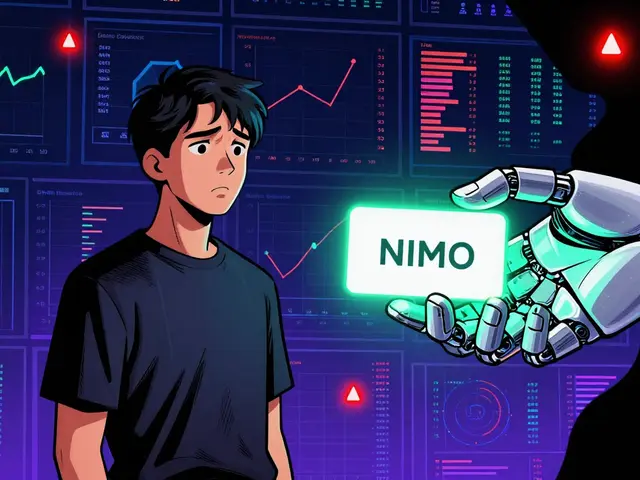

Have you ever looked at a decentralized finance dashboard and felt completely lost? You are not alone. Most DeFi platforms look like flight control centers designed for pilots with advanced degrees in mathematics. Enter NIMO Protocol, a platform that promises to change the game by using artificial intelligence to guide regular users through mining, staking, and yield farming. Launched on August 1, 2025, NIMO aims to bridge the gap between Web2 users and the complex world of Web3. It does this by wrapping high-yield opportunities in a user-friendly, gamified interface powered by its native token, NIM.
But does it actually work as advertised, or is it just another buzzword-heavy project? Let’s break down what NIMO Protocol is, how the NIM token functions, and whether it deserves a spot in your digital wallet.
The Core Concept: AI Meets DeFi
At its heart, NIMO Protocol is an AI-powered decentralized finance platform built on the BNB Smart Chain (BEP-20). The main problem it tries to solve is complexity. Traditional DeFi requires users to manually select strategies, monitor impermanent loss, and rebalance positions constantly. One wrong click can cost you money.
NIMO introduces AI agents that handle the heavy lifting. These algorithms dynamically adjust staking and yield farming strategies to optimize earnings while minimizing risk. Think of it as having a financial advisor who works 24/7, never sleeps, and charges no hourly fee-just a small cut via protocol fees. The platform emphasizes education and safety, offering a "guided participation" model. Instead of throwing you into the deep end, NIMO uses gamification to teach you the ropes while you earn.
This approach targets a specific audience: people who want exposure to crypto yields but lack the time or technical expertise to manage them manually. By automating strategy selection, NIMO lowers the barrier to entry significantly.
Understanding the NIM Token
The ecosystem runs on the NIM token. This isn’t just a speculative asset; it serves as both a utility and governance tool within the NIMO network. Here is what you can actually do with NIM:
- Earn Rewards: Stake NIM to participate in mining pools and yield farming campaigns. The majority of the token supply is dedicated to rewarding these participants.
- Governance: Holders can vote on proposals that shape the future of the protocol. This includes decisions on new features, partnership integrations, and treasury management.
- Access Features: Certain advanced AI-driven strategies or premium educational content may require holding or spending NIM tokens.
The token operates on the BNB Smart Chain, which means it is compatible with standard wallets like MetaMask or Trust Wallet, provided they support BEP-20 assets. Gas fees for transactions are paid in BNB, not NIM, keeping the token focused on value accrual rather than transaction costs.
Tokenomics: Where Do the Tokens Go?
When evaluating any new crypto project, you need to look at the supply distribution. NIMO has a fixed total supply of 1 billion NIM. There is no inflationary minting after this cap is reached. The distribution is heavily skewed toward user rewards, which is generally a bullish signal for community growth.
| Allocation Category | Percentage | Details & Vesting |
|---|---|---|
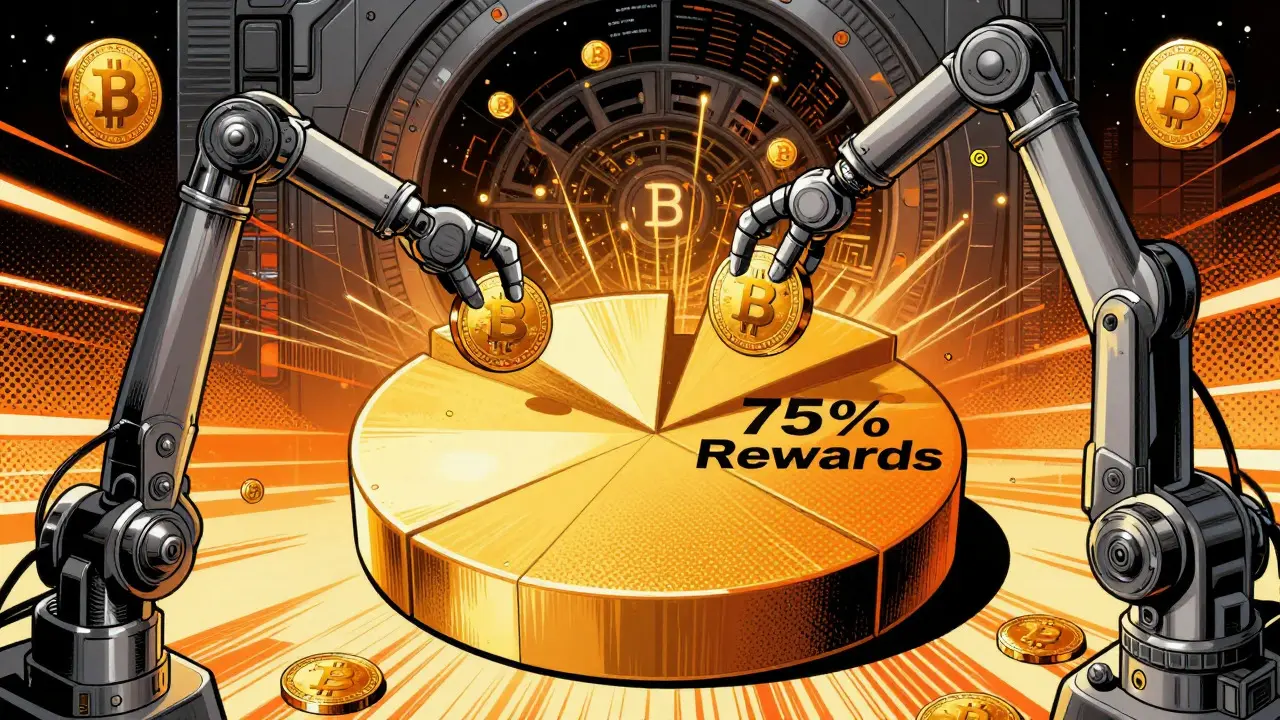
| Staking & Mining Rewards | 75% | Distributed over 10 years via deflationary emission schedule |
| Foundation Reserve | 10% | Locked for 3 years to ensure long-term stability |
| Ecosystem Growth & Partnerships | 10% | Used for marketing, developer grants, and strategic alliances |
| Community Incentives & Events | 5% | Airdrops, contests, and community building initiatives |
The 10-year deflationary emission schedule is key here. It means tokens are released slowly, preventing massive sell-offs from early investors dumping their bags all at once. However, with 75% of the supply going to rewards, the circulating supply will grow steadily, which could create selling pressure if demand doesn’t keep up.
Market Reality: Price, Liquidity, and Data Discrepancies
Here is where things get tricky. If you search for the price of NIM right now, you might see wildly different numbers. This is common for micro-cap tokens launched in 2025. Some aggregators list NIM at fractions of a cent ($0.000006), while others show prices closer to $2.00. Why the difference?
It often comes down to data feed errors or decimal place mismatches in tracking software. For example, CoinGecko and Binance have shown conflicting data regarding circulating supply and price pairs. As of mid-2026, reliable trading volume appears concentrated on PancakeSwap v2, the leading decentralized exchange on BNB Chain. Volumes typically range between $20,000 and $120,000 per day, indicating moderate liquidity for a small-cap asset but not enough to support large institutional trades without significant slippage.
The market capitalization is also inconsistent across platforms, ranging from negligible figures to higher valuations depending on the source. Always check the live order book on PancakeSwap before buying, rather than trusting a static price tag on a tracker app.
Security and Technical Risks
Before you stake your savings, consider the security landscape. NIMO Protocol is built on BNB Smart Chain, inheriting its base layer security. However, the smart contracts governing the NIMO dApp itself are critical.
As of the latest available information, there are no widely publicized third-party audit reports from firms like CertiK or Hacken. While the litepaper mentions a "trust-focused user experience," the absence of verified audits is a red flag for conservative investors. In DeFi, unaudited code is risky code. Vulnerabilities in the AI logic or reward distribution mechanisms could lead to exploits.
Additionally, the team behind NIMO remains largely anonymous. While common in crypto, it reduces accountability. If something goes wrong, there is no central entity to hold responsible. Your protection lies in the transparency of the code and the strength of the community governance.

How to Get Started with NIMO Protocol
If you decide to take the plunge, the process is straightforward due to the BEP-20 standard. Here is the step-by-step workflow:
- Set Up a Wallet: Install a BNB Chain-compatible wallet like MetaMask or Trust Wallet. Ensure you have some BNB for gas fees.
- Acquire NIM: Connect your wallet to PancakeSwap v2. Swap BNB for NIM using the official contract address:
0x1c0acc34747a61fa9a4008b590319e0488eebdc8. Double-check this address to avoid scams. - Connect to NIMO: Visit the official NIMO Protocol website and connect your wallet.
- Start Earning: Navigate to the Staking or Yield Farming section. Select an AI-guided strategy. The platform will suggest optimal pools based on current market conditions.
- Monitor and Govern: Track your earnings through the gamified dashboard. Participate in governance votes when proposals arise.
The platform’s design aims to make steps 4 and 5 intuitive, removing the need to manually calculate APYs or swap between multiple protocols.
Is NIMO Protocol Worth It?
NIMO Protocol represents an interesting experiment in simplifying DeFi. Its focus on AI-driven optimization and educational onboarding addresses real pain points for new users. The tokenomics favor long-term holders and active participants, which aligns incentives well.
However, it remains a high-risk, early-stage project. The lack of independent audits, anonymous team, and volatile market data mean you should only invest what you can afford to lose. It is best suited for retail investors comfortable with DeFi risks who want to explore AI-integrated yield farming on BNB Chain.
For those seeking established, audited platforms, NIMO is not yet a replacement for giants like Yearn Finance or Aave. But as a niche player targeting the "Web2 to Web3" bridge, it offers a unique proposition worth watching closely in 2026 and beyond.
What blockchain is NIMO Protocol built on?
NIMO Protocol is built on the BNB Smart Chain (BSC), utilizing the BEP-20 token standard. This ensures compatibility with popular wallets like MetaMask and low transaction fees compared to Ethereum.
How much is 1 NIM coin worth?
The price of NIM varies significantly across exchanges due to low liquidity and data discrepancies. Prices have been reported ranging from fractions of a cent to around $2.00 USD. Always check live pairs on PancakeSwap for the most accurate current rate.
Is NIMO Protocol safe to use?
Safety depends on your risk tolerance. While the platform emphasizes user guidance, there are no publicly available third-party smart contract audits as of mid-2026. Users should exercise caution and start with small amounts to test the system.
What is the total supply of NIM tokens?
The total and maximum supply of NIM is fixed at 1 billion tokens. The distribution follows a deflationary emission schedule over 10 years, with 75% allocated to staking and mining rewards.
Can I buy NIM on centralized exchanges like Binance?
Currently, NIM is primarily traded on decentralized exchanges, specifically PancakeSwap v2. While some major trackers list it, direct spot listings on top-tier centralized exchanges are limited or non-existent, making DEX swaps the primary method of acquisition.
How does AI help in NIMO Protocol?
AI agents in NIMO analyze market conditions to automatically adjust staking and yield farming strategies. This automation aims to maximize returns and minimize risks like impermanent loss without requiring manual intervention from the user.