

You’ve probably seen the hype around task-to-earn models, but do you know what happens when a project like Midle (MIDLE) enters the crowded crypto space? Launched in January 2025, this ERC-20 cryptocurrency on the Ethereum blockchain designed to incentivize user engagement through social media and blockchain-based tasks promises to pay users for their digital labor. But with a market cap hovering near $10,000 as of early 2026, is it a genuine utility play or just another micro-cap experiment destined to fade? Let’s break down exactly what Midle is, how its economy works, and whether it holds any real value for investors or users.
The Core Concept: Paying for Digital Engagement
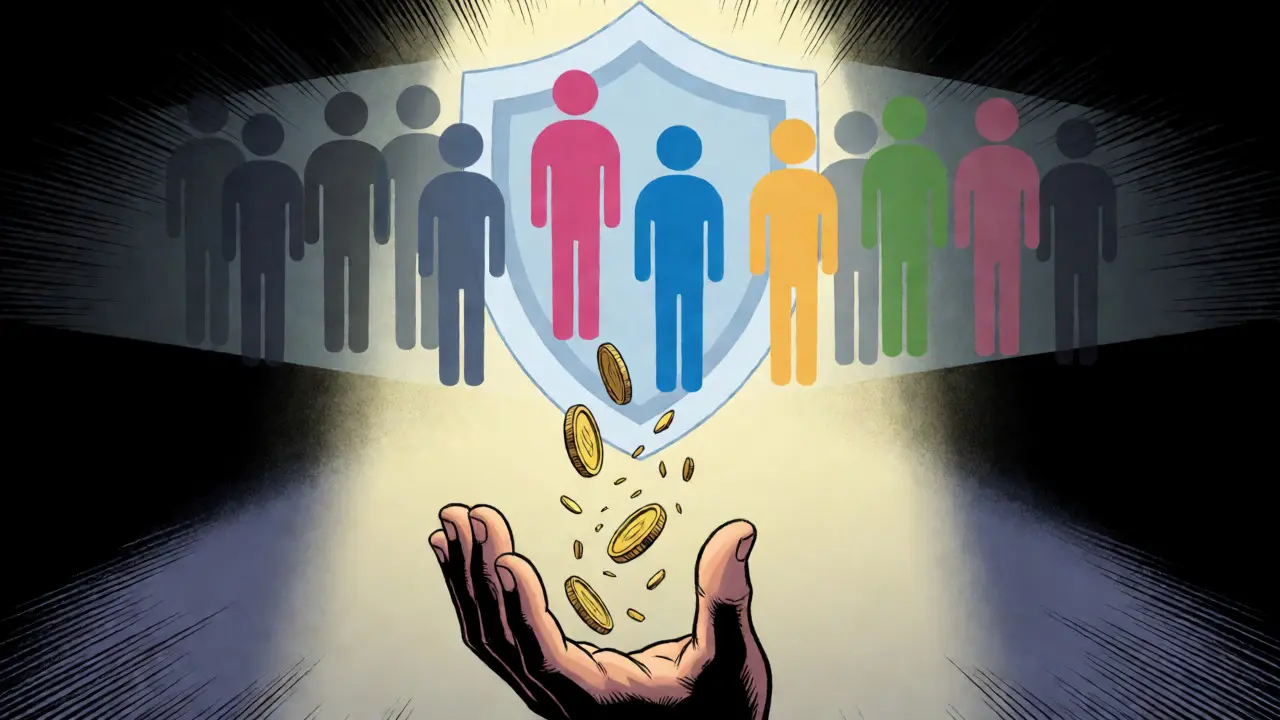
At its heart, Midle isn’t trying to be the next Bitcoin or Ethereum. It’s a platform where brands and projects pay for specific actions-like sharing a post, joining a Telegram group, or interacting with a smart contract-and the platform passes those rewards to you in MIDLE tokens. Think of it as a bridge between marketing budgets and crypto wallets. The system relies on a trust score algorithm that evaluates your behavior based on engagement history and guideline adherence. If you complete tasks reliably, your score goes up, unlocking higher-value opportunities. If you spam or drop out, penalties kick in. This gamified approach aims to filter out bots and ensure that brands get actual human attention, not just empty clicks.
Tokenomics: Supply, Distribution, and Value
Understanding the numbers is critical before you touch any new coin. Midle has a fixed total supply of 1 billion MIDLE tokens. When it launched, only about 26 million were in circulation, but by February 2026, data from CoinGecko suggests this number grew to roughly 55 million due to vesting schedules releasing more tokens into the wild. The initial distribution was heavily weighted toward private sales (9.69%) and public rounds (7.51%), meaning insiders and early backers hold a significant chunk of the pie.
| Metric | Value | Context |
|---|---|---|
| Total Supply | 1 Billion | Fixed maximum amount |
| Circulating Supply | ~55 Million | Released via vesting |
| Price per Token | $0.000361 | Down from $0.01 launch price |
| Market Cap | ~$10,000 | Micro-cap territory |
| Main Exchanges | KCEX, Gate.io, MEXC | Limited liquidity venues |
The math here is sobering. With a price of $0.000361, your earnings for completing a handful of tasks might barely cover the gas fees if you’re on mainnet Ethereum, though many such platforms use layer-2 solutions or off-chain accounting to mitigate this. Early investors who bought at the Initial DEX Offering (IDO) price of $0.01 have seen a massive decline-roughly 96%-unless they sold during the brief spike after launch.
How to Earn and Trade MIDLE
If you want to try it out, you don’t necessarily need to buy the token first. You can sign up, complete free tasks, and earn small amounts of MIDLE. However, there’s a catch reported by early users: the trust score barrier. New accounts often start with low scores, locking them out of high-reward tasks until they grind through dozens of low-payout activities. One Trustpilot reviewer noted earning just $0.45 worth of tokens after three days of work. That’s less than the cost of a coffee, highlighting the low immediate ROI for casual users.
To trade, you’ll need an account on centralized exchanges like KCEX, which currently handles over half of the daily volume. Note that there are no major decentralized exchange (DEX) listings, so you can’t easily swap MIDLE directly from a MetaMask wallet without using a CEX. This adds friction and custodial risk. Liquidity is thin; Reddit discussions point out that large sell orders could crash the price instantly because the order books are shallow.

Risks and Reality Check
Let’s be honest: Midle faces steep challenges. First, it competes with giants. Galxe (GAL), a similar task-to-earn platform, boasts a market cap of $150 million compared to Midle’s $10,000. That’s a difference of five orders of magnitude. Second, industry reports from Messari suggest that 85% of task-to-earn projects fail within a year due to poor retention. Users tend to leave once the easy money runs out, leaving brands with fewer participants.
Furthermore, the lack of transparent technical audits raises red flags. While the whitepaper mentions smart contracts, detailed security reports aren’t readily available. For a token handling user funds and verification logic, this opacity is concerning. Also, with no major updates announced since its January 2025 launch, development momentum seems slow. Is the team still active? Are they building the promised mobile app? These questions remain unanswered in public channels.
Is Midle Worth Your Time?
For most people, Midle is a speculative gamble rather than a solid investment. If you enjoy grinding social media tasks and don’t mind low payouts, it’s a harmless way to dabble in crypto. But if you’re looking for growth, the tiny market cap means one whale selling could wipe out weeks of gains. Treat any MIDLE holdings as lottery tickets, not savings accounts.
What is the primary purpose of the MIDLE token?
MIDLE serves two main functions: it is the reward currency paid to users for completing tasks on the platform, and it acts as a governance token allowing holders to vote on certain platform decisions.
Where can I buy Midle (MIDLE)?
As of February 2026, MIDLE is primarily traded on centralized exchanges such as KCEX, Gate.io, and MEXC. It is not widely available on major decentralized exchanges like Uniswap.
Is Midle a meme coin?
No, Midle is classified as a utility token within a task-to-earn ecosystem. Unlike meme coins driven purely by speculation and internet culture, MIDLE has a functional use case tied to platform engagement and verification services.
What is the total supply of MIDLE?
The total maximum supply of MIDLE is capped at 1 billion tokens. A portion of these is released gradually through vesting schedules to prevent immediate market dumping.
Why is the MIDLE price so low?
The low price reflects its status as a micro-cap asset with limited adoption and liquidity. Additionally, the high total supply relative to its market capitalization naturally results in a low unit price.