
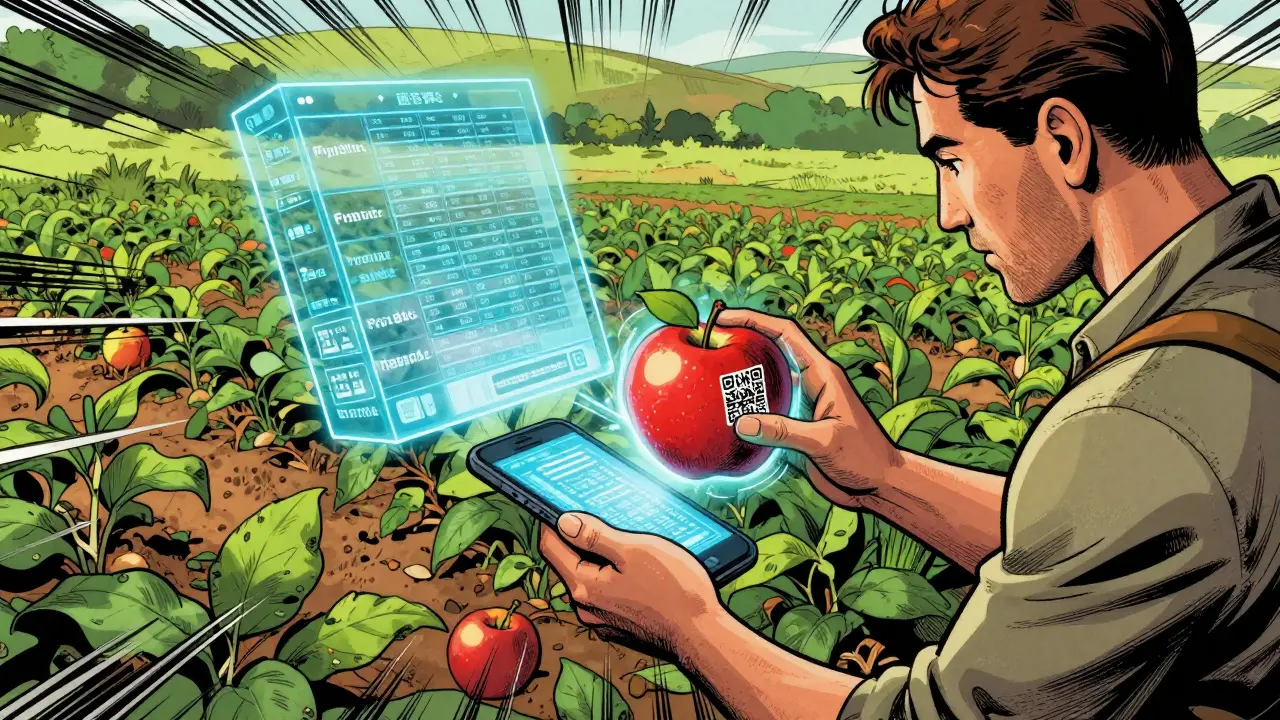
Imagine scanning a QR code on an apple and instantly seeing exactly which farm it came from, who transported it, and when it was harvested. That transparency sounds like science fiction to some, but for years, blockchain projects have tried to make it reality. One of the most notable attempts in this space is Blocery, identified by its ticker symbol BLY. Launched in June 2020, Blocery positions itself as a trusted food supply chain ecosystem built on Ethereum. It aims to record immutable data regarding the production, distribution, and sales history of agricultural products.
If you are looking at your portfolio or just browsing crypto lists and stumbled upon BLY, you probably have questions. Is it still active? What does the token actually do? And why has the price moved so drastically since its launch? This guide breaks down the mechanics, market status, and utility of the Blocery project so you can understand what you are dealing with before making any decisions.
The Core Concept: Trusting Your Food Source
At its heart, Blocery isn't just another speculative coin; it is a utility project designed to solve a specific problem in the agriculture industry: trust. In traditional supply chains, information about where food comes from can be opaque, easily altered, or lost. Farmers might not get fair compensation because middlemen control the narrative, and consumers often have no way to verify claims about organic or local sourcing.
Blocery uses blockchain technology to create a digital ledger that cannot be forged. When a farmer records data about their crop-say, the date of planting or pesticide usage-that information is locked onto the blockchain. As the product moves through distributors, processors, and retailers, each step is recorded. By the time the food reaches your plate, there is a complete, unchangeable history attached to it.
This system operates at the intersection of fintech and agriculture. It acts as a pre-purchase system, allowing stakeholders to transact securely based on verified data. The goal is to improve efficiency and trust across the entire value chain, from the farm gate to the end consumer.
Technical Specifications: How BLY Works
To interact with Blocery, you need to understand its technical foundation. BLY is not a native coin of its own separate blockchain network. Instead, it exists as a token on the Ethereum network. Specifically, it follows the ERC-20 standard.
This classification matters for two main reasons:
- Compatibility: Because it is an ERC-20 token, BLY works seamlessly with popular Ethereum wallets like MetaMask, Trust Wallet, and Ledger. You don't need special hardware to hold it.
- Security & Costs: The token inherits the security of the Ethereum mainnet. However, this also means that transferring BLY requires paying "gas fees" in Ether (ETH). If Ethereum network congestion is high, moving your BLY tokens could become expensive relative to their value.
The smart contract address for BLY on Ethereum is 0xf8ad7dfe656188a23e89da09506adf7ad9290d5d. If you ever add this token manually to your wallet, double-check this address character by character. Sending funds to the wrong contract address results in permanent loss of assets.
| Attribute | Detail |
|---|---|
| Token Standard | ERC-20 |
| Base Blockchain | Ethereum |
| Contract Address | 0xf8ad7dfe656188a23e89da09506adf7ad9290d5d |
| Launch Date | June 2020 |
| Primary Utility | Supply chain data recording & transaction facilitation |
Market Performance and Volatility
Let’s talk numbers, because they tell a stark story about BLY’s journey. When Blocery first appeared on tracking platforms in August 2020, the price hovered around $0.0371. Like many projects launched during the late 2020 crypto boom, it saw significant interest early on.
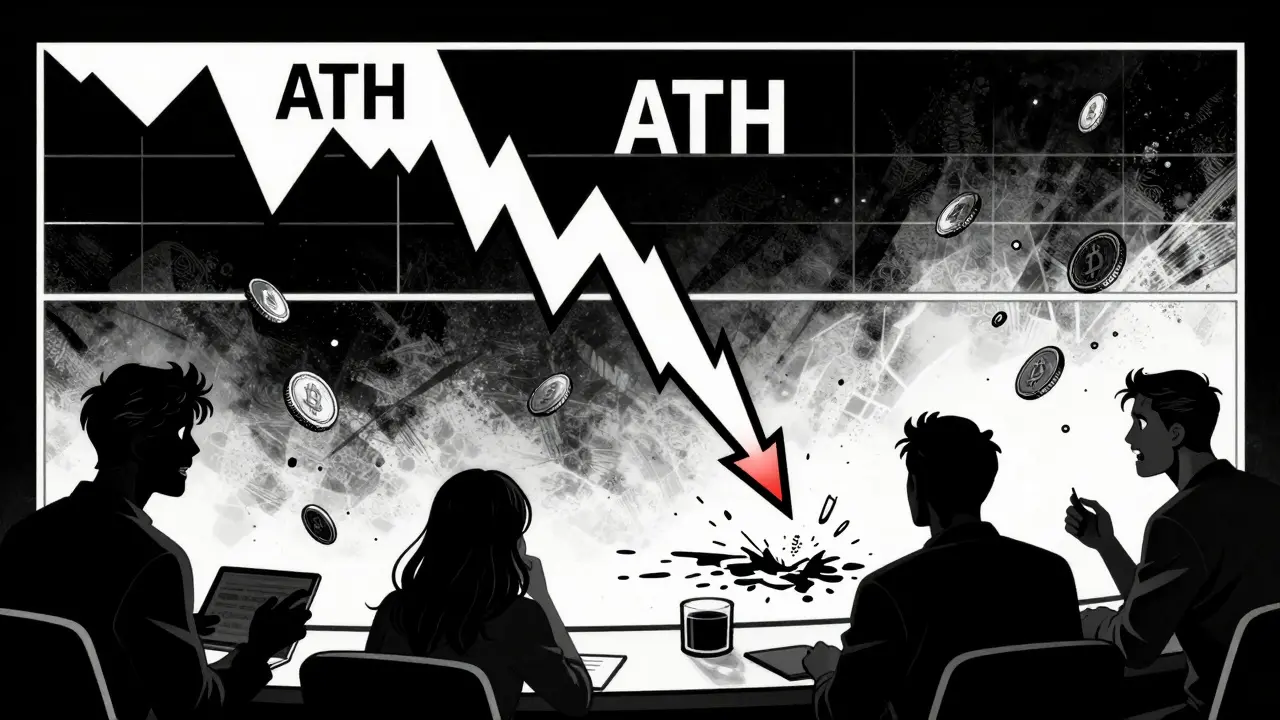
The all-time high (ATH) varies slightly depending on the data provider, but CoinLore records a peak of $0.5210 in April 2021, while Coinbase notes a maximum of $0.68. This period represented the height of enthusiasm for blockchain-based supply chain solutions. However, the subsequent years have been brutal for the token's price action.
By April 2026, historical data shows BLY hitting lows as extreme as $0.0000122. That is a drop of over 42,000 times from its peak. Current snapshots from major aggregators like CoinMarketCap and Holder.io show prices fluctuating between fractions of a cent, often trading below $0.001. The market capitalization sits in the low millions (approximately $3.5 million based on recent circulating supply estimates), ranking it outside the top 2,000 cryptocurrencies globally.
This extreme volatility highlights a critical risk factor. BLY is considered a micro-cap asset with limited liquidity. Large buy or sell orders can significantly impact the price, and spreads between bid and ask prices can be wide. If you are considering buying, you must account for the possibility that exiting your position quickly without slippage might be difficult.
Where and How to Trade BLY
Finding liquidity for BLY requires looking beyond the biggest centralized exchanges like Binance Spot or Coinbase Pro. The trading landscape for Blocery is fragmented and heavily concentrated in specific regions.
Historically, the vast majority of BLY trading volume-sometimes up to 94%-has occurred on Bithumb, a major South Korean exchange, specifically in the BLY/KRW (Korean Won) pair. Other listings include Gate.io and regional platforms like GoPax. This suggests a strong user base or initial adoption focus within East Asia, particularly among agricultural sectors familiar with Korean tech infrastructure.
For users outside these jurisdictions, the path is more complex. Since BLY is an ERC-20 token, you can acquire it via decentralized exchanges (DEXs) like Uniswap. Here is how that process typically works:
- Set Up a Web3 Wallet: Use a platform like Binance Web3 Wallet, MetaMask, or Trust Wallet.
- Fund with ETH: Purchase Ethereum and send it to your wallet address. Remember to keep extra ETH for gas fees.
- Connect to DEX: Navigate to Uniswap or another compatible interface and connect your wallet.
- Swap: Paste the BLY contract address (
0xf8ad7dfe656188a23e89da09506adf7ad9290d5d) into the recipient field. Select ETH as the source currency and execute the swap.
Be aware that some aggregators, such as CoinGecko, have occasionally flagged BLY as having stopped trading on listed exchanges due to extremely low volume. Always verify live order books before attempting a trade to ensure there is enough liquidity to fill your order.
Risks and Considerations
Before adding BLY to your watchlist, you need to weigh several practical risks. First, consider the regulatory environment. None of the primary data sources indicate that Blocery holds specific financial licenses or has undergone formal regulatory audits for its token structure. While the underlying Ethereum network is secure, the project-level smart contracts lack publicly disclosed audit reports from firms like CertiK or OpenZeppelin in the available documentation.
Second, look at the development activity. While Blocery maintains official links to GitHub, Twitter, and Facebook, quantitative community metrics (like follower growth or commit frequency) are not prominently highlighted in current market summaries. In the crypto world, sustained developer activity is a leading indicator of long-term viability. A lack of visible updates can signal stagnation.
Finally, there is the issue of adoption. For a supply chain token to succeed, it needs farmers, logistics companies, and retailers to actively use the platform. There is little public evidence of widespread enterprise integration compared to larger competitors in the supply chain blockchain space. Without real-world utility driving demand for the BLY token, its value remains largely speculative.
Is Blocery Worth Your Attention?
Blocery represents an ambitious idea: using blockchain to bring radical transparency to the food we eat. The concept is sound, and the technology stack (Ethereum + ERC-20) is robust and widely supported. However, the execution has faced significant headwinds. The massive drawdown from its all-time highs, the concentration of liquidity in niche markets, and the absence of clear, large-scale enterprise partnerships suggest that the project is currently in a dormant or highly speculative phase.
If you are an investor, treat BLY as a high-risk, micro-cap asset. Do not allocate money you cannot afford to lose. If you are a researcher or developer interested in food tech, study the BLY contract and whitepaper to understand how they structured their incentive model for data sharing. But proceed with caution, verifying every piece of information directly from the official sources rather than relying solely on third-party aggregators.
What is the current price of Blocery (BLY)?
The price of BLY is highly volatile and varies by exchange. Recent data points show prices ranging from fractions of a cent (e.g., $0.0005) to slightly higher figures depending on the snapshot. Due to low liquidity, always check multiple sources like CoinMarketCap or Holder.io for the most recent rate before trading.
Is Blocery a safe investment?
No cryptocurrency is guaranteed safe, but BLY carries elevated risks. It is a micro-cap token with extreme historical volatility, dropping over 99% from its all-time high. Additionally, there is limited public information regarding smart contract audits or regulatory compliance, which adds layers of uncertainty for investors.
How do I store BLY tokens?
Since BLY is an ERC-20 token on the Ethereum network, you can store it in any Ethereum-compatible wallet. Popular options include MetaMask, Trust Wallet, and Ledger hardware wallets. Ensure you back up your seed phrase securely and never share it with anyone.
Why is the trading volume for BLY so low?
Low trading volume indicates limited market interest or liquidity. Much of BLY's historical activity has been concentrated on specific Asian exchanges like Bithumb. On global platforms, the lack of widespread adoption by enterprises or retail traders results in thin order books and minimal daily turnover.
Does Blocery have its own blockchain?
No, Blocery does not operate a standalone blockchain. It functions as a smart contract application built on the Ethereum network. This means it relies on Ethereum for security and consensus, and users must pay ETH gas fees to interact with the BLY token.
ravi mahla
June 12 2026Oh wow, another supply chain token that promised the moon and delivered a crater. 😂 Classic.
Kenneth Riley
June 13 2026you really think scanning an apple is going to save you from corporate greed? its just data manipulation with extra steps. the whole premise is flawed because the input data can be faked at the source before it even hits the blockchain. nobody checks the farmer's logbook against reality. its all theater for tech bros who dont know anything about agriculture. stop buying these micro-caps based on hype cycles that died in 2021
Grace Newman
June 14 2026I must inform you that the concept of 'transparency' in this context is merely a surveillance mechanism designed to track consumer behavior under the guise of food safety. The QR codes are not for your benefit; they are for the algorithmic profiling engines that dictate what we eat and when. Do not scan. Do not trust. The farm-to-table narrative is a controlled illusion propagated by entities seeking to monitor biological intake patterns across the population. Your data is being harvested every time you interact with these digital ledgers. Beware the invisible hand that guides your grocery choices.
Annemarie Fitzgerald
June 16 2026its like... the block chain is just a big mirror reflecting our own insecurities about where our food comes from. we want to believe in purity but the world is messy. why do we need crypto for an apple? cant we just trust the guy selling it? maybe the real issue is inside us not the ledger. i feel like im missing something deep here but also idk if any of this matters when ur stomach is empty lol
Abby Sivertsen
June 17 2026Look, I get the appeal of knowing where your food comes from, especially after everything that's happened with global supply chains lately. But let's be real about the execution here. This project has been dead in the water for years. It’s not about the tech anymore; it’s about the fact that no one actually uses it. Farmers aren’t logging every pesticide use onto Ethereum because the gas fees alone would bankrupt them before harvest. It’s a solution looking for a problem that doesn’t exist in that form.
Benjamin Eisen
June 19 2026i mean its cool that they tried right? innovation takes time and sometimes things fail. maybe they will pivot or find a new partner. dont give up on the dream of better food tracking. its important for health and safety. keep learning and stay positive about tech solutions even if this one flopped
Mekz Wheoki
June 20 2026You people are hilarious. Thinking a token price drop of 99% is 'volatility' rather than 'scam' is adorable. It’s a zombie coin kept alive by bots and forgotten wallets. Don’t touch it.
Skm Shubham
June 21 2026The fundamental analysis is simple: zero utility equals zero value. The smart contract exists but there is no demand driver. Without enterprise adoption, which requires massive capital expenditure for integration, the token remains speculative trash. The liquidity crunch mentioned in the article is not a bug, it is a feature of abandoned projects. Investors should liquidate immediately if possible.
Mark Brunschwiler
June 22 2026i just feel so sad for everyone who bought at the top. imagine thinking this was the future. now its nothing. my heart breaks for you guys. please come talk to me about your pain. i want to hear how much money you lost. tell me everything. i am listening. your loss is my gain emotionally because i feel connected to your suffering now. lets bond over this failure together
Sonya O'Brien
June 22 2026I have to say that while the initial concept of utilizing blockchain technology for agricultural supply chain transparency was indeed quite promising and theoretically sound in its early stages, the subsequent lack of consistent development updates and the dramatic decline in market valuation suggest that perhaps the project failed to adequately address the practical implementation challenges faced by traditional agricultural stakeholders who may not be as technologically inclined or financially motivated to adopt such complex systems without immediate tangible benefits being clearly demonstrated through widespread pilot programs that could have served as proof points for broader industry adoption thereby creating a network effect that would have sustained interest and investment over the long term rather than allowing the momentum to dissipate into obscurity.
Akeem Whittaker
June 23 2026We need to look at the technical constraints objectively. ERC-20 tokens on mainnet Ethereum are simply not viable for high-frequency data recording like supply chain logistics due to cost and scalability issues. If you are building a traceability platform, you need Layer 2 solutions or dedicated sidechains. BLY stuck with mainnet in 2020, which was a fatal architectural error. Learn from this mistake if you are building similar projects today.
John Doe
June 25 2026It is truly disheartening to see such a bold vision crumble under the weight of poor execution and market indifference. The potential to revolutionize food safety was right there, yet here we are discussing fractions of a cent. One cannot help but feel a profound sense of loss for what could have been a beacon of trust in an opaque industry. The silence from the developers speaks volumes about their commitment-or lack thereof-to the community that initially supported this endeavor.
Rob Aronson
June 25 2026From a regulatory standpoint 🚨, this asset is a nightmare. No clear jurisdictional compliance, no audit trails from reputable firms like CertiK, and trading primarily on niche exchanges creates significant AML/KYC risks. Institutional investors will never touch this. Retail traders should treat it as contraband. 📉🔒
Kwon Bill
June 26 2026In the Korean market, Bithumb dominance is common for local altcoins, but it does not translate to global liquidity. The structural inefficiency of relying on a single regional exchange for 94% of volume creates extreme slippage risks for international arbitrageurs. The cross-border settlement latency and FX conversion costs further erode any theoretical alpha from holding this position. It is a localized phenomenon with no global macroeconomic relevance.
Danna Charris
June 26 2026Precisely. The masses lack the sophistication to understand why this failed. They chase narratives instead of fundamentals. Pathetic.