
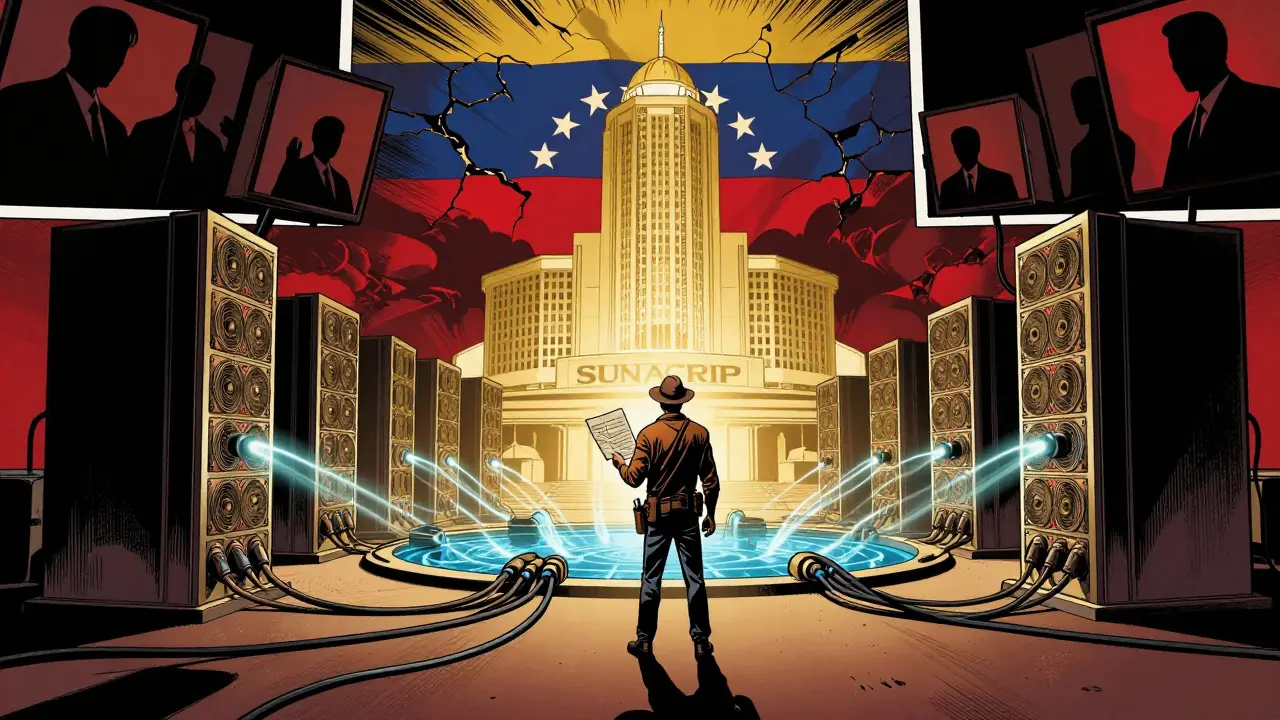
If you're thinking about mining cryptocurrency in Venezuela, you're not just setting up hardware-you're walking into one of the most tightly controlled systems on the planet. Unlike anywhere else, the Venezuelan government doesn't just regulate mining; it owns the entire process. To mine legally, you must join a state-run pool, submit years of paperwork, and accept that your earnings can be frozen without warning. This isn't a suggestion. It's the law. And if you ignore it, your equipment gets seized, your accounts get locked, and you face legal action.
How Venezuela Controls Every Bit of Mining
The entire system is built around SUNACRIP-the National Superintendency of Crypto Assets and Related Activities. Created in 2018 and reorganized in March 2024 after a corruption scandal shut it down in 2023, SUNACRIP is the only body that can legally approve mining operations. There’s no gray area. If you’re mining without their license, you’re breaking the law.
The core of their control? The National Digital Mining Pool. This isn’t just a recommendation. It’s mandatory. Every miner, whether running a single ASIC or a 10-megawatt data center, must connect to this government-operated system. All mining rewards-Bitcoin, Ethereum, or whatever else you’re mining-flow through this pool. The government sees every hash rate, tracks every miner’s contribution, and decides when and how much you get paid.
That means if SUNACRIP decides to delay payments, they can. If they suspect fraud, they freeze your earnings. No appeal. No transparency. And if you try to mine outside the pool? You’re risking equipment confiscation, fines, or worse.
The Licensing Process: More Than Just an Application
You can’t just walk into SUNACRIP with a rig and ask for a license. The process takes 3 to 6 months, and you need more than technical specs-you need a legal business entity registered with Venezuela’s commercial authorities. That’s step one. Step two? You submit a detailed business plan, including:
- Exact models and quantities of mining equipment
- Power consumption estimates
- Location of mining facilities
- Financial projections for the next 12 months
Equipment imports? They’re monitored directly by Venezuelan customs. No one can bring in mining hardware without prior approval. And even if you get approved, you’re not done. You must enroll in the Integral Miners Registry (RIM). This is your official ID in Venezuela’s crypto system. Without it, you can’t legally mine.
And here’s the kicker: you must keep every record of your mining activity for 10 years. Every power bill, every hash rate report, every payout received. This isn’t optional. It’s a legal requirement. Most small miners don’t realize how heavy this burden is. Tracking that much data for a decade means investing in secure digital archives, backup systems, and trained personnel.
Taxes: It’s Not Just One Tax
Venezuela doesn’t have a single crypto tax law. Instead, they layer taxes on top of existing rules. The Large Financial Transactions Tax (IGTF) hits you at up to 20% if you sell Bitcoin for dollars or even stablecoins-not bolivars, not Petro. That’s a huge hit if you’re trying to cash out.
Then there’s the Income Tax (ISLR). Mining profits are treated as income. So if you mine $5,000 worth of Bitcoin in a month, that’s taxable income. SENIAT, Venezuela’s tax agency, is getting smarter. By 2025, they plan to use blockchain analysis tools and data from exchanges to find unreported miners. They’re not just watching bank accounts-they’re tracking on-chain activity.
And if you use crypto to pay for services? The Value-Added Tax (VAT) at 16% might apply to exchange fees. It doesn’t touch the crypto trade itself, but if you’re using a local exchange to convert Bitcoin to bolivars, they’ll charge you.
There’s no clear tax code. No published rate schedule. You’re left guessing what you owe-until SENIAT shows up.
The Reality of Operating in Venezuela
On paper, Venezuela wants to be a crypto mining hub. Low electricity prices. Government backing. A legal framework. But reality is different.
Electricity cuts are common. Even with state subsidies, blackouts happen daily. Mining rigs shut down. Hash rates drop. Profits vanish.
Then there’s the trust issue. SUNACRIP was suspended in 2023 after a $3 million corruption scandal. The head of the crypto ministry was arrested. The agency was restructured. And yet, the rules didn’t change. Miners still have to comply. But who’s actually enforcing them? No one knows.
Reddit threads from Venezuelan miners tell the real story: payments are delayed for months. Some report getting nothing for over a year. Others say their equipment was seized after a routine inspection. The government doesn’t publish payment schedules. There’s no customer service line. No email support. Just silence.
And international miners? They’re staying away. Why risk your hardware in a country where the government can take it, freeze your earnings, and change the rules tomorrow?
Who Can Even Do This?
Let’s be clear: this system doesn’t work for individuals. It’s built for corporations with legal teams, accounting departments, and connections inside Venezuela’s bureaucracy.
If you’re a solo miner with a few Antminers in your garage? You can’t legally operate. You’d need to register a company, hire staff, pay for legal advice, and spend months waiting for approval. And even then, you’re at the mercy of a government that has a history of breaking its own rules.
Even manufacturers of mining hardware need special licenses. Importing a single rack of ASICs? You need approval from SUNACRIP, customs, and the Ministry of Mining. It’s not just slow-it’s designed to discourage.
What Happens If You Don’t Comply?
Non-compliance isn’t a fine. It’s a risk to your freedom and assets.
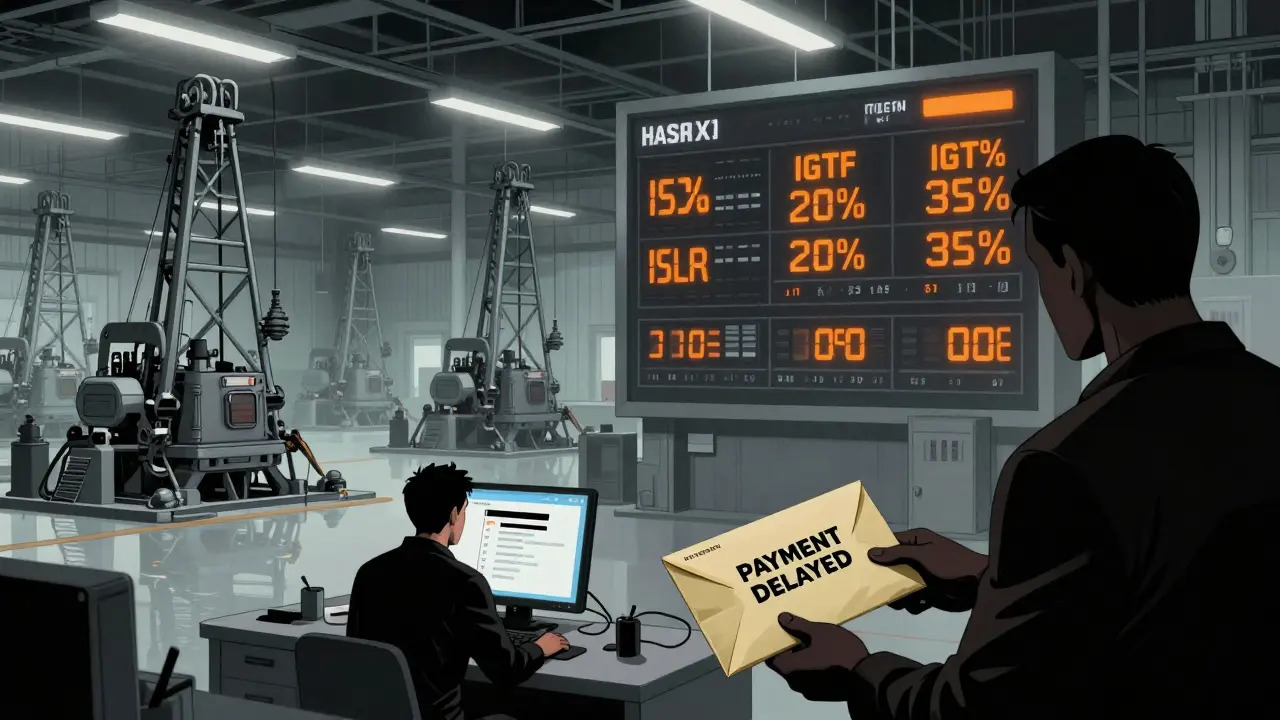
- Equipment gets confiscated without notice
- Bank accounts linked to mining income get frozen
- Legal action can lead to criminal charges
- Your name gets added to a government blacklist
There’s no warning. No appeal process. One day you’re mining. The next, your rigs are gone. And you have no way to prove you were operating legally because you didn’t have a license.
Some miners try to hide. They use offshore accounts. They mine under fake names. But with SENIAT’s new blockchain tracking tools, that’s becoming harder. They’re not just looking at banks-they’re looking at wallets.
The Bigger Picture: Why This System Exists
Venezuela’s hyperinflation destroyed the bolivar. In 2019, inflation hit over 1,000,000%. People turned to Bitcoin and Ethereum to survive. The government saw an opportunity: control the crypto flow, tax it, and use it to fund state projects.
They didn’t want to embrace decentralization. They wanted to replace the bolivar with something they could control. That’s why the Petro cryptocurrency failed-it was seen as a scam. But mining? That’s real. That’s energy. That’s value.
So they created a system that takes control. Every hash. Every payout. Every dollar. It’s not about innovation. It’s about extraction.
And now, with political instability still high after the July 2024 elections, the whole system hangs by a thread. SUNACRIP is back on paper. But its authority? Unclear. Enforcement? Patchy. Trust? Nonexistent.
Should You Mine in Venezuela?
If you’re asking this question, the answer is probably no.
Even if you have the resources to jump through every bureaucratic hoop, you’re betting on a government that has broken every promise it made. Your profits are never yours. They’re conditional. They can vanish overnight. And you have zero legal recourse.
There are better places to mine. Places with clear rules. Stable power. Respect for property rights. Venezuela doesn’t offer any of that.
The state-licensed system isn’t a pathway to profit. It’s a trap wrapped in paperwork.
Joshua T Berglan
March 23 2026This is wild but honestly? 🤯 I love how Venezuela turned crypto into a state-controlled power move. It’s like they said, 'You want Bitcoin? Fine. But we’re the ones holding the keys.' 🔑⚡
Kevin Da silva
March 25 2026The government owns the hash rate. That’s not regulation. That’s nationalization. And it’s terrifyingly efficient.
Kayla Thompson
March 25 2026Let me guess - this is just another socialist fantasy where the state pretends to be innovative while stealing your profits. Classic. No wonder miners are fleeing.
Kevion Daley
March 26 2026Honestly? This system is a masterpiece of control. Not because it works - but because it *looks* like it works. The bureaucracy alone is a deterrent. Genius in the most dystopian way.
Jackie Crusenberry
March 27 2026I just don’t get why anyone would even try. It’s like trying to swim in molasses while wearing concrete shoes.
YANG YUE
March 28 2026It’s not about mining. It’s about sovereignty. Venezuela didn’t want to adopt crypto - they wanted to weaponize it. The Petro failed because it was fake. This? This is real control. Real power. Real fear.
Misty Williams
March 28 2026This is a textbook example of authoritarian overreach. No one should be forced into a state-run mining pool. This isn’t innovation - it’s extortion disguised as policy.
Anand Makawana
March 28 2026The regulatory framework, although highly centralized, demonstrates a strategic alignment with macroeconomic stabilization goals. The IGTF and ISLR integration, coupled with blockchain forensic monitoring, represents a paradigm shift in fiscal governance within emerging economies.
Mohammed Tahseen Shaikh
March 29 2026You think this is bad? Wait till you see the guys who tried to mine with solar panels and got raided because their 'green energy' wasn't approved by SUNACRIP. The state doesn't want miners - it wants slaves with ASICs.
Sarah Terry
March 30 2026It’s heartbreaking to see how much potential was crushed under bureaucracy. But if you’re serious about mining, find a way to partner with someone who’s already in the system. It’s not ideal - but it’s survivable.
Shayne Cokerdem
March 31 2026so like… the gov just steals ur bitcoin? and u cant do nothing? bro thats not a country thats a video game villain
aravindsai pandla
April 1 2026The structural integrity of this system is fascinating. While it appears oppressive, it also creates a level of traceability that could, in theory, reduce illicit activity. A double-edged sword, but one that requires deeper analysis.
namrata singh
April 1 2026I feel so sad for the miners. Imagine putting your heart into this, only to have your earnings vanish because someone in an office decided you 'looked suspicious'. No one should live like this.
Andrea Zaszczynski
April 3 2026Wait - so you can’t even buy hardware without government approval? That’s not regulation. That’s a dictatorship with a blockchain logo.
Cordany Harper
April 3 2026I’ve been to Caracas. The power outages are brutal. Mining there isn’t about profit - it’s about survival. The state’s system might be cruel, but for some, it’s the only way to keep lights on.
Andy Green
April 3 2026This is what happens when you let communists play with crypto. They don’t want decentralization - they want to be the only node. And guess who’s the validator? The same guy who’s printing money like it’s confetti.
Zion Banks
April 3 2026This isn’t a mining policy - it’s a psyop. The government knows no one will risk it. So they create the illusion of control to scare off outsiders. Meanwhile, they’re quietly hoarding the real hashes through black-market channels. Trust me - the real mining is underground.
manoj kumar
April 4 2026Why are people still surprised? Venezuela’s always been a banana republic with Bitcoin tattoos. They don’t want miners - they want hostages.
JOHN NGEH
April 5 2026I wonder how many miners are still trying. I hope they have backup plans. This isn’t just risky - it’s emotionally draining. You’re not just mining crypto. You’re mining hope.
Jenni Moss
April 7 2026You guys are overthinking it. If you’re smart, you just set up in a rural area, hide your gear, and pray the power doesn’t cut. The state can’t monitor everything. They’re too busy arguing with each other.
vu phung
April 7 2026The energy subsidies are real. The bureaucracy? A tax on patience. If you’ve got deep pockets and a legal team, you can make this work. It’s not for the little guy - but it’s not impossible.
Lorna Gornik
April 9 2026this is so wild 😳 i love how chaotic it is. like imagine your rig gets seized and you’re like ‘but i had a permit??’ 🤡
Shana Brown
April 9 2026You can do this - but you need to treat it like a military operation. Plan every step. Document everything. And always have an exit strategy. It’s not easy, but it’s possible if you’re disciplined.
Marie Mapilar
April 10 2026i just feel so bad for the people trying to do this. like… they’re not evil. they just want to make money. and the system is crushing them. 💔
Dominic Taylor
April 10 2026The integration of blockchain analytics with national tax enforcement represents an unprecedented convergence of fiscal policy and distributed ledger technology. This model may serve as a template for other states seeking sovereign control over decentralized assets.