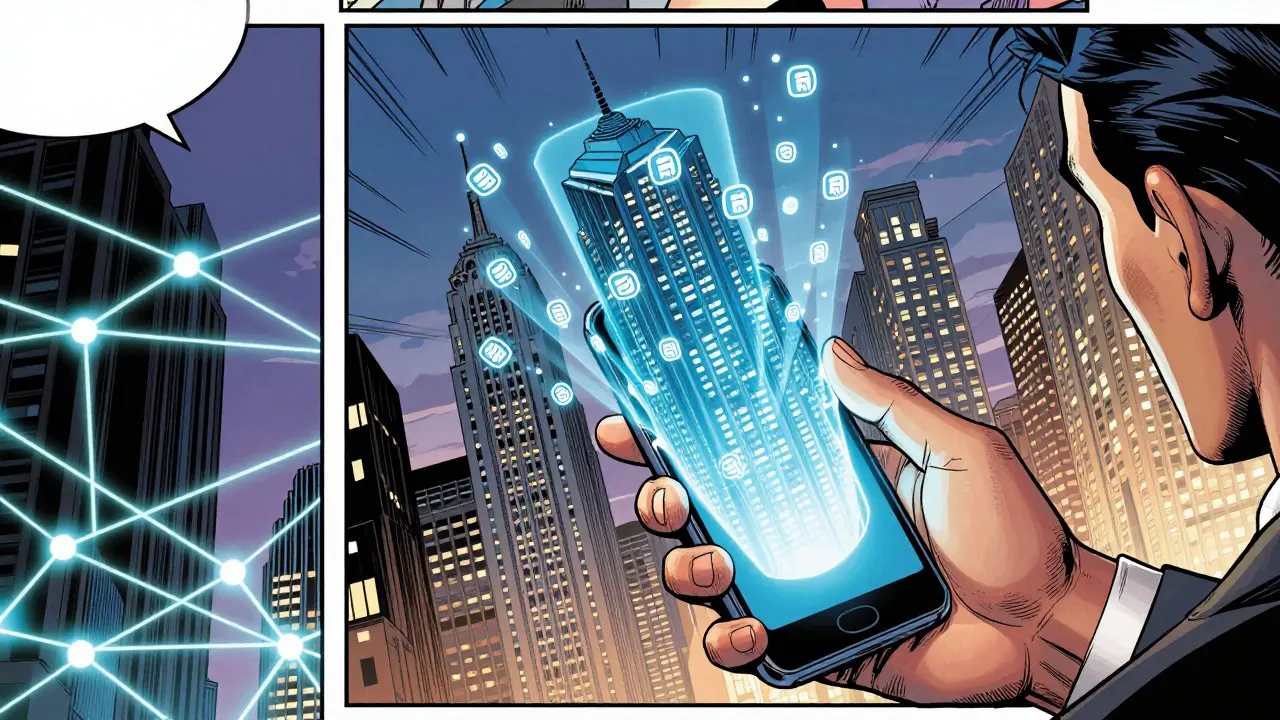
Imagine buying a slice of a Manhattan skyscraper for $100. Or trading shares in a private equity fund as easily as you swap crypto on your phone. This isn’t science fiction anymore; it’s the reality of digital asset ownership. We are witnessing a fundamental rewrite of how property rights work, moving away from dusty paper deeds and slow bank transfers to instant, programmable tokens on a blockchain.
For centuries, owning something meant holding a physical key or a signed document. Today, ownership is code. As we move through mid-2026, this shift is no longer just for tech enthusiasts. It is becoming the backbone of global finance. The question isn't if digital assets will change wealth management, but how quickly they will replace the old systems entirely.
The Rise of Tokenized Real-World Assets (RWAs)
The biggest driver behind this change is not Bitcoin speculation. It is the tokenization of real-world assets (RWAs). Think about traditional investments like real estate, bonds, or private equity. They are notoriously illiquid. You can’t sell half your house to pay a bill. But with blockchain technology, these assets can be broken down into millions of digital tokens.
This process creates fractional ownership. Platforms like the Real Estate Metaverse (REM) already allow users to buy fractions of properties starting at just $100. In return, investors receive proportional passive income distributions automatically via smart contracts. According to Boston Consulting Group's forecast from late 2024, the RWA market is projected to hit $16 trillion by 2030. Compare that to pure cryptocurrency ownership, which is expected to reach only $5.2 trillion in the same timeframe. The money is moving from speculative coins to tangible, tokenized value.
Why does this matter? Because it democratizes access. Previously, investing in top-tier private funds required minimums of $50,000 or more. Now, BlackRock plans to launch tokenized private equity funds in February 2026 with minimum investments of just $1,000. This lowers the barrier to entry for everyday investors while providing institutions with unprecedented liquidity.
Institutional Adoption: The Numbers Don't Lie
If you think crypto is still a fringe hobby, look at the institutional data. The era of skepticism is over. EY’s 2025 Institutional Investor Digital Assets Survey, which polled 352 major players, revealed that 86% of institutional investors now have exposure to digital assets or plan to allocate capital in 2025. That is a massive jump from previous years.
Private equity firms lead the charge with 92% adoption rates, followed closely by hedge funds at 89%. Even pension funds, traditionally cautious, show 67% adoption. These aren't small bets either. Nearly 60% of these institutions plan to allocate over 5% of their total assets under management (AUM) to digital assets. This represents a structural shift in how large pools of capital are managed.
| Feature | Traditional Ownership | Digital Asset Ownership |
|---|---|---|
| Settlement Time | 2-3 Business Days | 12-30 Seconds |
| Transaction Costs | $15 - $50 per trade | $0.02 - $0.15 per trade |
| Market Access | Business Hours Only | 24/7 Global Access |
| Minimum Investment | $50,000+ (Private Funds) | $100 - $1,000 (Tokenized) |
| Intermediaries | Custodians, Clearinghouses, Agents | Smart Contracts & Validators |
The efficiency gains are staggering. Settlement times drop from days to seconds. Transaction costs plummet from tens of dollars to fractions of a cent. For cross-border transactions, the World Bank reported cost reductions of 60-80% in late 2024. This speed and efficiency are why institutions are rushing to adopt these technologies.
Technical Infrastructure: Where the Magic Happens
Under the hood, this revolution runs on specific blockchain infrastructures. Ethereum remains the dominant player, handling 56.3% of tokenized asset transactions as of Q1 2025, according to Javelin Strategy. Its robust ecosystem of developers and established standards makes it the go-to choice for serious financial applications.
However, competition is heating up. Solana holds an 18.7% market share, prized for its high speed and low fees, making it ideal for high-frequency trading of tokenized assets. Polygon captures 12.1%, often serving as a bridge between Ethereum and other networks. The choice of blockchain depends on the use case: security and compliance often point to Ethereum, while speed might favor Solana.
Two technical standards are crucial here. ERC-3643 (T-ReX) is designed for institutional-grade security tokens, ensuring that only verified investors can hold certain assets. ERC-6551 allows NFTs to function as smart wallets, giving non-fungible tokens their own identity and ability to interact with other contracts. These protocols turn simple tokens into complex financial instruments.
Custody is another critical piece. Institutions don't just leave keys in a drawer. Sixty-three percent of institutional players now use Multi-Party Computation (MPC) technology for custody. MPC splits private keys into multiple parts, requiring several parties to authorize a transaction. This eliminates single points of failure. Additionally, 76% of institutions use hybrid custody models, combining self-custody for control with institutional custodians for security and insurance coverage averaging $250 million per arrangement.
Regulatory Landscape: Clarity vs. Fragmentation
Despite the technological readiness, regulation remains the biggest hurdle. Seventy-eight percent of institutional investors cite regulatory clarity as the number one catalyst needed for further growth. Currently, the landscape is fragmented. There are 47 different regulatory frameworks across major jurisdictions, creating a maze for global operators.
However, progress is accelerating. In the U.S., the GENIUS Act implemented in Q2 2024 created the first comprehensive framework for digital assets. Following this, SEC Chairman Mark Uyeda launched 'Project Crypto' in January 2025, focusing on four pillars: asset classification, tokenized securities frameworks, market structure reforms, and innovation exemptions. By October 2025, Phase 2 of Project Crypto was announced, signaling a move toward stable, predictable rules.
In Europe, the Markets in Crypto-Assets (MiCA) regulation took full effect in January 2025, providing a unified rulebook for the EU. These developments are reducing uncertainty. Yet, challenges remain. Only 37% of institutions express complete confidence in current frameworks. Issues like tax reporting complexity-which has increased 300% compared to traditional assets-and varying capital gains taxes (like India's 30%) continue to complicate things.
Challenges and Risks to Watch
Digital asset ownership isn't without its pitfalls. Security remains a primary concern. While MPC and cold storage have improved safety, the threat of hacks persists. Professor Gary Markus of NYU Stern warned that without standardized custody frameworks, systemic vulnerabilities could emerge during market stress, pointing to the $2.1 billion FTX collapse as a cautionary tale.
Implementation costs are also high. Setting up a fully compliant digital asset infrastructure takes 6-9 months and averages $2.3 million per institution. Staff training alone costs around $185,000 per organization. For smaller firms, these barriers are significant. Furthermore, cross-chain interoperability is still immature. Moving assets seamlessly between Ethereum, Solana, and other chains often requires bridges that introduce additional risk.
Another issue is the lack of recovery mechanisms. If you lose your private key, your assets are gone forever. Traditional systems have entities like the Securities Investor Protection Corporation (SIPC) to help in cases of broker failure. Digital assets currently lack this safety net, placing the burden of security squarely on the user or custodian.
What Comes Next?
Looking ahead to 2030, the trajectory is clear. Eighty-nine percent of institutional investors believe digital asset ownership will be fully integrated into mainstream finance within five years. The penetration of global financial assets held digitally is expected to rise from 3.2% today to 15-20% by 2030.
We will see more integration with Artificial Intelligence. Javelin Strategy predicts blockchain-AI integration will become a major trend, using immutable records to archive AI models and inputs for regulatory compliance. Central banks are also getting involved, with the U.S. Federal Reserve planning a pilot for a wholesale Central Bank Digital Currency (wCBDC) in Q3 2026.
For individuals, this means easier access to diverse investment portfolios. For businesses, it means faster settlements and lower costs. For regulators, it means modernizing laws to keep pace with technology. The future of ownership is digital, transparent, and borderless. The question is whether you're ready to adapt.
What is digital asset ownership?
Digital asset ownership refers to holding property rights recorded and transferred via blockchain technology and cryptographic tokens. Unlike traditional ownership relying on paper documents and intermediaries, digital ownership uses smart contracts to enforce rights, enable fractional investment, and facilitate instant settlement.
How does tokenization benefit real-world assets?
Tokenization breaks illiquid assets like real estate or private equity into tradable digital tokens. This enables fractional ownership (lowering minimum investments), provides 24/7 market access, reduces settlement times from days to seconds, and eliminates many intermediaries, significantly lowering transaction costs.
Is digital asset ownership safe for institutions?
Safety has improved significantly with institutional-grade solutions. Most institutions use Multi-Party Computation (MPC) for custody, hybrid storage models, and insured custodial services covering up to $250 million. However, risks remain regarding regulatory fragmentation, potential smart contract bugs, and the lack of consumer protection nets like SIPC.
What are the main regulatory developments in 2025-2026?
Key developments include the U.S. GENIUS Act (Q2 2024), the EU's MiCA regulation (fully effective Jan 2025), and the SEC's 'Project Crypto' initiatives led by Chairman Mark Uyeda. These frameworks aim to clarify asset classifications, establish tokenized securities rules, and create innovation pathways, though global regulatory consistency remains a challenge.
Which blockchains dominate tokenized assets?
Ethereum leads with 56.3% of tokenized asset transactions due to its mature ecosystem and security standards like ERC-3643. Solana (18.7%) and Polygon (12.1%) are gaining traction for their speed and lower costs, appealing to high-volume trading and specific enterprise use cases.
What is the projected market size for tokenized assets?
Boston Consulting Group projects the tokenized real-world asset (RWA) market to reach $16 trillion by 2030. This significantly outpaces pure cryptocurrency ownership, which is forecasted to reach $5.2 trillion in the same period, indicating a strong shift toward tangible, utility-driven digital assets.
How much does it cost for institutions to implement digital asset infrastructure?
Implementation is costly and time-intensive. Average setup costs range from $2.3 million per institution, including 6-9 months of deployment. Additional expenses include $185,000 for staff training and approximately $280,000 annually for regulatory technology (regtech) platforms to automate compliance.
Will digital assets replace traditional finance by 2030?
While not a complete replacement, digital assets are expected to integrate deeply. 89% of institutional investors predict full integration into mainstream finance by 2030. Penetration is estimated to grow from 3.2% to 15-20% of global financial assets, fundamentally altering wealth management, settlement, and ownership structures.