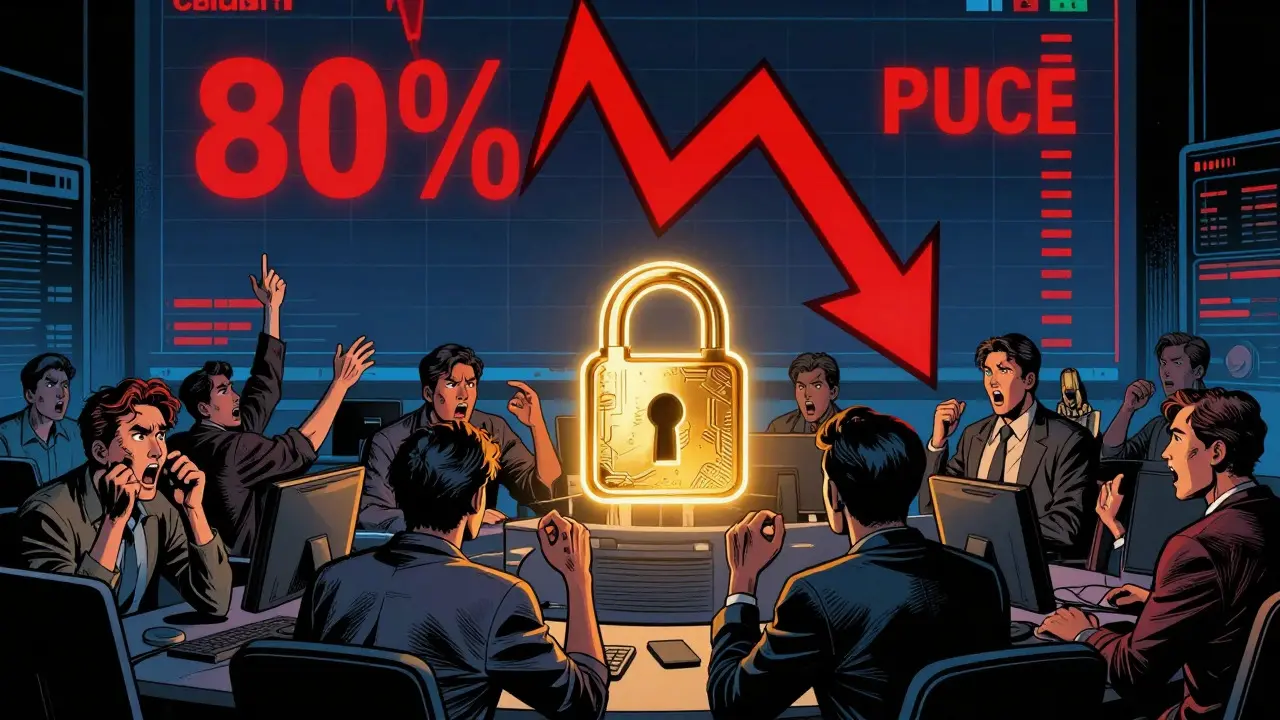
Imagine launching a new cryptocurrency project. You’ve raised millions from investors, assembled a top-tier team, and built a promising product. But within weeks of the token going live, the price crashes by 80%. Why? Because early investors and team members dumped their entire holdings at once. This scenario is all too common in crypto, but it doesn’t have to be. The solution lies in smart contract vesting, which is a blockchain-based mechanism that locks tokens and releases them gradually over time according to predefined rules. By automating this process, projects can prevent sudden sell-offs, align incentives with long-term growth, and build trust with the community.
What Is Smart Contract Vesting?
At its core, vesting is about patience. In traditional finance, employee stock options often vest over four years, ensuring staff stay committed to the company’s success. Crypto works similarly. When you implement smart contract vesting, you are essentially creating a digital escrow service that holds tokens until specific conditions are met-usually the passage of time or the achievement of certain milestones.
Unlike manual processes where a trusted third party might release funds, these contracts run on the blockchain. They are self-executing, transparent, and tamper-proof. Once deployed, no one-not even the project founders-can change the terms unless those changes were explicitly coded into the contract. This immutability is what gives investors confidence that the team won’t bail out early.
Two Main Architectural Approaches
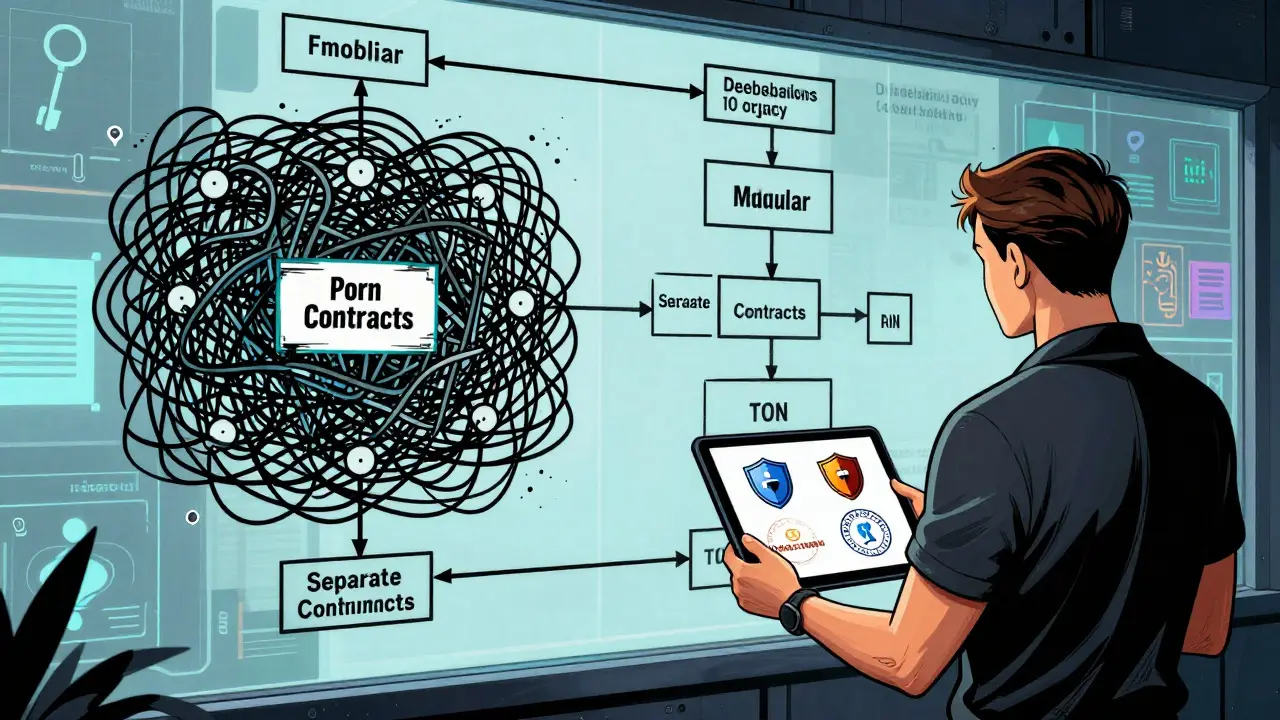
When building a vesting system, developers generally choose between two paths. The first approach embeds the vesting logic directly into the token’s own smart contract. This keeps everything in one place, simplifying the codebase but potentially bloating the main token contract with complex distribution rules.
The second approach uses a separate vesting contract. This is the method favored by many large-scale projects because it offers greater flexibility. For example, the TON blockchain (Tokamak Network) employs a sophisticated division system. Instead of locking raw TON tokens, they issue specialized share tokens like SeedTON, PrivateTON, and StrategicTON. These shares represent claims on the underlying asset and have unique pricing and payout schedules. Later, users exchange these shares for actual TON through a dedicated "Swapper" contract, burning the shares in the process. This separation allows for nuanced control over different investor classes without cluttering the main token logic.
Key Parameters for Implementation
To make a vesting contract work, you need to define several critical parameters. These values are immutable once set, so getting them right during development is crucial. Here are the standard components:
- Vesting Total Amount: The total number of tokens locked. On networks like TON, this is often measured in nanotons for precision (e.g., 500 TON).
- Vesting Start Time: A Unix timestamp indicating when the clock begins ticking.
- Total Duration: How long the entire vesting period lasts. For instance, 31,104,000 seconds equals exactly one year.
- Unlock Period: The interval between each release. Monthly unlocks would use a value of 2,592,000 seconds.
- Cliff Duration: An initial lock-up period where zero tokens are released. A two-month cliff would be 5,184,000 seconds.
- Sender and Owner Addresses: The authorized wallet managing the contract and the beneficiary receiving the tokens.
Mathematical constraints ensure the contract functions correctly. For example, the total duration must be divisible by the unlock period, and the cliff cannot exceed the total duration. These checks prevent logical errors that could trap funds forever.

Custom Development vs. Standard Solutions
You might wonder whether to build your own vesting contract or use an existing template. Custom development offers complete control. If your project has unique tokenomics-such as milestone-based unlocks tied to real-world achievements or varying release rates-you’ll likely need a bespoke solution. It also eliminates dependency on third-party platforms, giving you full ownership of the code.
However, custom comes with costs. Security audits are non-negotiable. Firms like ConsenSys Diligence, Trail of Bits, or OpenZeppelin typically charge between $15,000 and $50,000 per audit. Since vesting contracts hold significant value, skipping this step is risky. Additionally, custom development requires skilled engineers who understand Solidity, Vyper, or other blockchain languages, adding to time and resource investments.
On the flip side, using established libraries or services provided by companies like Nadcab Labs or DeFi Prime can speed up deployment. These providers offer pre-audited templates with customizable schedules, reducing upfront costs while maintaining security standards.
| Feature | Embedded Logic | Separate Contract (e.g., TON Model) | Third-Party Service |
|---|---|---|---|
| Complexity | High (bloated token contract) | Medium (modular design) | Low (plug-and-play) |
| Flexibility | Low (hard to update) | High (swappable mechanisms) | Medium (limited by provider) |
| Cost | Moderate (one-time audit) | High (multiple contracts to audit) | Variable (subscription or fee) |
| Control | Full | Full | Limited (dependency risk) |
Security Risks and Mitigation
Security is paramount. A vesting contract holding millions of dollars is a prime target for hackers. Common vulnerabilities include reentrancy attacks, integer overflows, and improper access controls. To mitigate these risks, follow best practices:
- Use Multi-Signature Wallets: Require multiple keys to authorize administrative actions, preventing single-point failures.
- Implement Emergency Pauses: Allow trusted parties to halt distributions if a bug is discovered, though this should be used sparingly to maintain trust.
- Test Extensively: Run simulations on testnets before deploying to mainnet. Tools like Hardhat or Foundry can help identify edge cases.
- Audit Regularly: If you update the contract, get it re-audited. Code changes can introduce new vulnerabilities.
Time-lock mechanisms add another layer of safety by delaying any parameter changes, giving users time to react if something looks suspicious.
Gas Costs and Distribution Mechanics
Don’t overlook gas fees. On Ethereum, sending individual transactions to hundreds of beneficiaries can cost thousands of dollars. Consider using batch distribution systems or migrating to Layer 2 solutions like Polygon, Arbitrum, or Optimism, where fees are significantly lower. Some projects opt for "pull" mechanisms, where users claim their tokens manually rather than having them pushed automatically. This shifts the gas cost to the recipient but reduces the burden on the project treasury.
Future Trends in Vesting
The landscape is evolving. Cross-chain vesting is emerging, allowing tokens to be distributed across multiple blockchains simultaneously. DAO governance integration lets communities vote on minor adjustments to vesting parameters, balancing flexibility with security. Regulatory compliance is also becoming more important; features like investor accreditation verification may soon be standard to meet frameworks like the EU’s MiCA regulation.
Conclusion
Implementing smart contract vesting is not just a technical task-it’s a strategic decision that impacts your project’s credibility and longevity. Whether you choose a custom-built solution or a modular approach like TON’s, prioritize security, clarity, and user experience. Done right, vesting becomes a powerful tool for building sustainable ecosystems.
What is the difference between a cliff and a vesting period?
A cliff is an initial lock-up period where no tokens are released. For example, if you have a 6-month cliff, you receive nothing for the first six months. After the cliff ends, the regular vesting period begins, releasing tokens incrementally (e.g., monthly) until the total amount is fully distributed.
How much does a smart contract audit cost?
Audits from reputable firms like OpenZeppelin or Trail of Bits typically range from $15,000 to $50,000 depending on the complexity of the code. Simpler contracts may cost less, while highly complex systems with multiple interacting contracts can exceed this range.
Can I change the vesting schedule after deployment?
Generally, no. Most vesting contracts are designed to be immutable to ensure trust. However, some advanced implementations include upgradeable proxies or multi-sig governance structures that allow limited changes under strict conditions, such as community votes or emergency pauses.
Why do projects use separate vesting contracts instead of embedding logic in the token?
Separate contracts offer modularity and flexibility. They keep the main token contract lightweight and allow for complex distribution schemes (like TON’s share tokens) without complicating the core token functionality. It also makes auditing easier since the vesting logic is isolated.
Is it better to push tokens to users or let them pull?
It depends on gas costs and user experience. Pushing tokens automatically is convenient for users but expensive for the project due to transaction fees. Pulling tokens saves the project money but requires users to interact with the contract themselves, which may lead to lower participation if not communicated well.