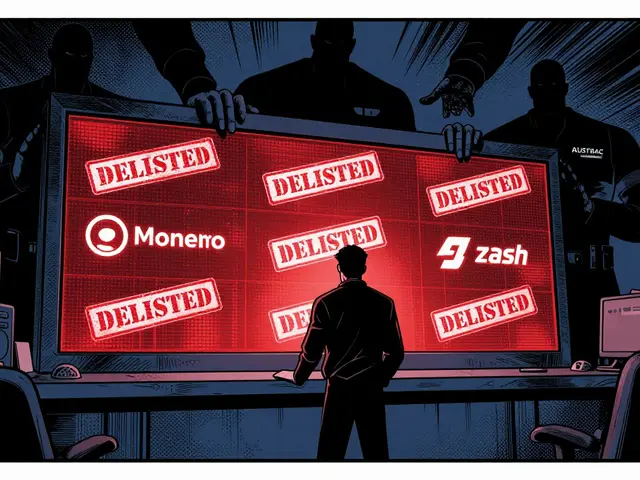
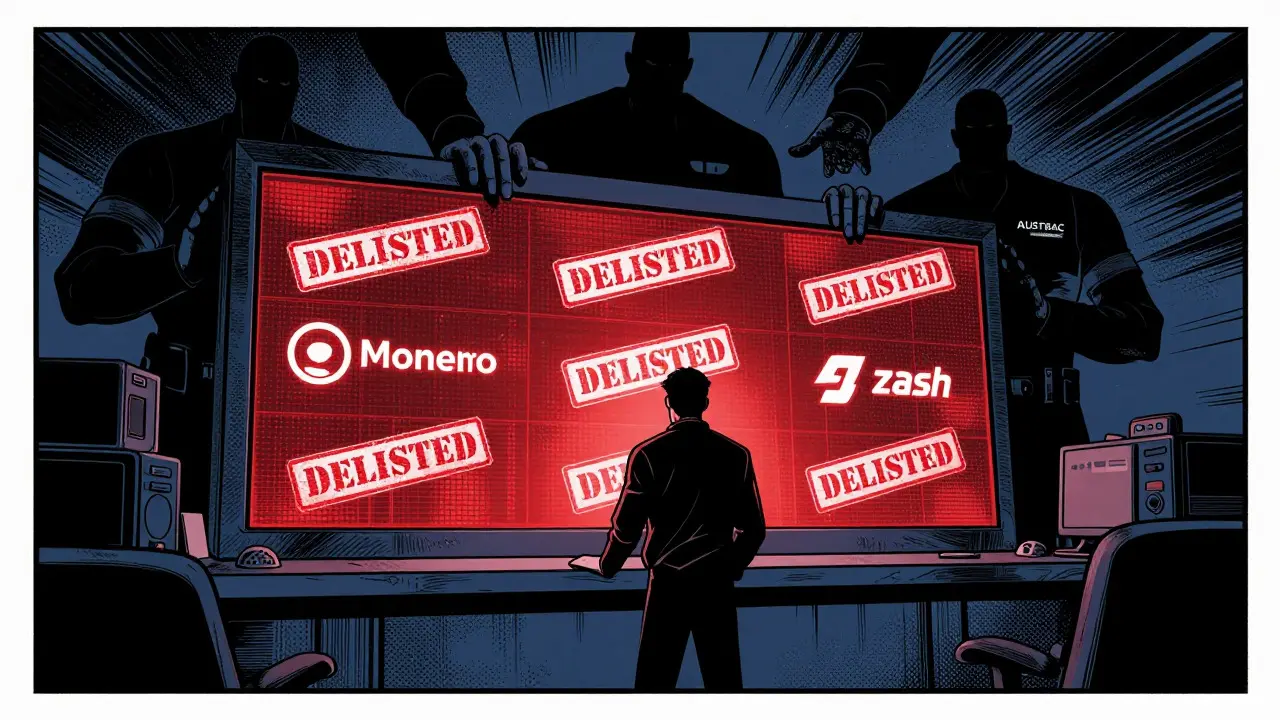
You can still legally own Monero, a popular privacy coin that uses ring signatures to hide transaction details in your wallet right now. But if you’re trying to buy or sell it on a major Australian exchange like CoinSpot, Swyftx, or Binance Australia, you’ll likely hit a wall. This isn’t a sudden government decree banning the technology itself; it’s a quiet, comprehensive squeeze driven by regulatory pressure that has effectively removed privacy coins from mainstream trading platforms across the country.
By mid-2026, the landscape for digital assets in Australia has shifted dramatically. While individual ownership remains legal, the ability to trade these assets through regulated channels has evaporated. This guide breaks down exactly why this happened, which coins are affected, and what options remain for traders who value financial privacy.
The Regulatory Squeeze: ASIC and AUSTRAC
To understand why privacy coins vanished from Australian exchanges, you need to look at the two main regulators pulling the strings: the Australian Securities and Investments Commission (ASIC) and the Australian Transaction Reports and Analysis Centre (AUSTRAC). Neither agency issued a single press release saying "No more privacy coins." Instead, they tightened the noose through Anti-Money Laundering and Counter-Terrorism Financing (AML/CTF) obligations.
AUSTRAC oversees Digital Currency Exchange (DCE) providers under the AML/CTF Act 2006. Their job is to ensure that money moving through crypto exchanges can be traced. For standard cryptocurrencies like Bitcoin or Ethereum, this is manageable. Transactions are public, and while addresses aren't directly tied to names initially, blockchain analysis firms can often link them to identities over time. Privacy coins break this chain entirely.
Coins like Zcash use zero-knowledge proofs to verify transactions without revealing amounts or parties involved. Dash offers optional private sending features. These technologies create an "insurmountable" compliance challenge for exchanges. If an exchange cannot prove where the money came from or where it’s going, they risk losing their license. With AUSTRAC actively canceling registrations for non-compliance, exchanges chose self-preservation over listing high-risk assets.
Furthermore, starting March 31, 2026, AUSTRAC’s regulatory scope expanded to cover all digital asset service providers, not just traditional exchanges. This formalized the informal restrictions already in place, making it nearly impossible for new entrants to offer privacy coin trading without facing immediate scrutiny.
Which Coins Are Affected?
Not every cryptocurrency with a "private" marketing angle is banned. The restrictions specifically target coins with built-in, mandatory, or highly effective obfuscation protocols. Here are the primary entities impacted:
- Monero (XMR): The most prominent privacy coin. Its default mode of operation hides sender, receiver, and amount. Almost all major Australian DCEs have delisted XMR.
- Zcash (ZEC): Offers "shielded" transactions. Even though it has transparent modes, the existence of shielded pools makes compliance too risky for many exchanges.
- Dash (DASH): Known for its PrivateSend feature. While not always fully private, the feature creates enough ambiguity to trigger delistings.
- Horizen (ZEN): Similar to Zcash, utilizing zk-SNARKs for privacy. Often grouped with ZEC in delisting notices.
It is crucial to distinguish these from "privacy-enhanced" tokens that may simply have better metadata protection but still operate on transparent ledgers. The ban targets the cryptographic anonymity itself.
Global Context: Australia Is Not Alone
If you think this is unique to Australia, take a look at the global map. In 2025, 73 exchanges worldwide delisted privacy coins, a 43% increase from 2023. Australia’s approach mirrors trends in other developed economies.
| Jurisdiction | Status of Privacy Coins | Key Regulator/Action |
|---|---|---|
| Japan | Banned (2018) | Financial Services Agency (FSA) guidance led to total delisting on registered exchanges. |
| South Korea | Delisted (Q1 2025) | Top exchanges like Upbit and Bithumb removed listings voluntarily due to regulatory pressure. |
| European Union | Ban Effective July 2027 | New Anti-Money Laundering Regulation prohibits anonymous accounts and privacy coins. |
| Australia | De Facto Ban on Exchanges | AUSTRAC enforcement and ASIC scrutiny force exchanges to delist to maintain licenses. |
| Switzerland/Liechtenstein | Limited Availability | Some exchanges offer access under strict KYC/AML frameworks, but availability is shrinking. |
Major global players like Binance delisted XMR, ZEC, and DASH from European and US platforms in February 2025, impacting roughly $600 million in trading volume. Kraken followed suit in Canada in March 2025. When the giants leave, local Australian exchanges follow quickly to avoid being seen as outliers attracting illicit funds.
How Do Australians Buy Privacy Coins Now?
Since the centralized exchange route is blocked, users have had to adapt. The market hasn’t disappeared; it has moved underground or to the periphery. Here are the current methods:
- Peer-to-Peer (P2P) Markets: Platforms like LocalMonero (or its successors) have seen a 19% uptick in activity globally following exchange delistings. Users find each other directly, often using escrow services. However, this carries significant counterparty risk. You’re dealing with individuals, not insured institutions.
- International Exchanges: Some traders use offshore exchanges that haven’t delisted these coins. The catch? These platforms may not comply with Australian consumer protection laws. If the exchange collapses or freezes withdrawals, you have little recourse through ASIC.
- Crypto ATMs: While AUSTRAC has tightened rules on crypto ATMs, some machines still allow cash purchases of specific coins. However, fees are exorbitant (often 10-20%), and limits are low.
- Atomic Swaps: For technically savvy users, decentralized atomic swaps allow swapping Bitcoin for Monero without a central intermediary. This requires technical knowledge and carries smart contract risks.
Each option comes with trade-offs. P2P offers accessibility but lacks security guarantees. Offshore exchanges offer liquidity but lack legal protection. Atomic swaps offer privacy but require expertise.
The Institutional Perspective: Why Banks Support the Ban
It’s easy to view this purely as a crackdown on personal freedom. However, there’s another side to the story. According to data from the Independent Digital Assets Exchange (IDAX), 78% of institutional clients in Australia actively supported the removal of privacy coins. Why?
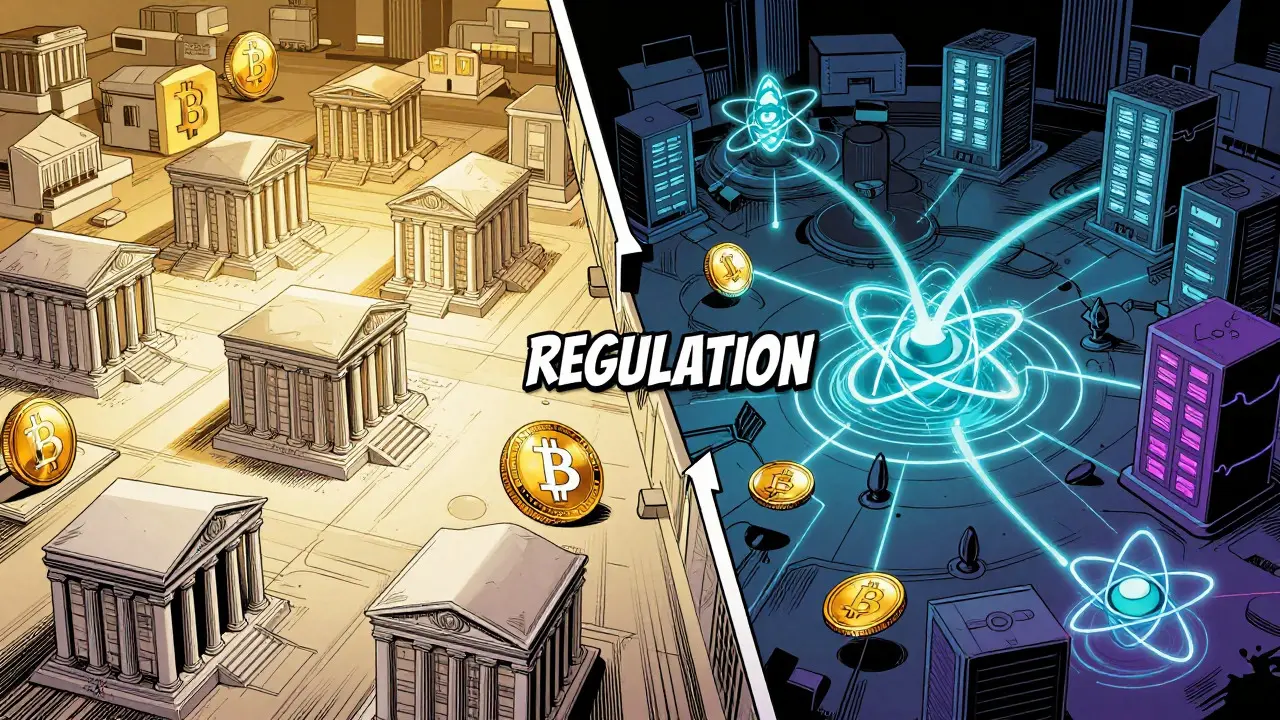
Institutional investors-pension funds, family offices, corporate treasuries-need certainty. They face their own regulatory requirements. Holding assets that are flagged as "high risk" by global banks complicates their audits and banking relationships. By removing privacy coins, exchanges make themselves safer partners for traditional finance. This has accelerated the adoption of compliant cryptocurrencies like Bitcoin and Ethereum among Australian institutions, as the "regulatory noise" around illicit finance has decreased.
For the average retail trader, this means less competition from whales hiding behind privacy layers, but also fewer tools for those who genuinely need financial confidentiality.
Future Outlook: Will Things Change?
As we move through 2026, the trend shows no signs of reversing. The EU’s upcoming ban in July 2027 will further isolate privacy coins from the global mainstream. In Australia, the March 2026 expansion of AUSTRAC’s powers solidifies the current status quo.
Could technology solve this? Some developers are exploring "compliant privacy" solutions-coins that reveal transaction details to authorized auditors while keeping them hidden from the public. However, purists argue this defeats the purpose of privacy coins. Until a solution satisfies both regulators and privacy advocates, the split between transparent and private crypto will likely widen.
For now, if you want to hold Monero or Zcash in Australia, you must accept that you are operating outside the protected ecosystem of licensed exchanges. Do your due diligence, verify your counterparts, and understand that you are bearing the full weight of regulatory risk yourself.
Is it illegal to own privacy coins in Australia?
No. Individual ownership of privacy coins like Monero or Zcash is 100% legal in Australia. The restrictions apply to Digital Currency Exchanges (DCEs) regulated by AUSTRAC, which have delisted these assets to meet Anti-Money Laundering (AML) compliance requirements.
Which Australian exchanges have delisted privacy coins?
Most major Australian-regulated exchanges, including CoinSpot, Swyftx, and Binance Australia, have delisted privacy coins such as Monero (XMR), Zcash (ZEC), and Dash (DASH). This was done voluntarily to maintain their AUSTRAC registration and avoid penalties.
Can I still buy Monero in Australia?
Yes, but not through standard domestic exchanges. You can use Peer-to-Peer (P2P) markets, international offshore exchanges (with higher risk), or specialized crypto ATMs. Each method carries different levels of fee, security, and legal risk.
Why did AUSTRAC target privacy coins?
AUSTRAC requires exchanges to monitor transactions for money laundering and terrorism financing. Privacy coins use cryptographic techniques like ring signatures and zero-knowledge proofs that obscure sender, receiver, and amount, making it difficult for exchanges to fulfill their AML/CTF obligations.
Will the ban on privacy coins be lifted in the future?
Currently, there is no indication that the restrictions will be lifted. With the EU planning a ban in 2027 and AUSTRAC expanding its oversight in 2026, the global trend is toward greater transparency. Unless "compliant privacy" technology gains regulatory acceptance, the de facto ban on exchanges is likely to persist.