
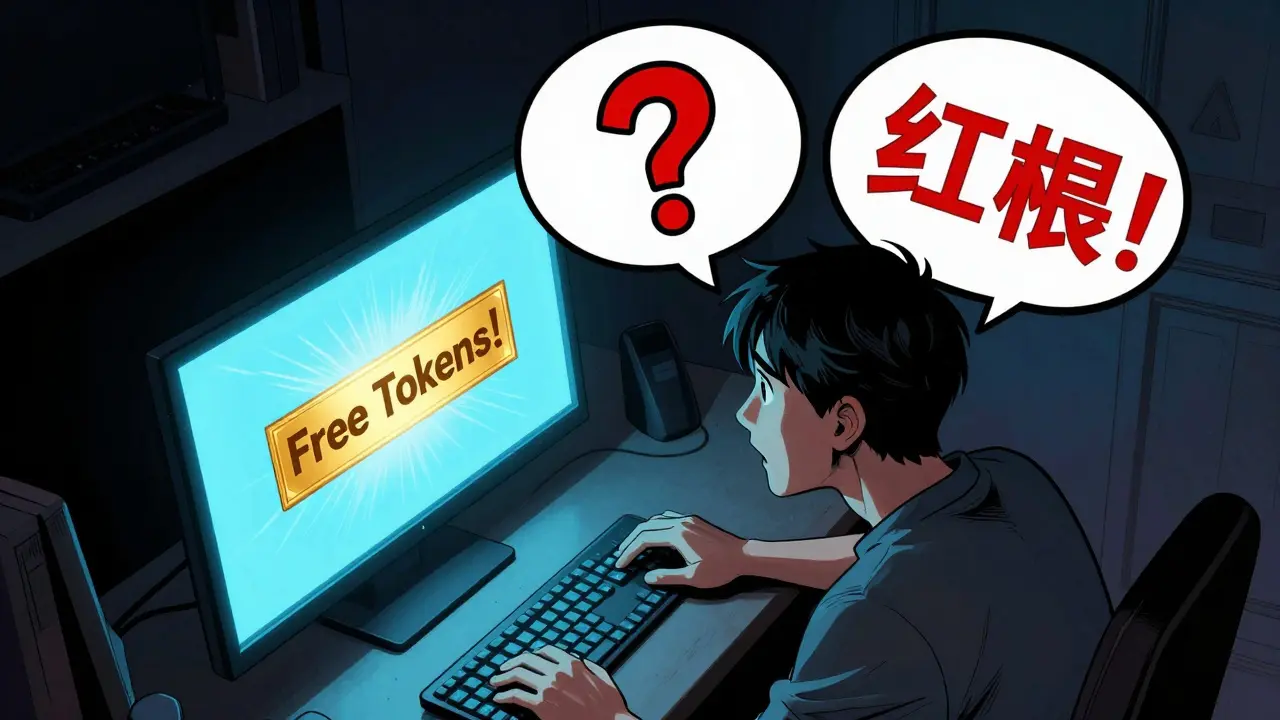
Finding a link that promises free money in your wallet is an adrenaline rush, but in the world of digital assets, it's also a massive red flag. If you've been hearing whispers about a Crypto Bank Coin airdrop is a potential distribution of CKN tokens to users as a marketing or reward strategy by the Crypto Bank project, you're probably wondering if it's a goldmine or a trap. The truth is, while the token exists, the details on an official airdrop are currently thin, which means you need to move with extreme caution.
| Attribute | Value / Status |
|---|---|
| Token Symbol | CKN |
| Total Supply | 1 Billion CKN |
| Circulating Supply | ~560,000 CKN |
| Current Market Price | $0 USD (Preview Status) |
| Contract Address | 0xE316...a954Ad |
The Mystery of the Missing CKN Airdrop Details
Here is the situation: Crypto Bank Coin (CKN) is positioned as a platform currency for the decentralized economy, meant to facilitate value exchange between companies, employees, and customers. However, if you search the major crypto news hubs or official airdrop trackers, you won't find a verified, step-by-step guide on how to claim a Crypto Bank Coin airdrop right now.
Why the silence? There are a few possibilities. First, the project might still be in its early "preview" phase, meaning they haven't launched the distribution yet. Second, they might be planning a targeted distribution rather than a public one. Third, the most dangerous possibility: someone is using the CKN name to run a fake airdrop scam to steal private keys. If you see a website asking for your seed phrase to "unlock" your CKN tokens, close the tab immediately. Real airdrops never ask for your private keys.
Why the CKN Tokenomics Hint at Future Distributions
If you look at the numbers, there is a massive gap in the supply. With a total supply of 1 billion tokens and only about 560,000 currently circulating, roughly 99.94% of the CKN supply is sitting in reserve or locked. In the crypto world, these reserves are often used for ecosystem growth, team vesting, or-you guessed it-airdrops to attract new users.
When a project has this much "dry powder," a distribution event is almost inevitable. But how would they do it? Most projects follow a few standard patterns:
- Holder Airdrops: You get CKN tokens because you already hold a specific amount of another cryptocurrency (like Ethereum or a partner token) in your wallet.
- Bounty Airdrops: You perform "social work," like following their X (formerly Twitter) account, joining a Telegram group, or referring friends.
- Exclusive Airdrops: These are reserved for early testers or developers who helped build the platform.
How to Spot a Legitimate Airdrop vs. a Scam
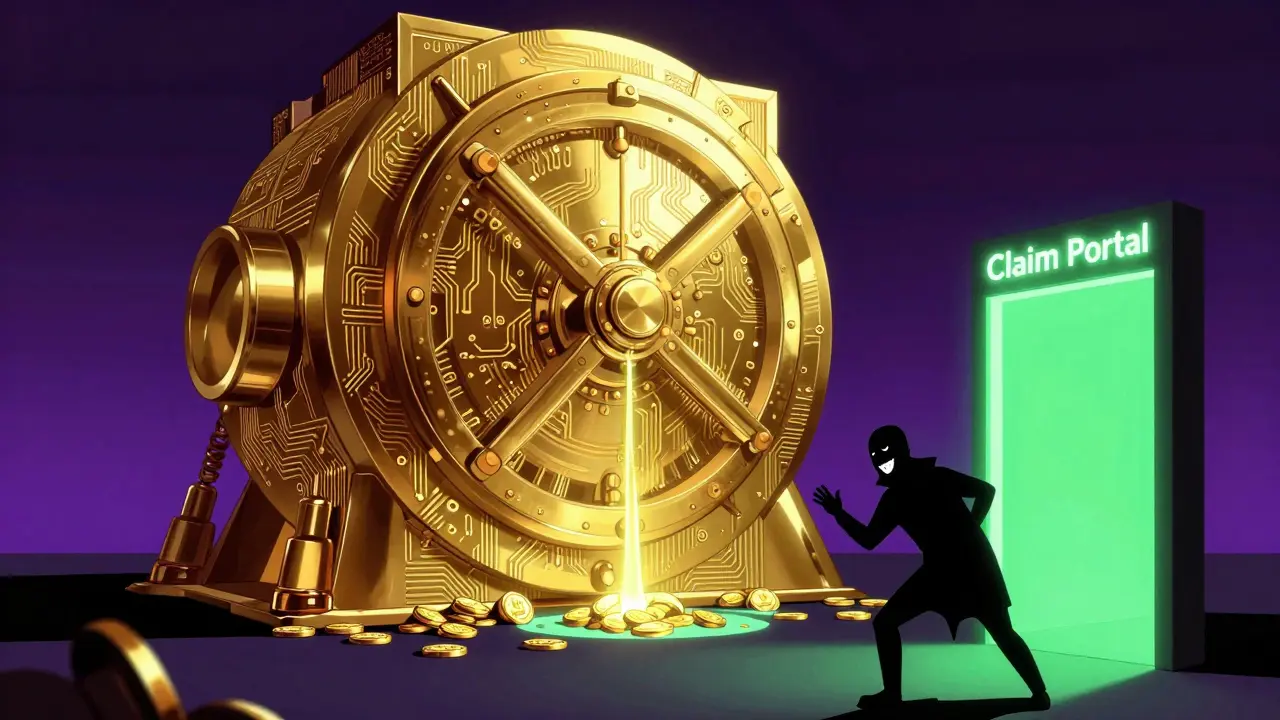
Since official CKN airdrop details are scarce, you are a prime target for phishing. Scammers love projects with high total supplies and low visibility because they can easily fake a "claim portal." To stay safe, you need to treat every "free token" offer as a potential threat until proven otherwise.
A legitimate airdrop typically uses a Smart Contract to send tokens directly to your address. You shouldn't have to "send tokens to receive tokens"-that's a classic scam. If a site tells you to send 0.1 ETH to "verify' your wallet" before receiving CKN, it's a fraud. Ever since the rise of massive drops like EigenLayer or Notcoin on the TON blockchain, the industry has standardized on non-custodial claims or direct wallet transfers.
The Reality of Earning from CKN
Let's talk about the money. Right now, CKN is listed with a $0 price point and minimal trading volume. This means that even if you managed to snag a few thousand tokens today, their immediate market value is essentially zero. That doesn't mean they're worthless, but it does mean your strategy should be long-term.
You have two main paths if you acquire CKN: selling or holding. Selling is only possible once the token is listed on a reputable exchange with actual liquidity. Holding, on the other hand, is a bet on the Decentralized Economy. If Crypto Bank actually implements its vision of value exchange between companies and customers, the token could gain utility and value over time. However, without a functioning product and active trading, any "value" is purely speculative.
Your Safety Checklist for Future CKN Claims
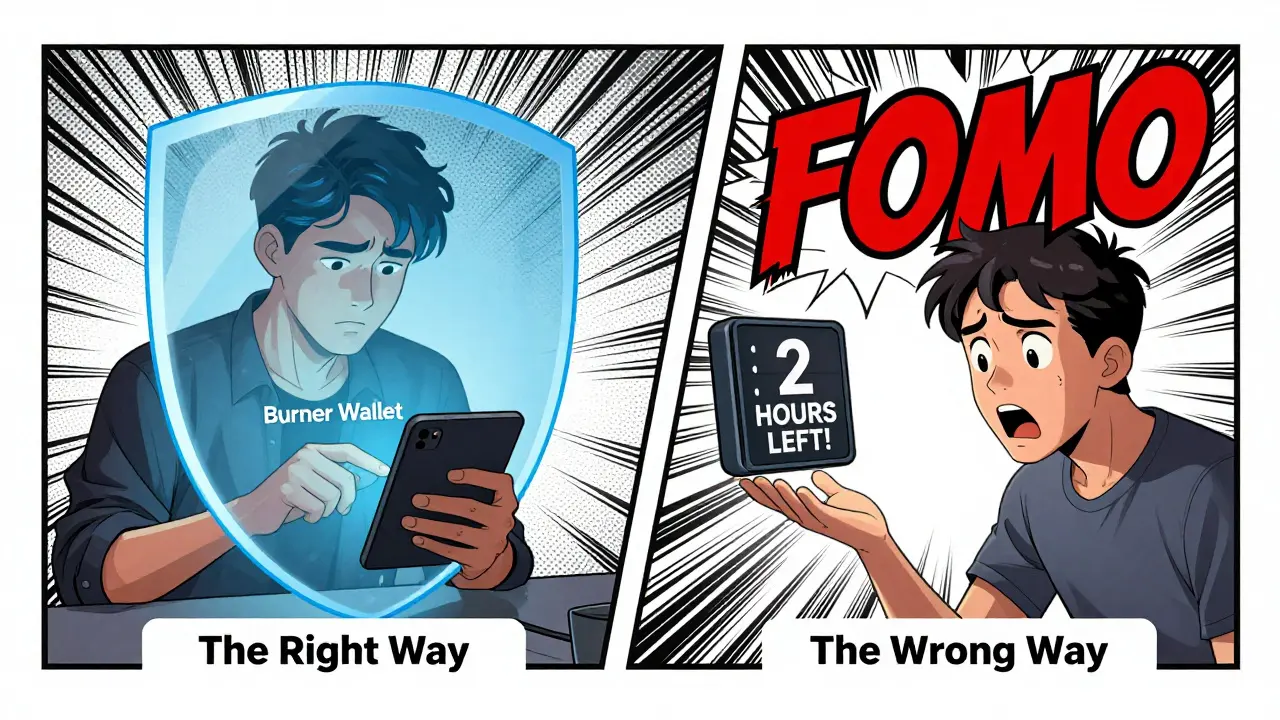
If a formal announcement finally drops, don't let the FOMO (Fear Of Missing Out) make you sloppy. Follow this rigorous verification process to ensure your main holdings stay safe:
- Verify the Source: Only trust links from the official Crypto Bank website or their verified social media profiles. Avoid links sent via unsolicited Direct Messages (DMs) on Telegram or Discord.
- Use a "Burner" Wallet: Never connect your primary hardware wallet or your main savings account to a new airdrop claim site. Create a fresh MetaMask or Phantom wallet specifically for the claim. If the site is a drainer, you only lose the empty burner wallet.
- Check the Contract: Copy the contract address provided and paste it into a blockchain explorer. If the contract was created two hours ago and has no history, be very skeptical.
- Ignore "Urgency": Scams use timers (e.g., "Claim in the next 2 hours or lose your tokens!") to make you panic and skip the safety checks. Legitimate airdrops usually have claim windows lasting weeks or months.
Is the Crypto Bank Coin (CKN) airdrop real?
Currently, there is no officially documented, wide-scale airdrop campaign for CKN from verified primary sources. While the token exists and has a massive reserve of uncirculated supply, any site currently claiming to offer a CKN airdrop should be treated as highly suspicious unless it comes directly from the official Crypto Bank project channels.
How can I tell if a CKN airdrop link is a scam?
The biggest red flag is any request for your seed phrase, private key, or a "activation fee." A legitimate airdrop will only ask you to connect your wallet to a smart contract to claim tokens. If the URL looks strange (e.g., cryptobank-claim-free.net instead of the official domain), it is almost certainly a scam.
What is the current value of CKN tokens?
As of the latest data, CKN is in a preview status with a listed price of $0 USD. This indicates it is not yet actively traded on major exchanges. Any potential value will depend on future project development, exchange listings, and market demand.
Where can I find official updates on Crypto Bank Coin?
You should look for the official project website and their verified social media handles. Avoid third-party "airdrop aggregator" sites that don't provide direct evidence or official links, as these often lead to phishing portals.
Why is there such a big difference between total and circulating supply?
A total supply of 1 billion with only 560,000 in circulation suggests that the vast majority of tokens are locked. This is common for new projects to prevent immediate price crashes and to reserve tokens for future incentives, such as airdrops, liquidity mining, or team rewards.
What to do next?
If you are hunting for airdrops, don't put all your eggs in one basket. While keeping an eye on CKN is fine, focus your energy on projects with transparent roadmaps and active communities. Set up a dedicated wallet for your airdrop activities, enable two-factor authentication (2FA) on all your accounts, and always double-check the contract address on a blockchain explorer before interacting. The best way to "win" at airdrops is to stay safe enough to actually keep the tokens you earn.
Erica Mahmood
April 7 2026basically just a textbook case of a low float high fdv play if this ever actually launches properly since the supply is basically all locked up right now
Arlen Medina
April 9 2026Typical garbage. Most of these coins are just scams designed to fleece people. Real money is made in US markets, not some random 'bank coin' from nowhere. Get a real job!
david head
April 10 2026thanks for the heads up on the burner wallet! 🚀🙌
Emma Pease-Byron
April 10 2026Imagine actually believing that a token with a zero dollar valuation and no actual utility is a 'goldmine'. The level of optimism here is truly quaint, if not entirely delusional.
shubhu patel
April 10 2026I really appreciate the detailed safety checklist because it's so easy to get caught up in the excitement of a potential airdrop and forget the basics, and I think it's wonderful that you're reminding everyone to use a burner wallet since that's the only way to truly keep your main assets safe from those nasty drainer contracts that are popping up everywhere these days, so thank you for being so thorough and kind in your explanation.
Alexandra Lance
April 12 2026Oh sure, 'official channels' 🙄. That's exactly how they get you to trust the honeypot before they rug pull the whole community. It's all a coordinated effort by the elites to track our wallets anyway 👁️🤡
Suvoranjan Mukherjee
April 13 2026Great breakdown! For those new to the space, remember that DeFi protocols often use these lock-ups to ensure long-term sustainability. If you're looking for alpha, keep an eye on the smart contract interactions on Etherscan to see where the big wallets are moving! Let's get those gains safely! 📈
vijendra pal
April 14 2026I already checkd the contract and it look sus 🚩🚩 no liquidity in the pool yet!! dont fall for it guys!! 😱
Patty Levino
April 14 2026If anyone is feeling overwhelmed by the technical side, just remember that if it feels too good to be true, it usually is. Just take a deep breath and don't rush into clicking any links.
Krystal Moore
April 15 2026It's honestly disgusting how many scams target innocent people just trying to make a little extra money. The lack of ethics in the crypto space is absolutely appalling and someone needs to hold these developers accountable!
Hugo Lopez
April 16 2026This is a very helpful guide! I appreciate the clarity and the warning signs. Stay safe everyone! 😊✨
Sharhonda Walker
April 18 2026Tnx for the tip about the burnner wallet! I almos used my main one last time I did a drop and almost lost everything. Be carefull guys!
Susan Payne
April 19 2026The desperation for 'free money' displayed in these circles is truly a testament to the decay of financial literacy in the modern era. It is a tragedy.
Joshua Aldrich
April 20 2026It's funny how we chase these digital ghosts while the real value of community slips away. Still, the tech is fascinatng even if the coins are mostly junk. Just be careful with your keys, man. I've seen too many people lose their life savings to a simple typo or a bad link.
Earnest Mudzengi
April 20 2026The whole 'preview status' is a psyop to keep the retail sheep waiting while the insiders dump on us. It's a classic pump and dump coordinated by the central banks to suck more liquidity out of the system. Wake up!
Manisha Sharma
April 21 2026Typical westren project with no real value. Indian devs would have made a much more stable ecosystem but here we are waiting for a 'preview' lol. So pathetic.
JERRY ORTEGA
April 22 2026just keep it simple. no seed phrase = no scam. if they ask for the keys just block them and move on
Taylor Meadows
April 24 2026I can tell just by the way people are reacting to this that most of you aren't even mentally prepared for the volatility of a real market. You're all just gambling with your rent money and pretending it's 'investing'. It's pathetic to watch.
akash temgire
April 24 2026The lack of a whitepaper link here is concerning.
Susan Wright
April 24 2026For those who don't know, you can also use tools like Revoke.cash to make sure any permissions you gave to a suspicious site are cancelled immediately after claiming.