

Imagine moving to a country where you pay zero tax on your crypto profits-provided you just wait one year. For years, this was the headline that drew thousands of traders and digital nomads to Portugal. But in 2025 and into 2026, the story got complicated. The easy days of unregulated freedom are over, replaced by a complex mix of strict EU rules, temporary regulatory blackouts, and a tax system that rewards patience but punishes short-term flipping.
If you are considering Portugal as your next base for trading, you need to look past the marketing brochures. You need to understand exactly how Portugal's crypto regulations work right now, what the new EU laws mean for your daily trades, and whether the tax benefits are still worth the bureaucratic headache. This guide cuts through the noise to give you the real picture of trading crypto in Portugal in 2026.
The Golden Rule: The One-Year Tax Exemption
Let’s start with the biggest drawcard: taxes. If you move to Portugal primarily to save money on capital gains, you need to know the specific rules introduced in the 2023 budget plan and still in effect today.
Under current Portuguese law, cryptocurrency is treated as a financial asset. Here is how the taxation breaks down:
- Long-Term Holdings (HODLing): If you hold your crypto for more than 365 days before selling, the profit is completely tax-exempt. There is no capital gains tax on these transactions. This applies to Bitcoin, Ethereum, and most other major tokens.
- Short-Term Trading: If you sell within 365 days of buying, the profit is taxed at a flat rate of 28%. This is significantly lower than the income tax rates in many Western European countries, such as Germany or France, but it is not free money.
- Mining and Staking: Income from mining or staking is generally treated as business income or capital gains depending on the scale. Large-scale operations may face different scrutiny, so professional advice is essential here.
This structure makes Portugal incredibly attractive for long-term investors. However, for active day-traders who buy and sell daily, the 28% rate applies to every profitable trade. It is crucial to keep meticulous records of your purchase dates. The clock starts ticking from the moment you acquire the asset, not when you transfer it to an exchange.
The Regulatory Rollercoaster: From Blackout to MiCA
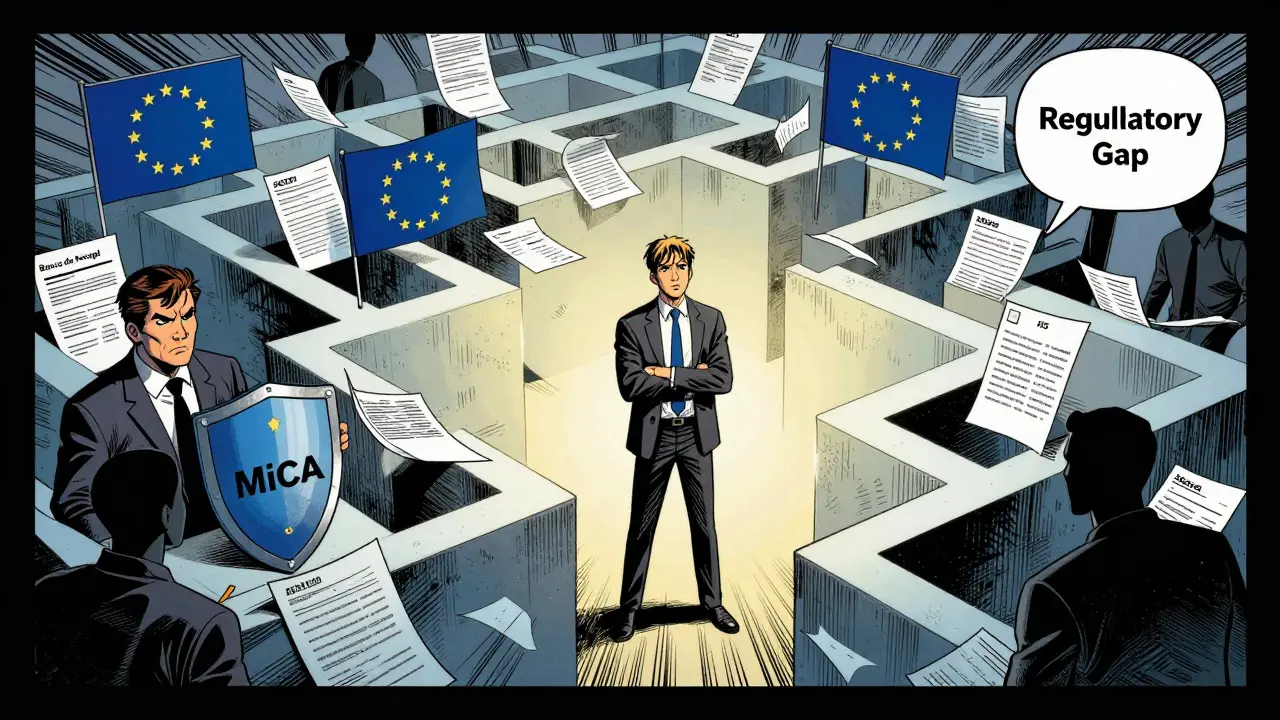
Taxes are only half the story. The legal framework for operating in Portugal has been turbulent. In January 2025, a significant shock hit the market: Banco de Portugal announced it could no longer authorize or supervise new cryptocurrency service providers. Why? Because national legislation to implement the EU’s Markets in Crypto-Assets (MiCA) regulation had not yet been passed.
This created a paradoxical "regulatory gap." Existing companies continued to operate under transitional arrangements, but new businesses faced a wall. They couldn’t get licensed, yet they were expected to comply with anti-money laundering (AML) rules. For individual traders, this meant fewer local exchanges to choose from and increased reliance on international platforms like Binance or Coinbase, which operate globally but aren't locally supervised by Portuguese authorities in the traditional sense.
By late 2025, the government moved to fix this. On October 17, 2025, Secretary of State for Treasury and Finance João Silva Lopes presented a legislative proposal to transpose MiCA into national law. The goal is to have full implementation before the July 1, 2026 deadline set by the EU. As we stand in mid-2026, the landscape is stabilizing, but the transition period has left some lingering confusion about compliance requirements for smaller traders.
Who Watches the Watchers? Key Authorities
Navigating Portugal’s system requires knowing which agency does what. It is not a single department; it is a multi-authority setup that can feel fragmented if you don’t know where to look.
| Authority | Role in Crypto Ecosystem | Relevance to Traders |
|---|---|---|
| Banco de Portugal | Registers Virtual-Asset Service Providers (VASPs) and ensures AML/CFT compliance. | You must use registered VASPs. They do not approve tokens, but they police the exchanges you use. |
| CMVM (Securities Market Commission) | Determines if a token qualifies as a financial instrument (security). | If you invest in ICOs or security tokens, CMVM rules apply. Standard BTC/ETH trading usually falls outside their direct scope unless deemed a security. |
| AT (Tax Authority) | Enforces IRS rules for crypto income and gains. | You report your taxable gains (short-term) to AT. They cross-reference data with banks and exchanges. |
| UIF (Financial Intelligence Unit) | Receives suspicious transaction reports. | Exchanges report large or unusual transfers to UIF. Ensure your KYC is up to date to avoid frozen accounts. |
For the average trader, the most immediate interaction will be with Banco de Portugal via the exchange you choose. When you sign up for a platform, check if it is registered there. While registration doesn't guarantee the safety of your funds (it’s not insurance), it means the exchange is legally required to follow strict Anti-Money Laundering (AML) and Know Your Customer (KYC) protocols.
The Non-Habitual Resident (NHR) Program: Is It Still Worth It?
Many high-net-worth individuals and successful traders flock to Portugal for the Non-Habitual Resident (NHR) program. Historically, this regime offered a 20% flat tax rate on certain Portuguese-sourced income and exemptions on foreign earnings. For crypto traders, this was a game-changer because it could potentially reduce the effective tax rate on short-term gains below the standard 28%, depending on how the income was classified.
However, the NHR program is undergoing significant changes in 2026. The government has tightened eligibility criteria, focusing more on "qualified" professions like scientists and engineers, while reducing benefits for passive income earners. For crypto traders, the clarity is diminishing. Some argue that crypto trading income might still qualify for favorable treatment under specific interpretations, but others warn that the window is closing.
If you are earning millions in annual trading profits, relying solely on NHR without professional legal counsel is risky. The cost of a specialized tax lawyer in Lisbon is negligible compared to potential penalties from misclassification. Always verify the current status of NHR with a certified accountant before making relocation decisions based on this benefit alone.
Practical Steps for Setting Up in Portugal
So, you’ve decided to move. What does the actual process look like? Here is a realistic checklist for a crypto trader relocating to Portugal in 2026.
- Secure Residency First: Apply for a D7 visa (passive income) or Digital Nomad visa. You cannot open a bank account or file taxes without a residence permit (NIF number). Start this process early; bureaucracy moves slowly.
- Open a Local Bank Account: Traditional banks in Portugal can be hesitant about crypto clients due to AML concerns. Fintechs like Revolut or Wise are popular, but for serious banking, consider institutions known for being tech-friendly. Be prepared to explain the source of your funds clearly.
- Choose Compliant Exchanges: Stick to major global exchanges that adhere to MiCA standards or are registered with Banco de Portugal. Avoid obscure local platforms that may disappear during the regulatory transition. Popular choices among expats include Kraken, Coinbase, and Binance (via its EU entity).
- Track Every Transaction: Use software like CoinLedger or Koinly to track your cost basis. Remember the 365-day rule. If you buy Bitcoin today, you must hold it for at least one year to claim the tax exemption. Selling after 364 days triggers the 28% capital gains tax.
- Hire a Crypto-Savvy Accountant: Do not use a generalist accountant. Find someone who specializes in digital assets. They will help you navigate the intersection of IRS reporting and the evolving MiCA regulations.

Market Outlook: Why Stay in Portugal?
Despite the regulatory bumps, Portugal remains a top destination for a reason. The blockchain sector commands 36% of all venture funding in the country, according to Chambers Global Practice Guides. This isn’t just hype; it reflects genuine economic activity. Companies are building here, and talent is flowing in.
Compared to neighbors like Spain or Italy, Portugal offers a more predictable tax environment for long-term holders. While Germany imposes complex valuation rules and France adds social contributions on top of capital gains, Portugal’s binary system (0% or 28%) is easier to plan around. Plus, the quality of life is hard to beat. With warm weather, affordable housing outside Lisbon and Porto, and a growing community of crypto professionals, the lifestyle factor is a tangible benefit.
Looking ahead, once MiCA is fully implemented by mid-2026, Portugal aims to become Europe’s third-largest crypto hub. This means better consumer protection, clearer rules for stablecoins, and a more mature ecosystem for institutional players. For the retail trader, this translates to safer exchanges and less ambiguity about what is legal.
Common Pitfalls to Avoid
Even with the best intentions, mistakes happen. Here are three common errors traders make in Portugal:
- Misunderstanding the Holding Period: Thinking that holding crypto in a cold wallet counts differently than holding it on an exchange. It does not. The tax authority looks at the date of acquisition vs. the date of disposal, regardless of storage method.
- Ignoring AML Requirements: Assuming that because you are an individual trader, you don’t need to worry about Anti-Money Laundering rules. If you receive large amounts of crypto from unknown sources, your bank or exchange may freeze your account. Always ensure your counterparties are identifiable.
- Relying on Outdated NHR Advice: Many online forums still discuss the old NHR benefits. The rules changed significantly in 2024-2025. Always consult current legal sources rather than Reddit threads from two years ago.
Portugal is not a wild west anymore. It is becoming a regulated, sophisticated market. That brings stability, but it also demands diligence. If you respect the rules, keep your records straight, and plan for the long term, Portugal can offer one of the most favorable environments for crypto wealth building in Europe.
Is crypto trading legal in Portugal in 2026?
Yes, crypto trading is legal. However, it is subject to strict regulations under the EU's MiCA framework and national AML laws. You must use registered Virtual-Asset Service Providers (VASPs) and report taxable gains to the tax authority.
How much tax do I pay on crypto profits in Portugal?
If you hold your crypto for more than 365 days, you pay 0% tax on capital gains. If you sell within 365 days, you pay a flat 28% capital gains tax on the profit. Mining and staking income may be taxed differently depending on classification.
Do I need a license to trade crypto personally?
No, individual traders do not need a license. Licenses are required for businesses offering services like exchanges, wallets, or custody solutions. These entities must register with Banco de Portugal.
What is the impact of MiCA on traders in Portugal?
MiCA brings stricter consumer protections and standardized rules across the EU. For traders, this means exchanges must provide clearer information, handle complaints better, and maintain higher capital reserves. It reduces the risk of fraud but increases compliance costs for platforms.
Can I live in Portugal as a digital nomad trading crypto?
Yes, Portugal offers a Digital Nomad Visa. You must prove sufficient income and health insurance. Once resident, you become tax-resident and must declare your worldwide income, including crypto gains, following Portuguese tax rules.