Since 2019, Cambodia has taken one of the strictest stances in Southeast Asia when it comes to cryptocurrency. While neighboring countries like Thailand and Singapore have slowly opened doors for crypto trading and banking services, Cambodia has built a wall - and it’s not just a wall. It’s a complex, tightly controlled system that bans most crypto activity while allowing a handful of licensed players to operate under heavy restrictions. If you’re trying to buy, sell, or move crypto in Cambodia, you’re not just fighting technical hurdles - you’re fighting a regulatory maze that changes faster than most people can keep up.
How Cambodia’s Crypto Ban Actually Works
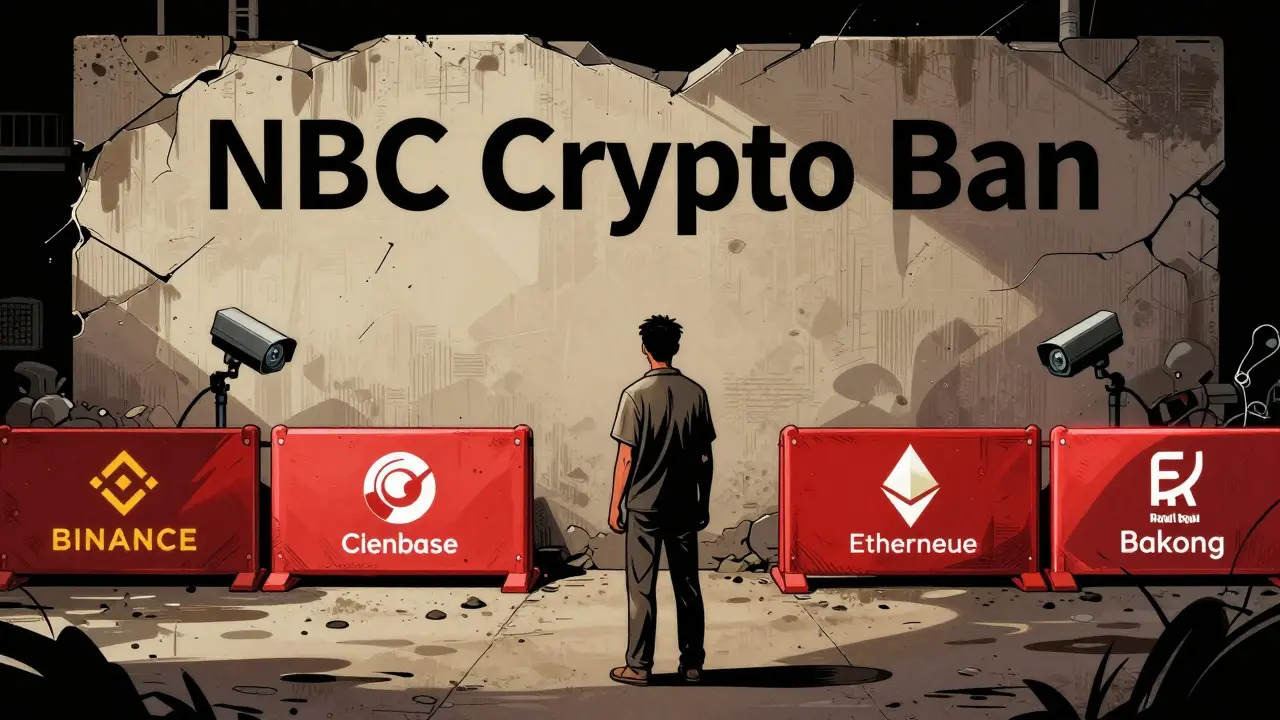
It’s easy to think Cambodia just says "no" to crypto. But the truth is more nuanced. The National Bank of Cambodia (NBC) didn’t just issue a blanket ban. In January 2025, they rolled out Prakas B7-024-735, a legal framework that divides crypto into two groups. Group 1 includes tokenized securities and stablecoins fully backed by real assets like the U.S. dollar. Group 2 is everything else - Bitcoin, Ethereum, Solana, and other unbacked coins. Banks are allowed to offer services for Group 1 assets only - and even then, only if they get special approval.Here’s the catch: no Cambodian bank can hold Bitcoin or Ethereum on its books. Not even a little bit. They can help you convert riel to USDT, but only if you’re using one of the two licensed platforms: Royal Group Exchange or Bakong-based services. Everything else? Blocked. The Telecommunication Regulator of Cambodia (TRC) shut down access to Binance, Coinbase, and OKX in December 2024. If you try to use them, you’ll hit a wall - literally. Your browser will show an error.
Why This Rule Exists
The crackdown didn’t come out of nowhere. In 2024, the U.S. Treasury’s OFAC sanctioned Ly Yong Phat and his L.Y.P. Group for running online scam centers that used crypto to launder money and pay trafficked workers. That’s when things got serious. Cambodia was under international pressure to clean up its act. The NBC responded by tightening controls, not just to stop crime, but to protect the country’s fragile banking system.Before 2019, crypto trading was wild. People were losing money on unregulated platforms. One Thai exchange, Bitkub, collapsed in 2024 and lost over $100 million. The NBC saw that coming. Their Director General, Chea Serey, said outright: "We won’t let another $100 million crash take down our $28 billion banking sector." So they built rules that are stricter than even the Basel Committee’s recommendations. Banks can’t invest more than 15% of their tier 1 capital in crypto - and only Group 1 assets. Compare that to Thailand, where banks can hold up to 20% in Bitcoin. Cambodia is playing it safe - too safe, some say.
What You Can and Can’t Do
If you’re a regular user, here’s what matters:- You can’t use Binance, Coinbase, or any offshore exchange from within Cambodia. Their websites are blocked.
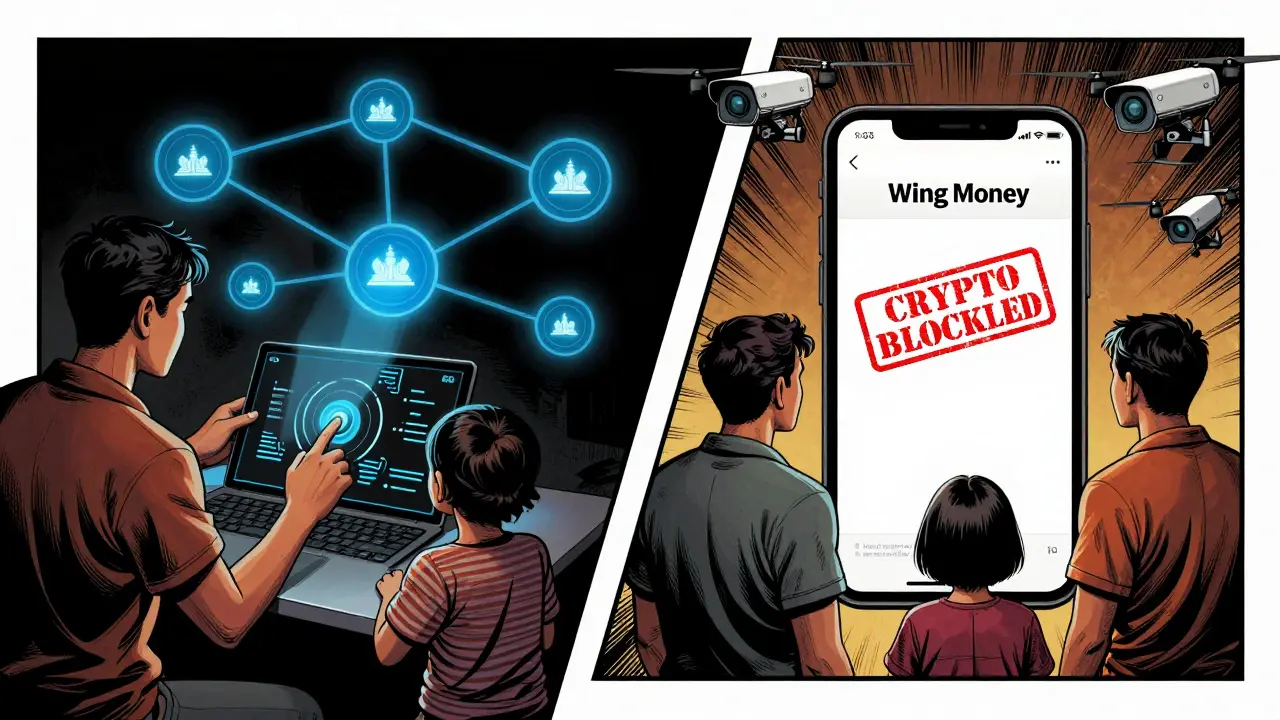
- You can’t deposit or withdraw crypto directly to your Wing Money, ABA, or Canadia Bank account. Those systems auto-freeze transactions flagged as crypto-related.
- You can only convert crypto to riel or USD through Royal Group Exchange or Bakong-approved channels.
- You need to submit your national ID, a utility bill, and proof of income to get approved - and the process takes 3-15 days.
- Daily limits are low: $5,000 max per person, per day.
- Even if you’re approved, your transactions are monitored 24/7. Any pattern that looks like money laundering? Your account freezes. No warning. No appeal.
Real people are feeling this. On Reddit, a user named "PhnomPenhTechie" said their Wing Money account was frozen for 14 days after three small P2P trades of $50 each. "The system doesn’t know the difference between a scammer and a student sending crypto to their cousin," they wrote. Trustpilot reviews for Wing Money’s crypto services sit at 2.1 out of 5 - 78% of complaints are about "too much paperwork" and "unexplained freezes."
The Bakong Paradox
Here’s the irony: Cambodia built one of the most successful digital payment systems in the region - Project Bakong. Launched in 2020 with help from Japan, Bakong lets 12.4 million people send money instantly between banks using blockchain. It handles 4.7 million transactions daily. It’s fast, cheap, and reliable.But here’s the twist: Bakong doesn’t connect to public blockchains like Bitcoin or Ethereum. It’s a closed, government-controlled system. The NBC says this is intentional. "We won’t recognize private cryptocurrencies until Bakong is fully stable," said NBC Governor Chea Chanto in November 2024. In other words: we built our own blockchain - so you don’t need others.
But that’s not how most people see it. In rural areas, where 68% of people still lack bank accounts, crypto could be a lifeline. Instead, they’re stuck with a system that’s efficient but limited. You can send money to your sister in Siem Reap in seconds - but you can’t use that same system to receive crypto from a remote freelancer in Vietnam.
The Hidden Cost
The restrictions aren’t just annoying - they’re expensive. Cross-border payments that should take hours now take 3-5 days. Remittance fees in Cambodia sit at 6.8% - higher than Laos (4.2%) and Vietnam (3.9%), where crypto corridors are allowed. The World Bank estimates Cambodia is losing $1.2 billion in fintech investment by 2027 because companies won’t set up shop here.And the underground economy? It’s growing. Chainalysis data shows illicit crypto activity in Cambodia jumped 37% in 2024. Why? Because when legal channels are too slow or too restricted, people find other ways. South Korean exchange Bithumb processed $8.93 million in transactions with Huione Guarantee - a company sanctioned by the U.S. Treasury - in 2024. That’s a 1,400x increase from 2023. Cambodia’s ban didn’t stop crypto. It just moved it into the shadows.
Who’s Winning? Who’s Losing?
The winners are the two licensed platforms: Royal Group Exchange and Bakong. They’re the only ones allowed to operate. Royal Group says users love their service: "Verified in 3 days, $5,000 daily limit, 0.8% fee," says one Google Review. But they’re also the only ones who can survive. Smaller players? Gone.Startups are stuck too. AgriTech firm RiceX raised $2 million in stablecoins through NBC-approved channels - but it took 10 days of paperwork. "It was worth it for certainty," they said. But most startups don’t have the time or lawyers to wait.
Meanwhile, ordinary Cambodians - especially young people, freelancers, and rural workers - are losing access to global financial tools. They can’t earn in crypto. They can’t send money to family abroad using stablecoins. They can’t use DeFi loans. They’re locked out.
What’s Next?
The NBC isn’t done. In 2025, they’re rolling out real-time monitoring for every crypto-fiat conversion. No more delays. No more gray areas. If you transfer crypto to a bank account, they’ll see it instantly - and if it looks suspicious, your account freezes before you even finish the transaction.There’s no sign of easing. The U.S. is watching. More sanctions are likely. And while experts like Dr. Sophal Ear argue the rules protect financial stability - Cambodia’s inflation is still at 6.2%, far below regional averages - others like David Kust of Kapronasia say the ban is backfiring. "It’s not stopping crime. It’s just making it harder for honest people to participate."
The choice Cambodia faces isn’t just about crypto. It’s about whether financial inclusion means controlling access - or opening doors. Right now, they’re choosing control. And the cost? Millions of people left on the sidelines.