

For years, Algerian traders whispered about the possibility of buying Bitcoin using their local dinars. They looked at charts on their phones, calculated fees, and dreamed of financial freedom beyond the reach of the state-controlled banking system. But that dream has hit a wall. As of mid-2025, there is no legal way for an Algerian citizen to access a cryptocurrency exchange. The government passed Law No. 25-10, which explicitly bans all interaction with digital assets. This isn't just a tax regulation or a licensing hurdle; it is a criminal prohibition. If you are trying to figure out how to buy crypto in Algeria today, you are technically looking for ways to break the law. Here is what that actually means for your wallet, your phone, and your freedom.
The Legal Wall: What Law No. 25-10 Actually Says
To understand why access is so difficult, you have to look at the text of the legislation itself. Law No. 25-10 defines cryptocurrencies as virtual instruments used for exchange via computer systems without central bank support. Under this definition, the purchase, sale, use, and holding of these assets are strictly prohibited. This covers everything from Bitcoin and Ethereum to stablecoins like Tether. The law doesn't just stop at trading. It criminalizes mining, storing coins in self-custody wallets, operating exchanges, and even promoting or educating others about crypto.
This comprehensive approach sets Algeria apart from most other countries. While nations in Europe and parts of Asia are building regulatory frameworks to integrate blockchain technology, Algeria has chosen outright prohibition. You are now in the same category as China regarding direct access. The law came into effect immediately upon publication in the government gazette in July 2025. There was no grace period. There was no transition phase. One day, peer-to-peer (P2P) markets were bustling; the next, they became high-risk underground operations.
Why Did the Government Ban Crypto?
You might wonder why a country would go to such lengths to block something that many young people view as the future of finance. The Algerian government cites three main reasons: national security, financial stability, and anti-money laundering efforts. Following guidance from the Financial Action Task Force (FATF), authorities feared that unregulated digital assets could be used to move money out of the country or fund illicit activities. With a strict currency control regime already in place, allowing free-flowing digital assets threatened to undermine the state's grip on the economy.
Before the ban, the market was growing fast. A Chainalysis report from late 2024 ranked Algeria among the top five fastest-growing crypto markets in the Middle East and North Africa (MENA) region. Retail investors were flocking to P2P platforms because traditional banks offered poor exchange rates and limited services. The government saw this surge not as innovation, but as a leak in the dam. By banning crypto, they aimed to plug that leak and maintain control over the national financial system.
The Penalties: Why the Risk Is High
If you decide to ignore the ban, you need to know exactly what you are risking. The penalties under Law No. 25-10 are severe and multifaceted. Individuals found violating the law face imprisonment ranging from two months to one year. On top of jail time, you will likely face fines between 200,000 and 1,000,000 Algerian dinars. That translates to roughly $1,540 to $7,700 USD. For more serious violations, fines can reach up to 2 million dinars ($14,700). These numbers are not theoretical; they are written into the statute book.
What makes the situation worse is the enforcement mechanism. Algerian agencies have enhanced their digital monitoring capabilities. They are actively scanning for suspicious transactions and online activity. If your crypto operations are linked to organized crime or if you are a repeat offender, the punishment doubles. This creates a chilling effect. Even holding educational discussions about blockchain or advertising crypto services can lead to criminal charges. The net is cast wide.
| Method | Legal Status | Risk Level | Key Challenge |
|---|---|---|---|
| Centralized Exchanges (CEX) | Illegal | High | Requires KYC with foreign ID; blocked IP addresses |
| Peer-to-Peer (P2P) | Illegal | Medium-High | Counterparty risk; traceable bank transfers |
| Decentralized Exchanges (DEX) | Illegal | Medium | On-chain visibility; smart contract risks |
| Physical Cash Trading | Illegal | Low-Medium | Scams; lack of liquidity; safety concerns |
How People Are Still Trying to Access Crypto
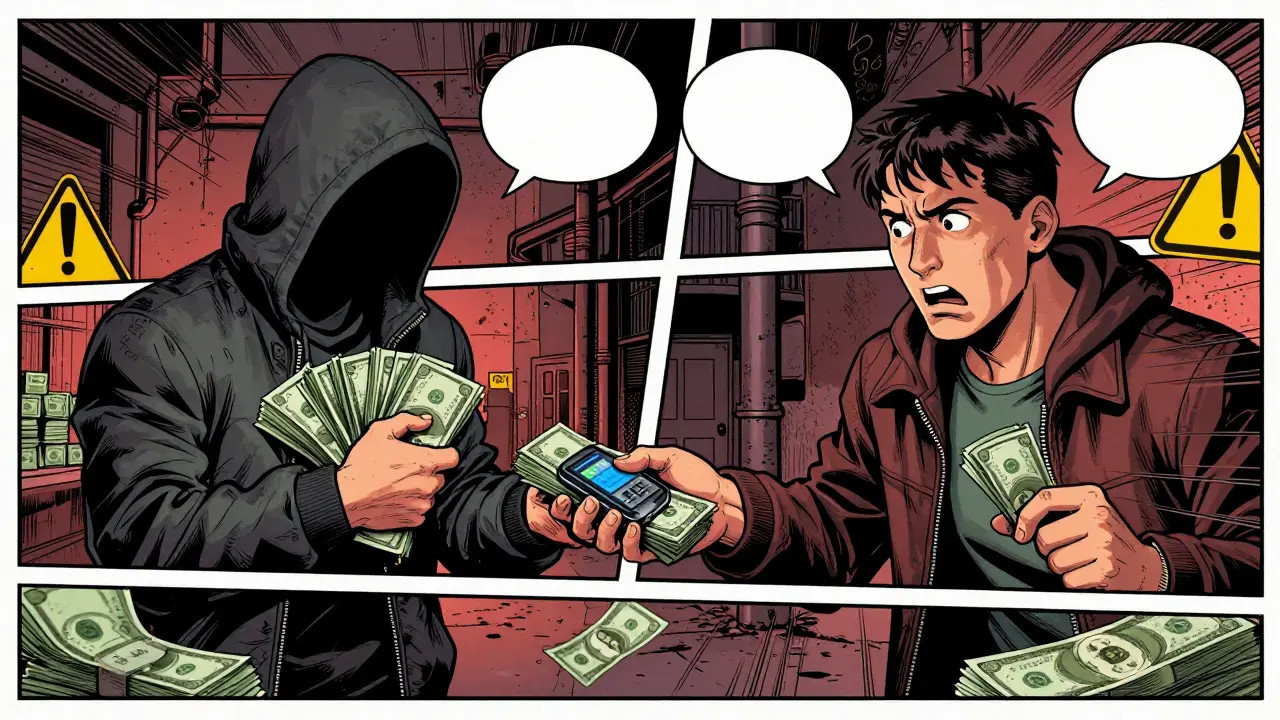
Despite the heavy hammer of the law, human ingenuity tends to find a way. Since there are no legal pathways, Algerians who still want exposure to digital assets are turning to underground methods. However, every option comes with significant downsides. Let's look at the common workarounds and why they are problematic.
- Using VPNs to Access Foreign Exchanges: Many users try to hide their location using Virtual Private Networks (VPNs) to sign up for international platforms like Binance or Kraken. The problem? Most major exchanges require Know Your Customer (KYC) verification. Unless you have a passport or ID from another country, getting verified is nearly impossible. Even if you get in, depositing funds from an Algerian bank account often triggers fraud alerts, leading to frozen accounts.
- Peer-to-Peer (P2P) Trading: Before the ban, P2P was the lifeline for Algerian traders. Now, it continues in the shadows. Traders meet in person or use encrypted messaging apps to swap dinars for crypto. The risk here is counterparty trust. Without a regulated platform escrow, you rely entirely on the other person's honesty. Scams are rampant, and if the deal goes wrong, you have no legal recourse.
- Decentralized Exchanges (DEX): Some tech-savvy users bypass intermediaries entirely by using DEXs on networks like Ethereum or Solana. This avoids KYC. However, it requires you to hold a private key, which adds technical complexity. More importantly, all transactions are visible on the public blockchain. If regulators decide to track specific wallet addresses, anonymity is an illusion.
- Physical Cash Trading: The oldest method remains relevant. Buying and selling crypto for cash in local cafes or meeting spots eliminates the digital trail of bank transfers. But it limits your transaction size due to safety concerns and carries a high risk of being scammed by fake sellers or buyers.
The Talent Exodus and Economic Impact
The ban hasn't just affected individual traders; it has devastated the local tech ecosystem. Prior to 2025, Algeria had a vibrant community of blockchain developers, DeFi specialists, and crypto analysts. Companies were hiring locally, and universities were starting to offer courses in distributed ledger technology. The passage of Law No. 25-10 effectively criminalized this profession. Suddenly, working on a blockchain project could mean facing prison time.
This has sparked what industry observers call a "blockchain talent exodus." Skilled developers are leaving for neighboring countries or remote roles abroad where crypto is legal. For Algeria, this means losing a generation of tech talent to competitors. Critics argue that by choosing prohibition over regulation, the country is isolating itself from global fintech trends. While the government protects short-term financial control, it may be sacrificing long-term economic growth in the digital sector.

What Should You Do If You Want to Invest?
If you are reading this because you want to buy Bitcoin or Ethereum, you are in a tough spot. There is no safe, legal route. Here is a practical breakdown of your options and what you should consider before taking any action.
- Assess Your Risk Tolerance: Ask yourself if you can afford to lose your investment to a scam or a frozen account. Also, ask if you can afford a potential fine of $7,700 or a few months in jail. If the answer is no, staying out of crypto might be the wisest financial decision right now.
- Consider Alternative Assets: If your goal is diversification away from the Algerian Dinar, look at other asset classes. Gold, foreign stocks (if accessible through legal channels), or real estate in other jurisdictions might offer similar benefits without the criminal penalty.
- Stay Informed on Legal Changes: Regulations can change. Keep an eye on official government announcements. Sometimes, bans are lifted or modified after a few years. However, do not bet on this happening soon; the current political climate suggests the ban will remain strict for the foreseeable future.
- If You Must Trade, Minimize Digital Footprints: If you decide to take the risk, avoid using your primary email or phone number for crypto-related activities. Use separate devices if possible. Understand that total anonymity is rare, so keep your positions small enough that a loss wouldn't ruin you.
Frequently Asked Questions
Is it illegal to hold cryptocurrency in Algeria?
Yes. Under Law No. 25-10, holding cryptocurrency is strictly prohibited. The law defines possession as a violation, meaning even if you bought coins before the ban, keeping them in your wallet is technically against the law.
Can I use a VPN to buy crypto legally?
No. Using a VPN does not make the activity legal; it only helps hide your location from basic IP checks. The act of trading is still illegal regardless of your digital footprint. Additionally, most exchanges require KYC verification, which usually exposes your true identity.
What is the maximum fine for crypto violations?
The standard fine range is 200,000 to 1,000,000 Algerian dinars. However, for more serious cases, fines can reach up to 2 million dinars (approximately $14,700). Repeat offenses may result in doubled penalties.
Are stablecoins like USDT banned in Algeria?
Yes. The law prohibits all "virtual currencies," which includes stablecoins like Tether (USDT). There is no exception for assets pegged to fiat currencies.
Will the ban be lifted in the future?
It is uncertain. Given the government's emphasis on financial control and the recent implementation of the law, a near-term lift is unlikely. However, global pressure and technological adoption could force a re-evaluation in the coming years.