Imagine sending a package across the ocean. You know exactly who it’s going to, where they live, and what’s inside. Now imagine trying to send that same package through a network of anonymous drop boxes, changing hands every few miles, with no paper trail. For years, cryptocurrency offered that second option-a way to move value globally without leaving fingerprints.
That era is effectively over. By 2026, international authorities have woven a tight net around digital assets. The days of treating crypto as a lawless frontier are gone, replaced by a coordinated global surveillance apparatus designed to catch money launderers, sanction evaders, and terrorists before they can hide their tracks. If you are running a business or holding significant assets, understanding this new reality isn't just about staying legal; it's about keeping your funds accessible.
The Travel Rule: The New Passport for Digital Money
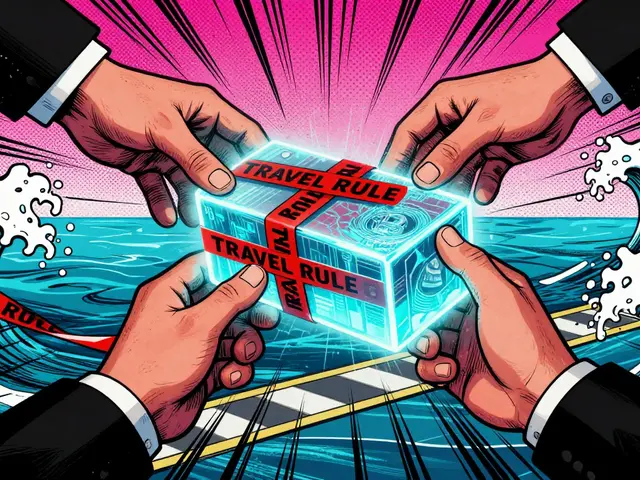
At the heart of this crackdown is a concept known as the Travel Rule, which is a regulatory standard requiring financial institutions to share sender and receiver information for transactions above a certain threshold. Think of it like attaching a customs declaration to every large international wire transfer, but for blockchain.
In the United States, this falls under the Bank Secrecy Act (BSA). Any entity classified as a Virtual Asset Service Provider (VASP)-which includes exchanges, custodians, and wallet providers-must collect and transmit Personally Identifiable Information (PII) for transactions of $3,000 or more. This isn't just a suggestion; it is a hard requirement. The data must include the name and address of both the originator and the beneficiary, along with transaction details like amount, date, and wallet addresses.
This aligns with standards set by the Financial Action Task Force (FATF), which is an intergovernmental organization that sets global standards for combating money laundering and terrorist financing. Hundreds of jurisdictions have adopted these rules. When you send crypto from an exchange in New York to one in London, those two platforms now talk to each other directly to verify identities before the transfer clears. If the receiving exchange cannot validate the sender's identity against their own Know Your Customer (KYC) database, the transaction gets blocked or flagged for review.
Who Is Watching? The Regulatory Cast
You might think only the FBI cares about your crypto movements, but the oversight structure is far more complex. In the US, the primary watchdog is the Financial Crimes Enforcement Network (FinCEN). They treat cryptocurrency businesses much like traditional banks. But they aren't alone.
- FinCEN: Focuses on anti-money laundering (AML) and counter-terrorist financing (CFT). They enforce recordkeeping and reporting for currency transactions involving convertible virtual currencies.
- SEC (Securities and Exchange Commission): Steps in when crypto assets are deemed securities. They regulate trading platforms handling security tokens and alternative trading systems (ATS).
- CFTC (Commodity Futures Trading Commission): Oversees crypto derivatives, futures commission merchants (FCMs), and swap dealers.
This multi-agency approach means there are fewer blind spots. A platform might try to classify itself strictly as a commodity trader to avoid SEC scrutiny, but FinCEN will still demand AML compliance. The result is a "compliance sandwich" where operators must satisfy multiple regulators simultaneously.
The European Fortress: MiCA and Risk Aversion
While the US pieces together its framework, the European Union has gone all-in with MiCA (Markets in Crypto-Assets), which is a comprehensive EU regulation establishing a unified legal framework for crypto-assets across member states. Launched fully by 2025, MiCA is widely viewed as more risk-averse than the UK-US approach. It doesn't just ask for good intentions; it mandates specific technical and operational controls.
Under MiCA, licensed crypto asset service providers must maintain robust financial crime control frameworks. This means enhanced due diligence on customers, continuous transaction monitoring, and immediate reporting of suspicious activity. The regulation creates a single passport for crypto firms: get licensed in one EU country, and you can operate across the entire bloc. However, this comes at the cost of flexibility. Firms must prove they can detect illicit flows in real-time, leading many to adopt expensive, AI-driven surveillance tools.
The contrast is stark. The US relies on a patchwork of existing banking laws adapted for crypto, while the EU built a bespoke castle specifically for digital assets. For cross-border transfers between the US and Europe, this creates friction. US firms must ensure their Travel Rule data formats match EU expectations, often requiring middleware solutions to bridge the gap.

Transatlantic Cooperation: The UK-US Task Force
Regulators know that criminals don't respect borders, so neither do they. The most significant development in recent years is the formation of the UK-US Transatlantic Task Force. This bilateral initiative focuses on critical areas like licensing, custody standards, stablecoin regulations, and cross-border compliance.
Why does this matter to you? Because the UK and US hold the deepest capital markets and the most advanced fintech ecosystems. Their collaboration sets the de facto global standard. When they agree on how to handle stablecoin reserves or define custody requirements, other countries tend to follow suit. This task force acts as a template for global oversight, ensuring that a loophole in London doesn't become a highway for illicit funds in New York.
| Feature | US (FinCEN/BSA) | EU (MiCA) | UK (FCA/OFSI) |
|---|---|---|---|
| Primary Focus | AML/CFT Reporting | Market Integrity & Consumer Protection | Sanctions Compliance & Stability |
| Travel Rule Threshold | $3,000 | €1,000 | d>£1,000 |
| Licensing Approach | Registration (MSB/VASP) | Unified License Passport | FCA Authorization |
| Stablecoin Regulation | Emerging (Proposed Rules) | Strict E-Money/T2M Standards | Banking-Level Reserve Requirements |
How Criminals Bypass the Net (And Why It’s Getting Harder)
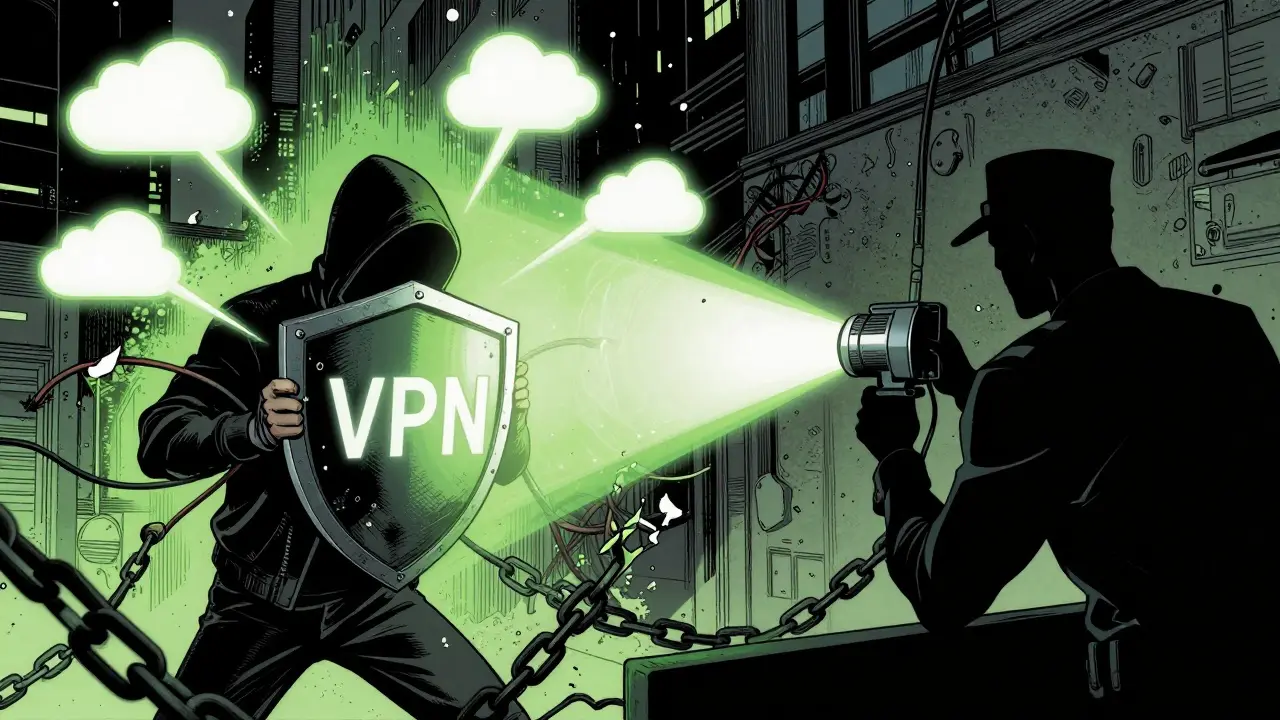
Despite these efforts, bad actors are creative. The UK’s Office of Financial Sanctions Implementation (OFSI) released a 2025 threat assessment highlighting several vulnerabilities. One common tactic involves using Virtual Private Networks (VPNs) to obscure the true location of individuals. If you appear to be connecting from a non-sanctioned country while actually being in a restricted zone, KYC checks can fail to flag you.
Another method is "layering" through intermediary wallets. Sanctioned exchanges may share infrastructure with legitimate ones. Criminals deposit funds into a sanctioned platform, move them through a series of private wallets that separate incoming deposits from withdrawals, and then withdraw to a clean exchange. This breaks the direct link that compliance software looks for.
High-risk services, particularly instant exchange platforms that don’t require KYC, remain a weak point. These services allow users to convert fiat to crypto quickly, bypassing initial screening. However, regulators are closing this gap. FinCEN’s proposed rules aim to classify cryptocurrencies like Bitcoin and Ether as "monetary instruments," bringing unhosted wallets under stricter scrutiny. Banks are now required to report transactions involving these assets if they suspect links to illicit activities.
Technical Challenges: Tracing the Untraceable
The decentralized nature of blockchain makes monitoring inherently difficult. Unlike a bank ledger controlled by one entity, public blockchains are open and permissionless. Techniques like mixing services, tumblers, and privacy coins (e.g., Monero, Zcash) add layers of anonymity. Cross-chain bridges further complicate matters by moving assets between different networks, obscuring the original source.
To combat this, authorities rely on blockchain analytics firms. Companies like Chainalysis and Elliptic provide tools that cluster wallet addresses, identify patterns, and link anonymous addresses to real-world identities. Regulators integrate these tools into their surveillance systems. For example, if a wallet receives funds from a known darknet market, every subsequent transaction from that wallet is flagged. This creates a "guilt by association" model that spreads suspicion across the network.
For businesses, this means working with licensed partners is crucial. Using a reputable exchange provides a layer of protection because they already perform these checks. Trying to build your own compliance stack from scratch is risky and expensive. Most mid-sized firms opt for API integrations with third-party AML providers to screen transactions in real-time.
What This Means for You in 2026
If you are an individual user, the impact is mostly friction. Expect longer verification times when linking bank accounts to exchanges. Large transfers may require additional documentation. Privacy is no longer a default feature; it is something you have to actively negotiate, and even then, only within narrow bounds.
For businesses, the stakes are higher. Non-compliance can lead to severe penalties, including loss of license and criminal charges. With 91% of central banks exploring digital currencies or stablecoins, the institutionalization of crypto is accelerating. This brings more eyes on the industry. The goal is not to stifle innovation but to ensure that digital finance operates with the same integrity as traditional banking.
The trend is clear: transparency is becoming the price of admission. As interoperability between traditional finance and crypto grows, the distinction between "fiat" and "digital" blurs. Your crypto holdings are increasingly treated like your bank account-visible, traceable, and regulated.
What is the Travel Rule threshold for crypto transactions?
In the United States, the threshold is $3,000. In the European Union and the UK, it is typically €1,000 or £1,000 respectively. Transactions above these amounts require VASPs to share sender and receiver PII.
Can I use privacy coins to avoid monitoring?
Most major exchanges have delisted privacy coins like Monero and Zcash due to regulatory pressure. Using them on remaining platforms increases the risk of having your accounts frozen or flagged for suspicious activity.
How do regulators track unhosted wallets?
They use blockchain analytics to trace interactions with centralized exchanges. If funds from an unhosted wallet enter a regulated exchange, the exchange must report the transaction and verify the owner's identity.
What happens if a VASP fails to comply with the Travel Rule?
Non-compliance can result in heavy fines, suspension of operations, and criminal charges against executives. Regulators are ramping up enforcement actions throughout 2025 and 2026.
Is MiCA stricter than US regulations?
Yes, MiCA is generally considered more comprehensive and risk-averse, providing a unified legal framework for the entire EU, whereas the US relies on a fragmented approach involving multiple agencies.