
You missed the boat on the recent Flux Protocol distribution if you weren't paying attention in October 2025. The Flux Protocol is a decentralized, secure, non-custodial digital encryption asset mortgage lending protocol developed by the Zero One team recently wrapped up a promotional campaign on CoinMarketCap. They handed out 10,000 FLUX tokens to 2,000 lucky winners. If you were one of them, or if you are looking for the next opportunity, this is your breakdown of what happened, how it works, and why this specific airdrop matters in the crowded DeFi landscape.
The Core Offer: What Was Distributed?
Let's get the numbers straight first because crypto marketing often hides the real value behind big promises. On October 10, 2025, Flux Protocol launched an airdrop via CoinMarketCap. The total pool was 10,000 FLUX tokens. These were split among 2,000 participants. That means each winner received exactly 5 FLUX tokens.
At the time of the distribution, FLUX was trading around $0.1331 USD. So, each winner pocketed roughly $0.66 USD in value. It sounds small, right? But look at the bigger picture. This represented only 0.0025% of the total circulating supply of 392.62 million FLUX tokens. For many users, even a few dollars is free entry into a protocol they might otherwise ignore. The goal wasn't just to give away money; it was to acquire active users who would actually use the lending platform.
| Metric | Value |
|---|---|
| Total Tokens Distributed | 10,000 FLUX |
| Number of Winners | 2,000 |
| Tokens Per Winner | 5 FLUX |
| Estimated Value Per Winner (Oct 2025) | ~$0.66 USD |
| Distribution Platform | CoinMarketCap |
How Did You Qualify? The Participation Mechanics
If you are wondering how people got their hands on these tokens, the process relied on standard CoinMarketCap engagement tactics. While specific step-by-step instructions for this exact event were sparse in public documentation, historical data from similar CoinMarketCap campaigns gives us a clear pattern.
To participate, you generally needed a registered CoinMarketCap account. From there, the requirement usually involved completing educational tasks about the protocol. This isn't just clicking a button. You had to read through materials explaining how Flux Protocol works, its multi-chain capabilities, and its unique consensus mechanism. Why do projects do this? Because educated users are less likely to panic-sell immediately and more likely to understand the utility of the token.
There was no complex wallet setup required upfront for the qualification phase, but claiming the tokens later required a compatible wallet that could receive ERC-20 or BEP-20 tokens, depending on which chain the airdrop utilized. Flux operates across multiple networks including Ethereum, BSC, Heco, OKExChain, and Conflux. This multi-chain nature is crucial because it determines where you need to have gas fees ready to move your tokens once claimed.
Why Flux Protocol? Understanding the Underlying Tech
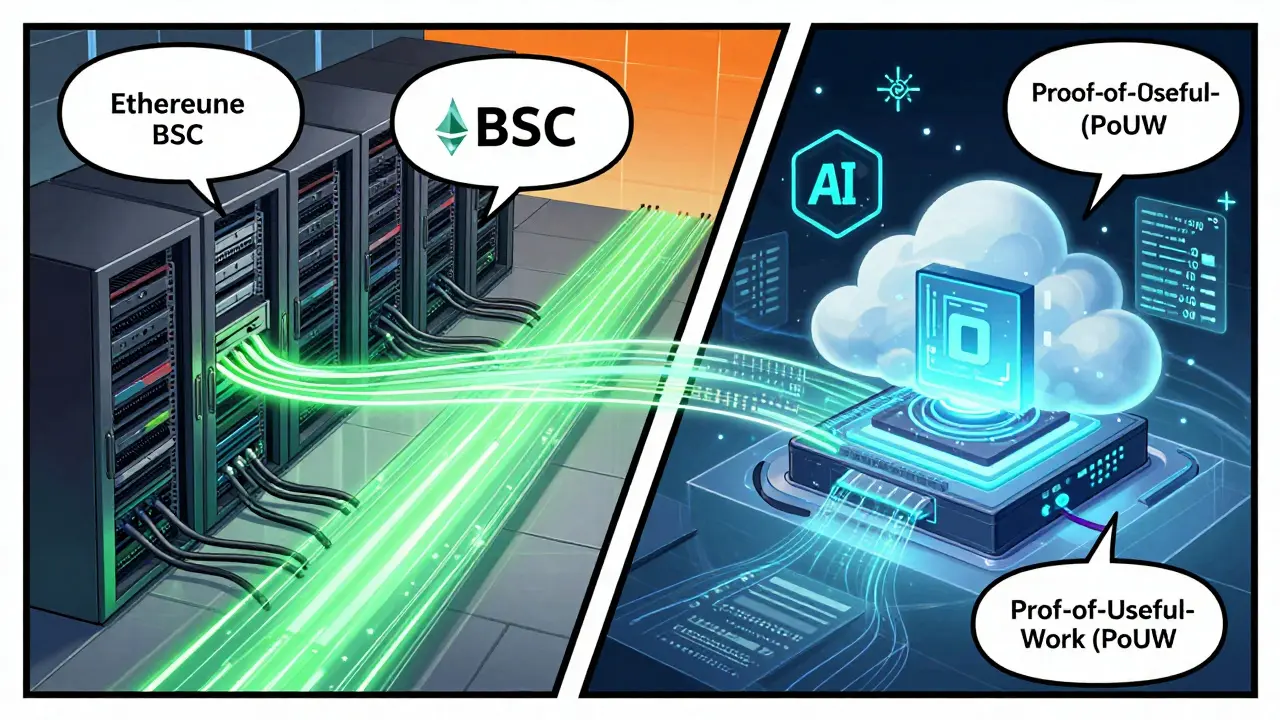
Airdrops are useless if the project behind them is dead on arrival. So, why should you care about Flux Protocol beyond the free tokens? Flux is not just another copy-paste lending platform. It differentiates itself through two main pillars: cross-chain functionality and Proof-of-Useful-Work (PoUW).
Most lending protocols like Aave or Compound are siloed within single chains or require expensive bridges to move assets. Flux allows users to deposit crypto assets to earn interest or borrow against their holdings across five major blockchain networks simultaneously. This reduces friction. You don't have to worry as much about being stuck on one chain with high gas fees. Their technical specs show significantly lower contract call costs and higher execution efficiency compared to older competitors.
Then there is the PoUW v2 upgrade implemented in September 2025. Unlike traditional Proof-of-Work that burns energy for nothing useful, Flux rewards users for performing real computational work, such as AI processing. This creates a tangible utility for the FLUX token beyond just governance or staking. When you hold FLUX, you are participating in a network that powers actual computation. This is a significant shift in value proposition for DeFi assets.
Market Context: Is FLUX a Good Investment Post-Airdrop?
Receiving tokens is easy. Knowing what to do with them is hard. Let's look at the market data as of late 2025. Flux Protocol ranked #515 by market capitalization with a cap of $52.78 million. Compare that to Aave at #55 or Compound at #102. The gap is massive. However, Flux showed resilience with a 24-hour trading volume of $7.478 million, representing a healthy volume-to-market-cap ratio of 14.57%. Anything above 10% is considered stable for emerging cryptocurrencies.
Price predictions vary wildly. Coinpedia analysts were optimistic, projecting a target of $1.68 per token for 2025, citing strong community support and interoperability. On the flip side, CoinCodex maintained a bearish view, forecasting a tight range between $0.1366 and $0.1367 with a Fear & Greed Index rating of 38. Technical analysis noted that while FLUX had outperformed the broader market with a 5.68% gain in 24 hours, it was still trading below critical moving averages like the 50-Day SMA ($0.1975). This suggests caution. The token has momentum, but it faces resistance.
The risk here is liquidity depth. With a bid-ask spread averaging 0.87% (compared to 0.12% for Aave), selling large amounts of FLUX can result in slippage. If you plan to sell your airdropped tokens, be aware that the market isn't deep enough to absorb huge orders without impacting the price.

Strategic Next Steps for Token Holders
If you successfully claimed your 5 FLUX tokens, you now have a decision to make. Here are three practical paths forward based on current ecosystem developments:
- Hold for Utility Expansion: Flux launched FusionX, a new exchange designed to expand FLUX token utility, in October 2025. Holding your tokens positions you to benefit from any future fee discounts or governance rights associated with this new platform.
- Stake for Yield: As a lending protocol, Flux offers interest rates on deposits. You could deposit your FLUX into the protocol to earn yield. Given the improved interest rate model mentioned in their whitepaper, this might offer better returns than holding idle in a wallet.
- Sell for Gas Fees: If you believe the bearish sentiment (RSI of 32.32 indicating oversold conditions but weak momentum) will persist, consider swapping your tokens for ETH or BNB to cover gas fees for other DeFi activities. Even $0.66 is useful for transaction costs.
Common Pitfalls to Avoid
Airdrop scams are rampant. Never share your private key or seed phrase to "claim" an airdrop. Legitimate distributions like the Flux/CoinMarketCap event happen through official interfaces. If you received an email or DM asking you to connect your wallet to a suspicious link to claim FLUX, delete it immediately. Always verify the source through CoinMarketCap's official announcements or the Flux Protocol website.
Also, watch out for tax implications. In many jurisdictions, receiving crypto airdrops is considered taxable income at the fair market value at the time of receipt. Keep records of the date, amount, and USD value when you claimed your tokens. Ignoring this can lead to headaches during tax season.
Is the Flux Protocol CoinMarketCap airdrop still open?
No, the specific airdrop distributing 10,000 FLUX tokens to 2,000 winners concluded in October 2025. However, Flux Protocol may launch future promotions. Check the official CoinMarketCap events page or Flux social channels for updates.
What is the minimum number of FLUX tokens I can claim?
In the completed October 2025 campaign, each eligible participant received exactly 5 FLUX tokens. There was no variable amount; it was a fixed distribution per winner.
Which blockchains does Flux Protocol support?
Flux Protocol currently operates on Ethereum, BSC (Binance Smart Chain), Heco, OKExChain, and Conflux. They have planned expansions to Solana, Polygon, Arbitrum, and Near to enhance cross-chain functionality.
Is Flux Protocol safe to use?
Flux is a non-custodial protocol, meaning you retain control of your assets. However, all DeFi platforms carry smart contract risks. Flux has undergone security audits and uses a Proof-of-Useful-Work consensus mechanism to enhance security, but users should always start with small amounts to test the waters.
What is Proof-of-Useful-Work (PoUW)?
PoUW is a consensus mechanism used by Flux that rewards participants for performing valuable computational tasks, such as AI processing, rather than just solving arbitrary mathematical puzzles. This adds real-world utility to the network's energy consumption.

Manish Prajapat
June 10 2026It is interesting to observe the shift towards Proof-of-Useful-Work in decentralized protocols. The traditional Proof-of-Work model was always criticized for its environmental impact, but Flux seems to have found a middle ground by utilizing computational power for AI processing. This creates a tangible utility that goes beyond mere speculation or governance rights. When you hold FLUX, you are essentially participating in a network that powers actual computation, which adds a layer of real-world value to the asset. It is not just about storing value; it is about contributing to a functional ecosystem. The cross-chain functionality is also a significant differentiator in a market saturated with siloed lending platforms. Being able to deposit assets across Ethereum, BSC, Heco, OKExChain, and Conflux simultaneously reduces friction significantly. Users no longer need to worry about being stuck on one chain with prohibitive gas fees. This interoperability is crucial for the long-term viability of any DeFi protocol. The airdrop itself, while small in monetary value, serves as an effective user acquisition strategy. By educating users through CoinMarketCap tasks, the project ensures that new participants understand the underlying technology before they engage further. This approach fosters a more informed community that is less likely to panic-sell during market volatility. The multi-chain nature also means that users must be aware of where their tokens reside and have the necessary gas fees ready to move them. It is a step forward in making DeFi more accessible and efficient for the average user.
Skm Shubham
June 11 2026You people are completely missing the point here. This is just another marketing stunt designed to pump the price temporarily before the developers dump their bags. Look at the numbers. $0.66 per winner? That is pathetic. They are giving away crumbs to keep the masses entertained while the whales accumulate. The liquidity depth is abysmal, with a bid-ask spread of 0.87%. Try selling anything substantial without slippage eating your profits alive. It is a trap. The PoUW narrative is just buzzword salad to attract retail investors who don't know better. Real utility comes from adoption, not press releases about AI processing. I see this pattern every cycle. Airdrop, hype, rug pull. Don't be a sucker. Hold onto your stablecoins and wait for the dust to settle. These projects always collapse under the weight of their own overpromising. The Fear & Greed Index is already flashing caution, yet everyone is still talking about potential gains. Wake up. The market doesn't care about your feelings or your educational tasks. It cares about volume and liquidity, and Flux has neither in meaningful quantities. Stay away from this garbage unless you want to learn a hard lesson about greed.
Charles Pawlikowski
June 12 2026typical crypto scam vibes :/ why do we even bother with these foreign chains when we have solid american tech? flux sounds like another way for overseas devs to drain our wallets. keep your money in usd or btc thats all that matters. dont fall for the ai hype it's just noise. :angry:
Fede Faith
June 14 2026I think Skm Shubham might be a bit too harsh, but he raises valid points about liquidity. However, looking at the strategic next steps, holding for utility expansion via FusionX could actually pay off if the platform gains traction. Staking for yield is also a reasonable option if you believe in the long-term vision of the protocol. Even if the initial airdrop value was low, getting free entry into a lending protocol with lower contract call costs is not nothing. You can always swap those tokens for ETH or BNB to cover gas fees elsewhere, so there is zero risk in claiming them if you did qualify. Just make sure you verify the source through official channels to avoid scams. The key is to treat it as an experiment rather than a get-rich-quick scheme. If you use the tokens to learn how cross-chain lending works, you gain knowledge that is valuable regardless of the token's price action. Plus, the educational aspect of the qualification process helps filter out bots and casual speculators, which is good for the ecosystem's health overall.
Josh Dodson
June 15 2026hey guys! i claimd mine yesterday and it was super easy lol. just read the articles on cmc and boom 5 flux in my wallet. not much cash but free money is free money right? gonna stake it and see what happens. hope it moons soon! 🚀
Andrea Burd
June 17 2026ugh. another airdrop guide. so tedious. the writing is pretentious and the value is negligible. i barely got 5 tokens after reading all that fluff about consensus mechanisms. waste of time honestly. why do people care about this stuff? it's all just noise in the end. typo typos everywhere in the post too. amateur hour.
Sonya O'Brien
June 19 2026I appreciate the detailed breakdown provided in the original post, as it really clarifies the mechanics behind the Flux Protocol distribution. It is quite fascinating how the project leverages CoinMarketCap's engagement tactics to ensure that participants are educated about the protocol's unique features before they receive any tokens. This approach not only filters out casual users who might immediately sell their holdings but also builds a foundation of informed community members who understand the value proposition of Proof-of-Useful-Work. The fact that Flux operates across multiple blockchain networks such as Ethereum, BSC, Heco, OKExChain, and Conflux is particularly impressive because it addresses one of the biggest pain points in DeFi: interoperability. Users often find themselves trapped on single chains with high gas fees, but Flux's cross-chain functionality allows for seamless asset movement and borrowing against holdings without the need for expensive bridges. While the monetary value of the airdrop was relatively small at around $0.66 per winner, the strategic implication of acquiring active users who will utilize the lending platform is significant for the project's long-term growth. Additionally, the introduction of FusionX as a new exchange expands the utility of the FLUX token, offering potential benefits such as fee discounts and governance rights for holders. It is important for anyone considering engaging with this protocol to remain vigilant against scams and to keep accurate records for tax purposes, as receiving crypto airdrops is considered taxable income in many jurisdictions. Overall, this seems like a well-thought-out initiative that prioritizes user education and ecosystem development over quick profits.
Rob Aronson
June 19 2026From a technical standpoint, the implementation of PoUW v2 is a game-changer for energy-efficient consensus mechanisms. By rewarding users for performing real computational work like AI processing, Flux moves away from the arbitrary mathematical puzzles of traditional PoW. This creates a symbiotic relationship between the network's security and its utility. The lower contract call costs and higher execution efficiency compared to older competitors like Aave or Compound are significant advantages. However, investors should be cautious of the current market metrics. With a market cap of $52.78 million and a ranking of #515, there is still a long way to go to challenge established players. The volume-to-market-cap ratio of 14.57% indicates healthy trading activity, but the bid-ask spread of 0.87% suggests limited liquidity for large orders. Always DYOR before committing any capital. 📊🔍
Kwon Bill
June 20 2026In my experience with Asian markets, cross-chain protocols face unique regulatory hurdles that Western projects often overlook. Flux's presence on Heco and OKExChain shows a strong understanding of the regional landscape. However, the expansion to Solana and Polygon will be critical for global adoption. The cultural shift towards accepting decentralized identity and non-custodial lending is happening faster in Asia than in Europe. Keep an eye on how local regulations evolve regarding PoUW mining rewards. It could set a precedent for other DeFi platforms operating in similar jurisdictions. The integration of AI processing into the consensus mechanism aligns well with the broader tech trends in countries like China and South Korea, where computational resources are highly valued.
Danna Charris
June 20 2026Surely you realize that most of these airdrops are just vanity metrics for the founders. The real question is whether the protocol can sustain itself without constant promotional campaigns. I doubt it. The elitist nature of DeFi excludes the very users it claims to empower. Only the initiated survive.
Akeem Whittaker
June 20 2026Let me break down the risks and opportunities here for everyone. First, the opportunity lies in the multi-chain infrastructure. If you are familiar with using different blockchains, Flux simplifies the process by allowing deposits across five major networks. This is useful if you have scattered assets and want to earn interest without moving everything to one place. Second, the risk is primarily related to smart contract security and market volatility. While Flux has undergone audits, no code is perfect. Start with small amounts to test the waters. Also, be aware of the tax implications. In the US and many other countries, airdrops are taxable events. Record the fair market value at the time of receipt. Finally, consider the utility. If you plan to use the FusionX exchange, holding FLUX might save you on fees. If not, staking for yield or swapping for gas fees are practical options. Don't let FOMO drive your decisions. Evaluate based on your personal financial goals and risk tolerance. Education is your best defense in DeFi.
sreeja boora
June 21 2026The Indian perspective on such protocols is mixed due to regulatory uncertainty. However, the technological advancement of cross-chain lending is undeniable. Many users in India are looking for ways to maximize yields on their idle crypto assets. Flux offers a viable alternative to centralized exchanges which often freeze withdrawals. The emphasis on security and non-custodial operations resonates well with users who have been burned by CEFT failures in the past. Nevertheless, caution is advised given the volatile nature of the crypto market in emerging economies.
John Doe
June 23 2026I cannot help but feel a sense of melancholy looking at these numbers. Here we are, building complex systems to distribute fractions of cents, while the world faces real crises. Yet, I understand the allure. It is a beacon of hope for some, a tiny spark in the dark void of traditional finance. For those who missed out, perhaps there is comfort in knowing that the cycle continues, and new opportunities will arise. But for those who received the tokens, cherish the moment. It is a small victory in a vast, indifferent universe. Do not let the bearish forecasts dim your spirit. Hold on to your dreams, and maybe, just maybe, the stars will align in your favor.
Annemarie Fitzgerald
June 23 2026oh my god. can we stop pretending this is innovative? it's just another copy paste job with fancy words. 'proof of useful work' is such a pretentious term for what is basically just renting out gpu power. and the airdrop was a joke. 5 tokens? please. i've seen better generosity from beggars on the street. the whole de fi space is a bubble waiting to burst and flux is just another brick in the wall. wake up sheeple. the matrix is feeding you lies about 'utility' and 'interoperability'. it's all just a game for the elites. i'm staying far away from this circus. typo typos everywhere in the article too. unprofessional.