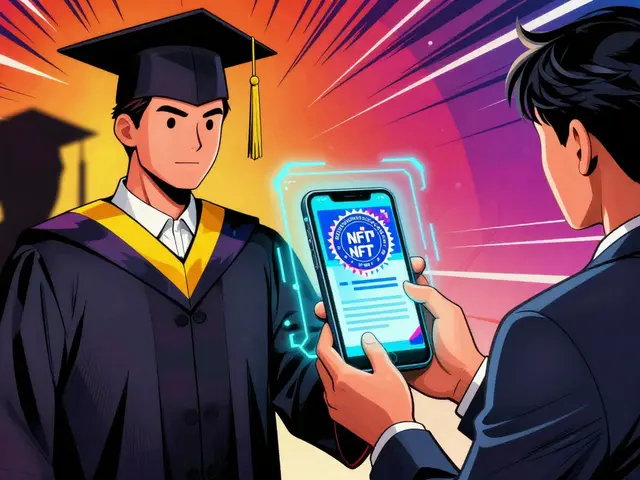
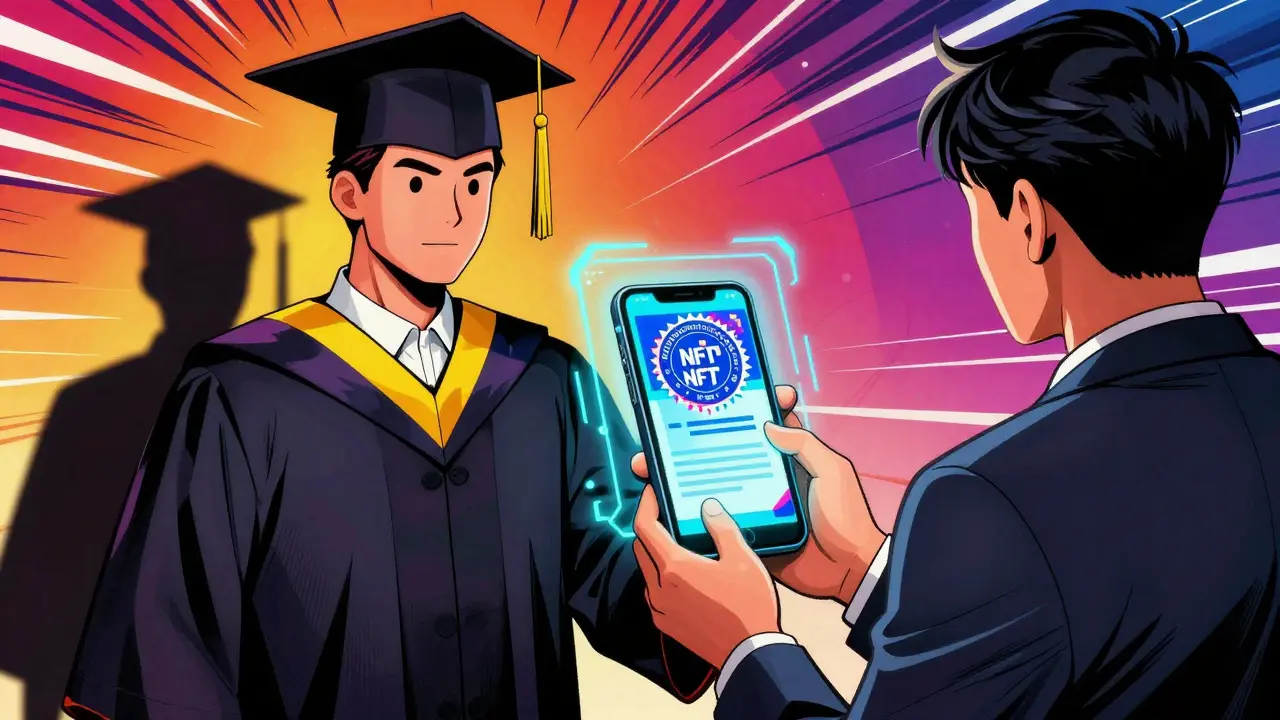
Imagine applying for a job and having your employer verify your university degree in fifteen seconds. No waiting three days for an email from the registrar’s office. No faxing documents. No worrying if that PDF is a forgery. This isn’t science fiction anymore. It’s happening right now through Educational Certificates as NFTs, which are digital representations of academic achievements secured on blockchain technology.
For decades, we’ve trusted paper diplomas and scanned PDFs to prove our hard work. But this system is broken. Credential fraud affects roughly 15-20% of verification cases globally. Employers waste hours checking backgrounds, and students lose control over their own records. Non-fungible tokens (NFTs) offer a fix. Unlike Bitcoin, where every coin is identical, each NFT is unique. That makes them perfect for representing one-of-a-kind things like your Master’s degree or coding bootcamp certificate.
How Blockchain Secures Your Diploma
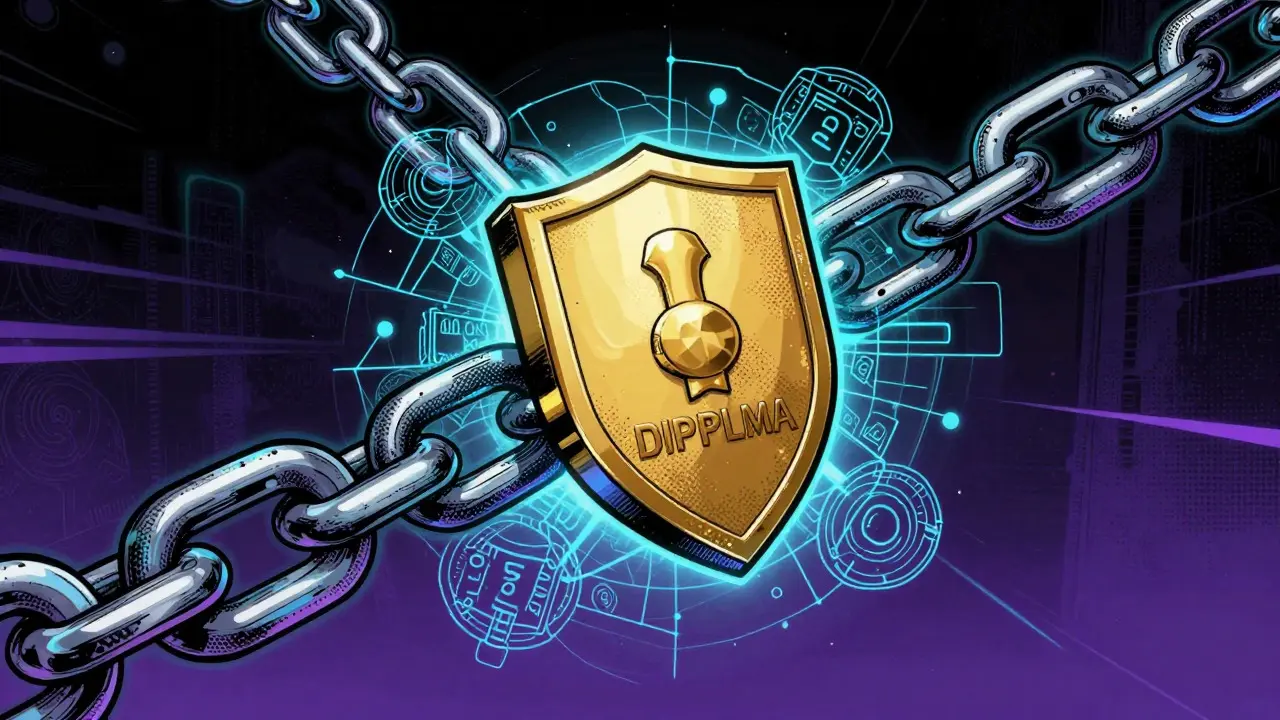
To understand why this matters, you need to look at how it works under the hood. When a university issues an NFT diploma, they aren’t just sending you a file. They are minting a token on a blockchain. Think of the blockchain as a public ledger that everyone can see but no one can change once written.
The actual image of your certificate usually lives on decentralized storage like IPFS (InterPlanetary File System). This ensures that even if the university’s website goes down, your proof of achievement remains accessible. The NFT itself contains metadata: your name (often hashed for privacy), the course title, the date of completion, and a cryptographic signature from the issuing institution.
This setup creates a verifiable chain of authenticity. If someone tries to alter the data, the cryptographic hash changes, and the blockchain rejects it. You get instant, tamper-proof proof that you earned that degree. Duke University pioneered this approach by issuing NFTs for its Master of Engineering in Financial Technology program, showing that top-tier institutions trust this method.
NFT Diplomas vs. Traditional Credentials
| Feature | Paper/PDF Diploma | NFT Certificate |
|---|---|---|
| Verification Time | 3-5 Business Days | Under 15 Seconds |
| Fraud Risk | High (15-20% of cases) | Negligible (Cryptographically Secured) |
| Ownership Control | Institution Holds Record | Student Holds Wallet Key |
| Cost to Verify | Administrative Labor Costs | Minimal Gas Fees (~$0.001) |
| Accessibility | Easy (Email/Post) | Requires Web3 Wallet Knowledge |
The biggest win here is speed and security. Traditional verification involves humans checking documents against databases. With NFTs, the code does the work. An employer clicks a link, sees the transaction history on the blockchain, and knows it’s real. Singapore’s SkillsFuture initiative reported a 98% reduction in credential verification fraud after rolling out NFT certificates across 23 polytechnics. That’s a massive shift for global hiring.
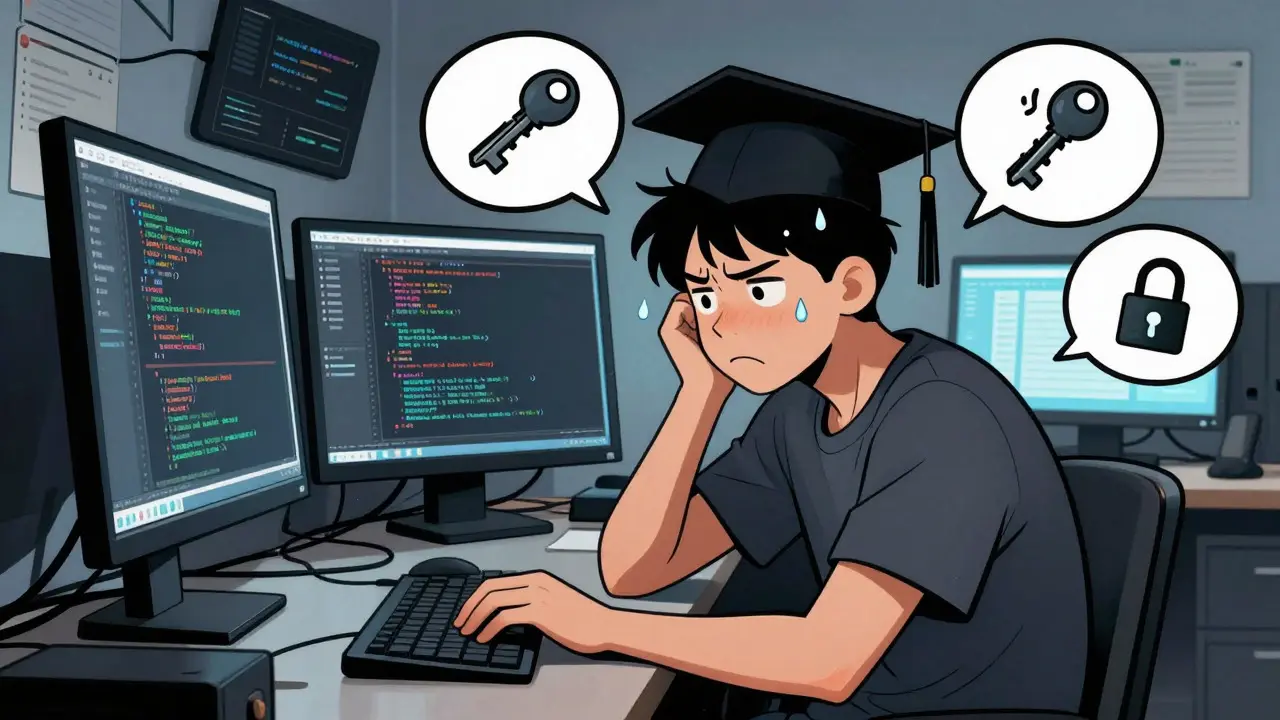
But there’s a catch. True ownership means you hold the keys. If you lose your private key to your digital wallet, you might lose access to your diploma forever. Unlike a university registrar who can reprint a lost paper copy, the blockchain doesn’t care if you misplaced your password. This shifts responsibility entirely onto the graduate.
The Technical Hurdles You Can’t Ignore
It sounds great in theory, but the user experience is still rough around the edges. To receive an NFT diploma, you need a Web3 wallet like MetaMask. For tech-savvy users, setting this up takes minutes. For others, it’s a nightmare.
Studies show that 68% of non-technology students struggle with wallet setup. One European university abandoned its pilot because only 32% of graduates successfully claimed their NFT credentials. Students complained about watching five YouTube tutorials just to get their digital diploma. That’s not scalable yet.
Then there’s the issue of blockchain choice. Most systems use Polygon instead of Ethereum Mainnet. Why? Cost. Ethereum transactions average $1.50 or more in gas fees. Polygon averages $0.001. When you’re issuing thousands of free diplomas, those pennies add up fast. However, this fragmentation means different universities might use different blockchains, creating interoperability headaches later.
Who Is Leading the Charge?
Adoption is uneven but accelerating. Singapore leads the pack, with 78% of higher education institutions piloting or using NFT credentials. The United States follows at 34%, mostly among research universities. Europe lags at 22%, largely due to GDPR concerns about storing personal data on immutable ledgers.
Several platforms are building the infrastructure:
- OpenCerts: A standard framework used widely in Asia, focusing on privacy and ease of integration.
- BCDiploma: Known for enterprise-grade security and support for complex institutional needs.
- Blockdegree: Focused on making the process user-friendly for both issuers and recipients.
Even giants like IBM and ConsenSys are entering the space. LinkedIn’s 2023 Hiring Manager Survey found that 41% of Fortune 500 companies are interested in NFT credential verification. While only 12% have implemented it, the interest signals a major shift in how HR departments will operate within the next few years.
Is It Worth It for You?
If you’re a student graduating soon, ask your university if they plan to issue NFT credentials. If they do, take the time to learn basic wallet management. Set up a hardware wallet or keep strong backups of your recovery phrase. Treat your digital diploma with the same care as your passport.
If you’re an educator or administrator, the ROI is clear. Reducing verification time from days to seconds saves administrative labor costs. Eliminating fraud protects your institution’s reputation. But you must invest in student support. Don’t just dump the tech on learners; provide guides, chatbots, and helpdesk resources. Without that support, adoption will fail.
Employers should start accepting these credentials now. Early adopters will gain a competitive edge in hiring speed and accuracy. As Gartner predicts, mainstream adoption could hit by 2027. Waiting until then means missing out on the first wave of verified talent.
What Comes Next?
The technology is evolving rapidly. In February 2024, OpenCerts released wallet-agnostic access, cutting student onboarding time by 65%. AI-powered translation tools are coming to handle multilingual verification. ISO working groups are drafting international standards expected by mid-2025.
Despite current friction, the trajectory is clear. Blockchain credentialing addresses fundamental flaws in the education-to-employment pipeline. It gives power back to students, secures records against fraud, and streamlines hiring. The hurdles are technical and educational, not theoretical. Once those are cleared, NFT diplomas won’t be a novelty-they’ll be the norm.
Are NFT diplomas legally recognized?
Recognition varies by country. In many regions, the legal weight comes from the issuing institution’s accreditation, not the format. However, regulatory bodies like the U.S. Department of Education are exploring standards for blockchain credentials. Always check local labor laws before relying solely on an NFT for official purposes.
What happens if I lose my crypto wallet?
If you lose your private key without a backup, accessing your NFT becomes nearly impossible. Some platforms are implementing recovery mechanisms, but currently, you are responsible for securing your wallet. Use hardware wallets and store recovery phrases safely offline.
Do NFT diplomas cost money to issue?
Issuing on networks like Polygon costs fractions of a cent per transaction. Universities typically absorb this cost. Students rarely pay anything unless they choose to trade or transfer the NFT on secondary markets, which incurs small gas fees.
Can employers easily verify NFT credentials?
Yes, verification is instant via blockchain explorers or dedicated verification portals. No special software is needed for basic checks. Advanced HR systems are beginning to integrate direct API connections to validate credentials automatically.
Is my personal data safe on the blockchain?
Reputable platforms store only hashed identifiers on-chain, keeping sensitive details off the public ledger. The actual document may reside on IPFS or private servers. Look for institutions compliant with GDPR and other privacy regulations when choosing an NFT credential provider.