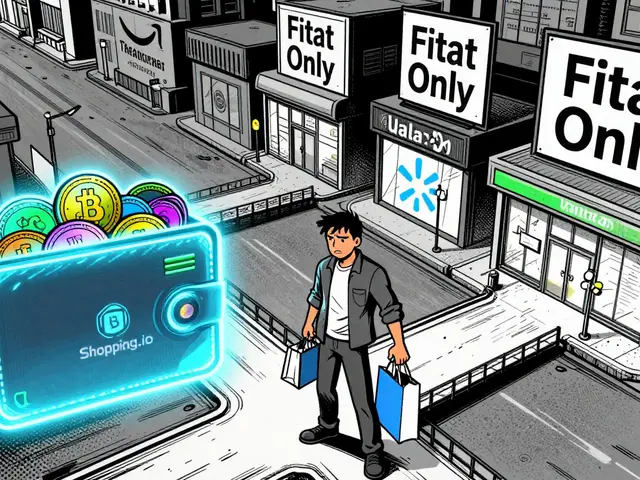
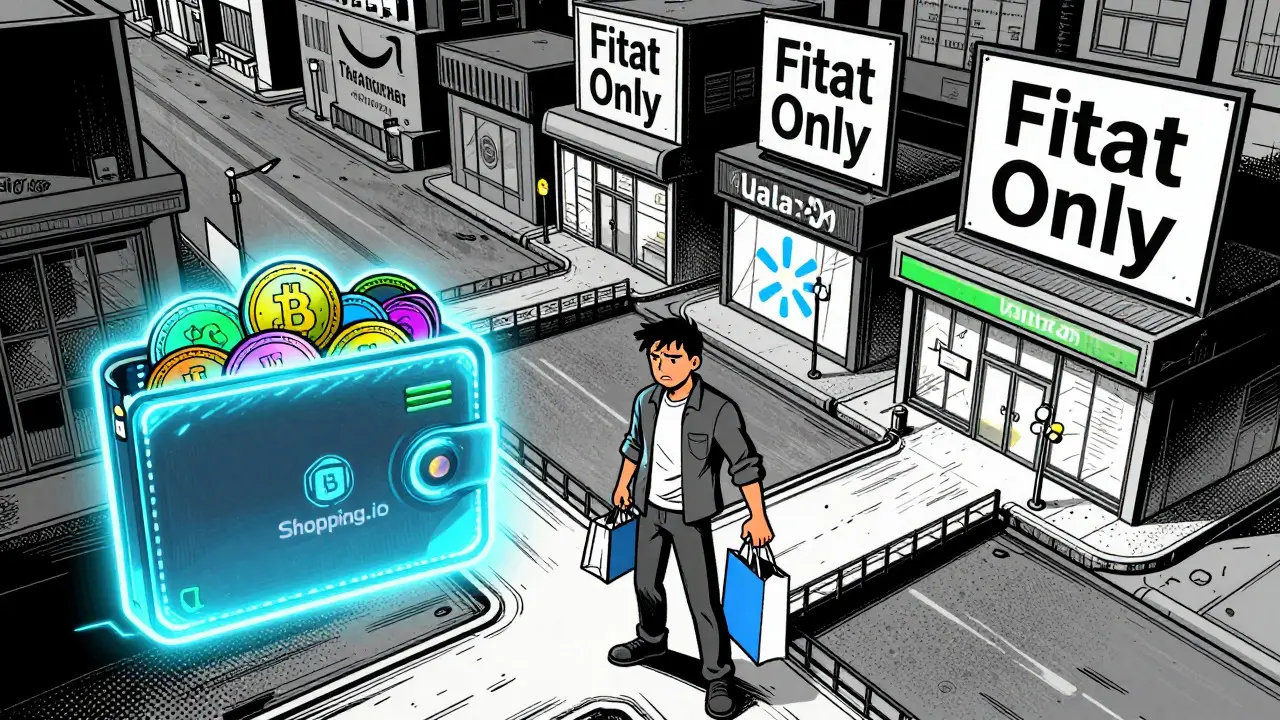
You have a wallet full of cryptocurrencies. You want to buy a new laptop or some home supplies. But when you go to Amazon or Walmart, you hit a wall: they only accept dollars, euros, or credit cards. This is where Shopping.io comes in. It acts as a bridge between your crypto holdings and traditional online stores.
At its core, Shopping.io is an e-commerce platform that lets you spend digital assets at major retailers. The system revolves around its native utility token, known as SHOP. Instead of selling products directly from its own warehouse, Shopping.io overlays existing marketplaces like Amazon, eBay, Walmart, and Home Depot. You browse these familiar sites through the Shopping.io interface, add items to your cart, and pay using cryptocurrency.
How the Shopping.io Platform Works
The concept sounds simple, but the execution involves a few technical steps. When you use Shopping.io, you are essentially using a payment gateway that converts your crypto into fiat currency for the retailer. Here is the typical flow:
- Browse Retailers: You access popular stores like Amazon or eBay through the Shopping.io portal or browser extension.
- Select Items: You pick out the goods you want just like any normal online shopper.
- Checkout with Crypto: At the payment stage, you choose to pay with one of the supported cryptocurrencies. The platform supports over 150 different coins natively, and potentially over 200 through partnerships with payment processors like NOWPayments.
- Conversion: Shopping.io instantly converts your crypto into the local currency required by the merchant. The merchant receives fiat money, and you get your product.
This model solves a major pain point for crypto holders. Previously, spending altcoins often meant buying gift cards, which were limited in value and availability. Shopping.io aims to remove those restrictions by integrating directly into the checkout process of massive global brands.
Understanding the SHOP Token
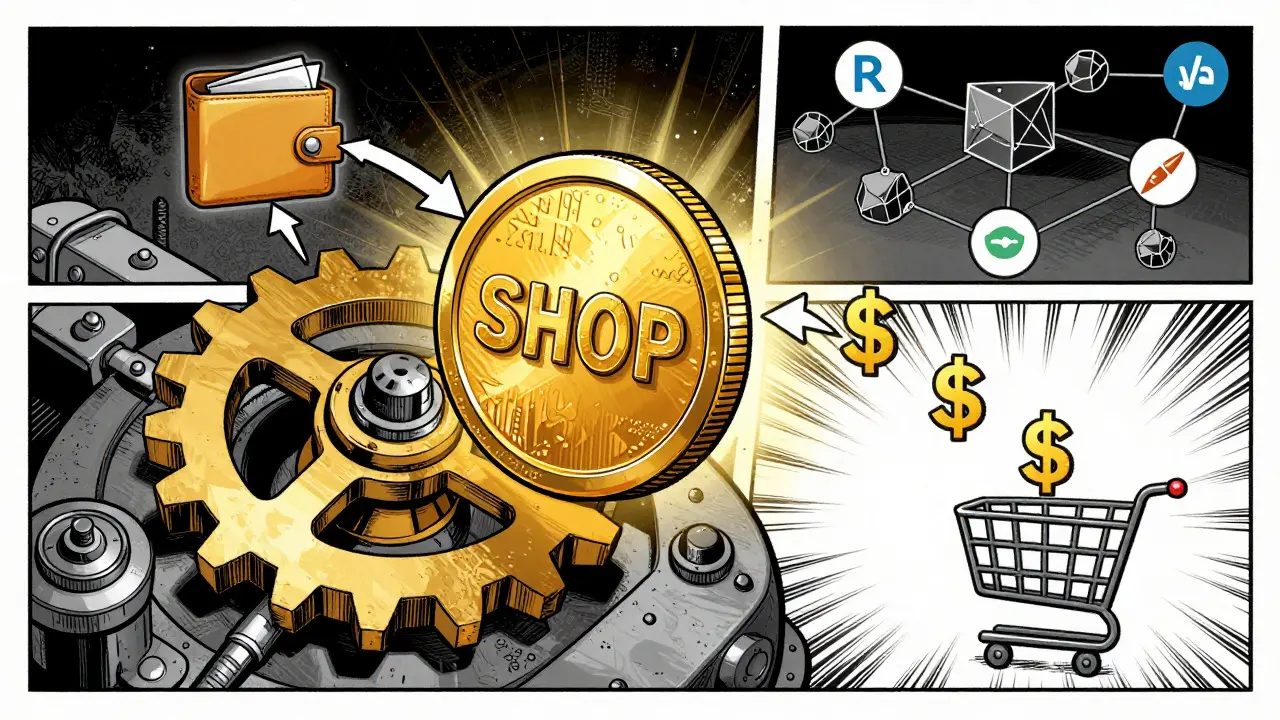
The SHOP token is the fuel that keeps this ecosystem running. It is not a meme coin designed purely for speculation, nor is it a governance token that gives you voting rights over the company’s direction. Instead, it is classified strictly as a utility token.
Technically, SHOP is an ERC-20 token built on the Ethereum blockchain. This means it follows the standard protocol for creating tokens on Ethereum, making it compatible with most wallets like MetaMask and exchanges that support Ethereum-based assets. The contract address for SHOP is publicly verifiable on block explorers like Etherscan.
So, why does the token exist? In many crypto ecosystems, utility tokens provide benefits such as reduced transaction fees, exclusive discounts, or faster processing times. While specific perks can change based on the platform’s current promotions, holding or using SHOP generally encourages users to stay within the Shopping.io ecosystem rather than converting everything to cash before shopping.
Token Supply and Market Data
If you are looking at the numbers, SHOP is what traders call a "micro-cap" asset. This classification is important because it tells you about the liquidity and volatility risks involved.
Here is the breakdown of the tokenomics as reported by major trackers in mid-2026:
| Metric | Value |
|---|---|
| Total Supply | ~99.87 Million |
| Circulating Supply | ~99.87 Million (Fully Diluted) |
| Blockchain | Ethereum (ERC-20) |
| Market Cap Range | $10,000 - $300,000 (Highly Volatile) |
| Primary Trading Venue | Uniswap v3 |
Note that the circulating supply is nearly identical to the maximum supply. This means almost all SHOP tokens are already in circulation. There is no hidden reserve waiting to be dumped on the market later, which is a positive sign for stability compared to projects with large unlocked vesting schedules.
However, the price data is messy. Different aggregators show conflicting prices, ranging from fractions of a cent to slightly higher values. This discrepancy is common for low-volume tokens. For example, while some sources might list a price around $0.002-$0.003, others may show stale data or errors due to thin liquidity. Always check multiple sources before trading.
Liquidity and Trading Risks
This is the section where you need to slow down and think carefully. SHOP is not listed on major centralized exchanges like Binance or Coinbase Pro for direct spot trading. Most trading happens on decentralized exchanges (DEXs), primarily Uniswap v3.
Trading on a DEX means you are swapping tokens directly from a liquidity pool rather than matching orders with another person on an order book. For micro-cap tokens like SHOP, this creates two main issues:
- Slippage: If you try to buy or sell a large amount of SHOP, you might move the price significantly. Buying $1,000 worth of SHOP could cost you much more than expected because the pool doesn't have enough depth to absorb the trade without shifting the exchange rate.
- Price Discrepancies: Because volume is low, the price on CoinMarketCap might differ from the actual price you get on Uniswap. Aggregators often pull data from various feeds, and if one feed is outdated, the displayed price becomes misleading.
Furthermore, the market capitalization fluctuates wildly. One day it might look like a $200,000 project; the next, it might appear closer to $10,000 depending on which data source you trust. This extreme volatility makes SHOP unsuitable for conservative investors who cannot afford to lose their principal investment.
Is Shopping.io Legitimate?
Determining legitimacy in the crypto space requires looking beyond marketing claims. Shopping.io has been tracked by major data providers like CoinGecko and CoinMarketCap for several years. It has functional integrations with real-world payment processors like NOWPayments. These factors suggest it is an active project rather than a "rug pull" (a scam where developers abandon the project).
However, "legitimate" does not mean "safe investment." The platform relies on affiliate relationships with retailers. Its revenue model depends on users actually shopping through the portal. If user adoption stalls, the utility of the SHOP token diminishes. Currently, community feedback suggests that while the concept is appealing, the user experience can be complex for beginners. Setting up wallets, managing gas fees on Ethereum, and navigating decentralized exchanges are barriers that keep mainstream shoppers away.

Future Outlook and AI Integration
The Shopping.io team has hinted at evolving the platform beyond simple payment processing. Recent updates to their branding mention "AI Powered Shopping." This likely refers to using artificial intelligence to improve product search, personalize recommendations, or compare prices across different retailers automatically.
If successful, these features could make the platform more sticky. Users might return not just to pay with crypto, but because the AI helps them find better deals than searching manually. However, concrete details on the AI stack or specific algorithmic advantages remain sparse in public documentation. For now, the primary value proposition remains the ability to spend diverse crypto assets at major retail chains.
Conclusion
Shopping.io fills a specific niche: allowing crypto holders to spend their assets at traditional retailers without going through cumbersome gift card processes. The SHOP token facilitates this ecosystem as a utility instrument on the Ethereum network. For everyday shoppers who hold significant amounts of altcoins, it offers a practical way to liquidate small portions of their portfolio for physical goods.
For investors, however, SHOP represents high risk. With low liquidity, thin trading volumes, and significant price discrepancies across data sources, it is not a stable store of value. Use it if you intend to shop; trade it only if you understand the mechanics of decentralized exchanges and are comfortable with micro-cap volatility.
Can I buy SHOP on Coinbase or Binance?
Currently, SHOP is not listed for direct trading on major centralized exchanges like Coinbase or Binance. Most users acquire SHOP by trading on decentralized exchanges such as Uniswap v3 using Ethereum (ETH) or other base pairs. Always verify the contract address before swapping to avoid fake tokens.
Which cryptocurrencies can I use to shop on Shopping.io?
The platform natively supports over 150 cryptocurrencies. Through partnerships with payment gateways like NOWPayments, this number may extend to over 200. This includes major coins like Bitcoin and Ethereum, as well as numerous smaller altcoins.
Is SHOP a good investment?
SHOP is considered a high-risk, micro-cap asset. Its value is tied directly to the usage of the Shopping.io platform rather than speculative hype alone. Due to low liquidity and high volatility, it is generally not recommended for conservative portfolios. It is best suited for users who plan to use the token for its intended purpose: shopping.
What is the difference between SHOP and SPI tokens?
Both SHOP and SPI are utility tokens within the Shopping.io ecosystem. SHOP is the primary ERC-20 token associated with the platform's core operations and Ethereum integration. SPI serves additional functions within the ecosystem, though specific distinctions in utility often depend on current platform campaigns and partnerships.
Does Shopping.io charge fees?
Yes, like most crypto payment processors, Shopping.io charges a fee for converting cryptocurrency to fiat currency at checkout. Additionally, since SHOP is an ERC-20 token, users must pay Ethereum gas fees when transferring or trading the token on the blockchain. Using SHOP may sometimes offer discounts on these platform-specific fees compared to paying with other methods.