You’ve probably seen the buzz around AI and blockchain merging. It’s one of the hottest narratives in crypto right now. But amidst the hype for major players like Fetch.ai or Render, smaller tokens pop up claiming to revolutionize how we use artificial intelligence on-chain. One such project is AIvalanche DeFAI Agents, represented by the AVAXAI token. If you are wondering what this coin actually does, whether it has real utility, or if it’s just another speculative asset, you’re not alone. The landscape is noisy, and separating genuine innovation from vaporware requires a closer look at the fundamentals, the market data, and the technology behind the scenes.
Understanding the Core Concept: What Are DeFAI Agents?
To get your head around AVAXAI, you first need to understand the term "DeFAI." This stands for Decentralized Finance Artificial Intelligence. While DeFi is about open financial protocols, DeFAI introduces autonomous AI agents that can interact with these protocols without human intervention. Think of it as hiring a robot trader or a bot that manages your portfolio 24/7, but instead of paying a monthly fee to a centralized company, you own a share of that agent via a token.
AIvalanche positions itself as an ecosystem specifically designed for creating, deploying, managing, and trading these tokenized AI agents. The core value proposition here is automation and monetization. According to their initial positioning, users can build agents for specific niches-like optimizing GameFi strategies, analyzing DeFi yields, or even generating viral meme content-and then tokenize them. Other users can buy shares in these agents, effectively renting out their computing power or strategic logic. It’s a model that tries to bridge the gap between complex AI coding and accessible crypto investment.
The Technology Stack: Avalanche and BNB Chain
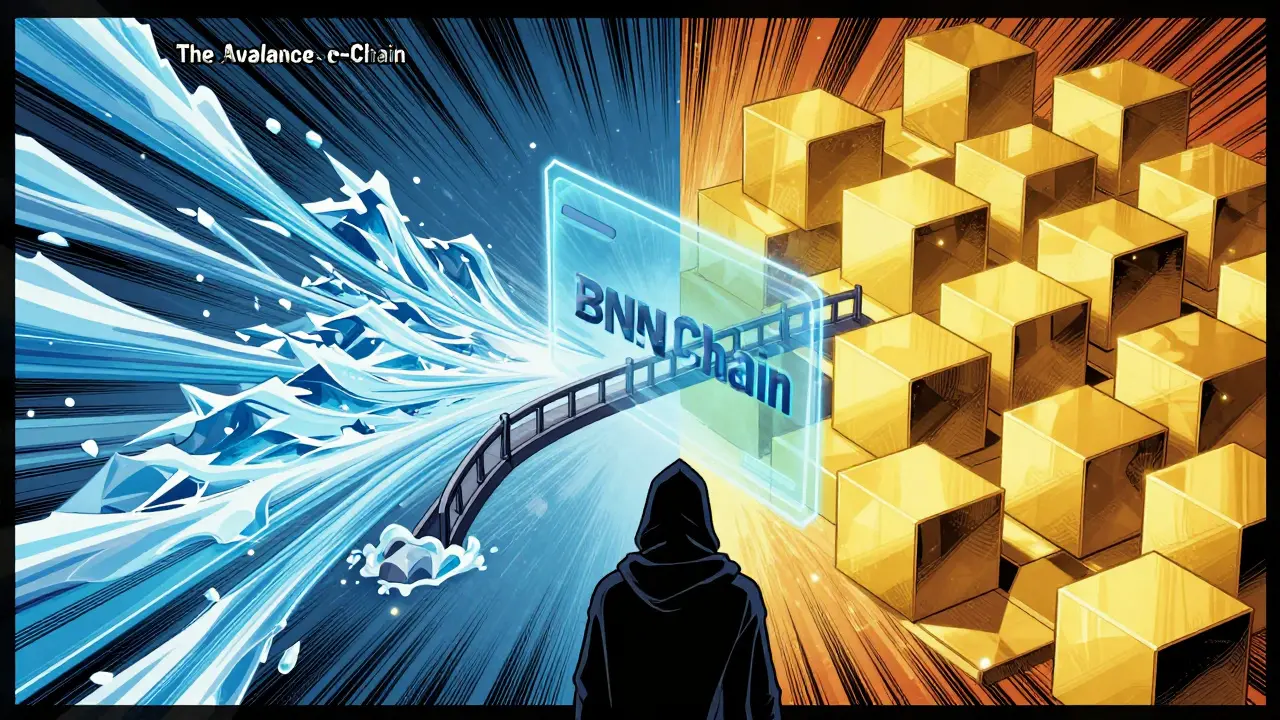
Technology matters in crypto, especially when dealing with AI, which requires significant processing power and low latency. AVAXAI operates primarily on the Avalanche C-Chain. Why Avalanche? The platform leverages Avalanche’s consensus protocol, which is known for fast finality and high throughput. For AI agents that might need to execute trades or react to market changes in milliseconds, speed is critical. Slow transactions mean missed opportunities, and Avalanche aims to solve that.
However, there’s a twist. While the branding screams "Avalanche," technical data reveals that AVAXAI also functions as a BEP-20 token on the BNB Chain. Both chains use the same contract address: 0x8c8d2a7d8d9CF26F5ee1BbFc0bA56e93F4A4A7aC. This dual-chain deployment is interesting. It suggests the team wants broader accessibility, allowing users with Binance Smart Chain wallets to participate easily. However, it also raises questions about where the primary development focus lies. Is it truly an Avalanche native project, or is it bridging across chains to capture liquidity wherever it exists?
The architecture reportedly integrates Deepseek AI technology. Deepseek is a recognized name in large language models and AI research. By integrating this tech, AIvalanche claims to provide a "seamless environment" for AI processing and blockchain transaction finality. In theory, this means the AI brain runs off-chain or on specialized nodes, while the ownership and transaction records stay on-chain via Avalanche. This hybrid approach is common in AI-blockchain projects because running heavy AI computations directly on a blockchain is currently too expensive and slow.
Tokenomics: Supply, Distribution, and Initial Sale
When evaluating any crypto coin, the tokenomics-the economic structure of the token-are crucial. Here is what we know about AVAXAI:
- Total Supply: Fixed at 1 billion tokens.
- Initial Circulation: Approximately 491.75 million tokens were in circulation at launch, representing about 49.175% of the total supply.
- ICO Details: The Initial Coin Offering (ICO) took place in Q1 2024. The sale price was $0.0026 per token.
- Fundraising Goal: The project aimed to raise $100,000 during its ICO.
- Public Allocation: About 23.72% of the total supply (237.23 million tokens) was allocated to public sale participants.
A fully diluted valuation (FDV) of roughly $2.60 million at launch seems modest compared to blue-chip cryptos, but it indicates a small-cap project with high growth potential-or high risk. The fact that nearly half the supply was circulating immediately suggests the team wanted to distribute ownership widely early on, rather than holding back massive amounts for future unlocks that could crash the price later. This is generally a positive sign for short-term stability, provided there isn’t hidden inflation elsewhere.
Market Performance and Liquidity Reality Check
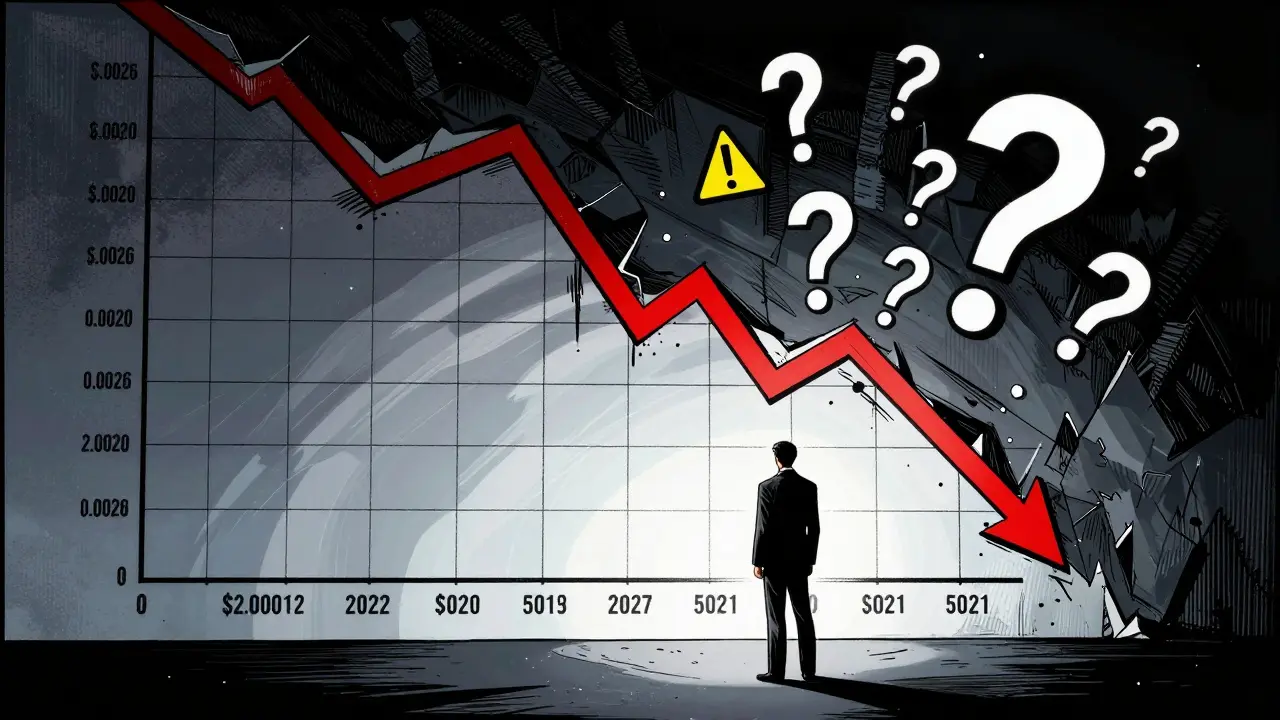
This is where things get tricky. If you look at the price action, AVAXAI has faced significant headwinds. As of late 2023 and moving into 2024, the token has experienced severe volatility and downward pressure. Data from aggregators like CoinGecko and CoinMarketCap showed prices hovering around $0.00012 to $0.00013. Compare that to the ICO price of $0.0026, and you see a drop of approximately 95%. That is a brutal decline for early investors.
Liquidity is another major concern. Trading volumes have been consistently low, often ranging between $140,000 and $240,000 in a 24-hour period. For a token trying to establish itself as a leading AI-agent platform, this volume is thin. Low liquidity means two things: first, it’s harder to buy or sell large amounts without affecting the price significantly (high slippage). Second, it makes the token more susceptible to manipulation by whales who can move the price with relatively small trades.
| Metric | Value / Status | Context |
|---|---|---|
| Current Price Range | $0.00012 - $0.00014 | Significant drop from ICO price of $0.0026 |
| 24h Volume | $140k - $240k | Low liquidity; high slippage risk |
| Market Cap Rank | #4078+ | Micro-cap status; minimal mainstream adoption |
| Supply | 1 Billion | Fixed supply; ~49% initially circulated |
| Chain Support | Avalanche & BNB Chain | Dual deployment for broader access |
Compared to competitors like Fetch.ai (FET) or SingularityNET (AGIX), which boast market caps in the hundreds of millions and ranks in the top 200, AVAXAI is operating in the shadows. Its ranking below #4000 indicates that it has not yet captured significant market attention or institutional interest. This doesn’t mean it’s dead, but it does mean it’s a high-risk, speculative play rather than a established infrastructure play.
Community and Development Activity
A crypto project lives or dies by its community and its developers. Let’s look at the social footprint. AIvalanche maintains a presence on Twitter (@ai_avalanche) with around 3,800 followers and a Telegram group with roughly 1,500 members. These numbers are small. In the world of crypto, where top projects have hundreds of thousands or millions of followers, this suggests a niche audience.
Engagement metrics tell a similar story. Posts typically receive under 10 likes, and discussions in Telegram often center on price complaints rather than technical feedback or feature requests. Users have expressed frustration over the difficulty of selling tokens due to slippage and the lack of exchange listings. Only a handful of exchanges list AVAXAI, limiting accessibility.
On the development side, transparency is lacking. There is no publicly available whitepaper or detailed technical documentation on official channels as of late 2023. Instead, information comes primarily from press releases distributed via services like Chainwire. One notable release, dated February 3, 2025 (a future date relative to current data points, suggesting either a roadmap announcement or a scheduling anomaly in reporting), claimed the launch of a Deepseek-powered DeFAI product. Without independent verification or code repositories (like GitHub) showing active commits, it’s hard to verify if the technology is actually being built or if it’s just marketing promises.
Risks and Considerations for Investors
If you are considering buying AVAXAI, you need to be aware of the risks. First, there is the liquidity risk. With low trading volume, you might find yourself unable to exit your position quickly without taking a massive loss. Second, there is the execution risk. The project relies on integrating complex AI models with blockchain infrastructure. If the technical implementation fails or lags behind competitors, the token could become obsolete. Third, there is the regulatory uncertainty. As governments worldwide scrutinize AI and crypto, projects that operate in gray areas-especially those with anonymous teams and limited legal documentation-face higher scrutiny.
Finally, consider the competitive landscape. The AI-blockchain sector is crowded. Established players with deep pockets and proven track records are dominating the narrative. For AVAXAI to succeed, it needs to demonstrate unique utility that others don’t offer. So far, the evidence for widespread adoption is thin. The concept of tokenized AI agents is compelling, but execution is everything.
How to Buy and Store AVAXAI
If you decide to proceed despite the risks, here is how you can interact with the token. Since AVAXAI is available on both Avalanche and BNB Chain, you’ll need a compatible wallet. MetaMask is widely supported. You will need to manually add the network (Avalanche C-Chain or BNB Chain) and then import the token using the contract address: 0x8c8d2a7d8d9CF26F5ee1BbFc0bA56e93F4A4A7aC.
- Set Up Your Wallet: Install MetaMask and configure it for either Avalanche or BNB Chain. Ensure you have enough AVAX or BNB for gas fees.
- Add the Token: Go to the "Import Tokens" section in MetaMask and paste the AVAXAI contract address.
- Acquire Tokens: Since AVAXAI is not listed on major centralized exchanges like Coinbase or Binance, you will likely need to use a decentralized exchange (DEX) like Trader Joe (on Avalanche) or PancakeSwap (on BNB Chain).
- Execute Trade: Swap your AVAX or BNB for AVAXAI. Be cautious of slippage settings; set them appropriately to avoid failed transactions or unfavorable prices.
Always double-check the contract address. Scammers often create fake tokens with similar names. Verify the address against multiple reputable sources like CoinGecko or CoinMarketCap before sending any funds.
Is AVAXAI a scam?
There is no definitive proof that AVAXAI is a scam, but it exhibits several red flags common in high-risk micro-cap projects. These include an anonymous team, lack of a public whitepaper, extremely low liquidity, and a significant drop in price from its ICO value. Always do your own research (DYOR) and never invest more than you can afford to lose.
What is the difference between AVAXAI and other AI crypto coins?
Unlike platforms like Fetch.ai that focus on general-purpose AI networks, AVAXAI specifically targets the creation and tokenization of individual AI agents for DeFi and GameFi tasks. It allows users to own shares in specific bots or algorithms, rather than just using a shared AI service. However, its market presence and technological maturity lag behind larger competitors.
Can I buy AVAXAI on Coinbase or Binance?
No, AVAXAI is not currently listed on major centralized exchanges like Coinbase or Binance. It is primarily traded on decentralized exchanges (DEXs) on the Avalanche and BNB Chains. This limits accessibility and increases the complexity of purchasing the token.
Why did the AVAXAI price drop so much?
The price drop from $0.0026 to around $0.00012 is attributed to several factors: low market demand, lack of significant exchange listings, poor liquidity, and broader market skepticism towards unproven AI-crypto projects. Additionally, the absence of tangible product updates or user growth has contributed to investor pessimism.
Is the AVAXAI team anonymous?
Yes, the founding team behind AIvalanche remains anonymous. While anonymity is not uncommon in crypto, it adds a layer of risk because investors cannot verify the identities or backgrounds of the people developing the project. This contrasts with many established projects that have public teams with verifiable LinkedIn profiles and industry experience.