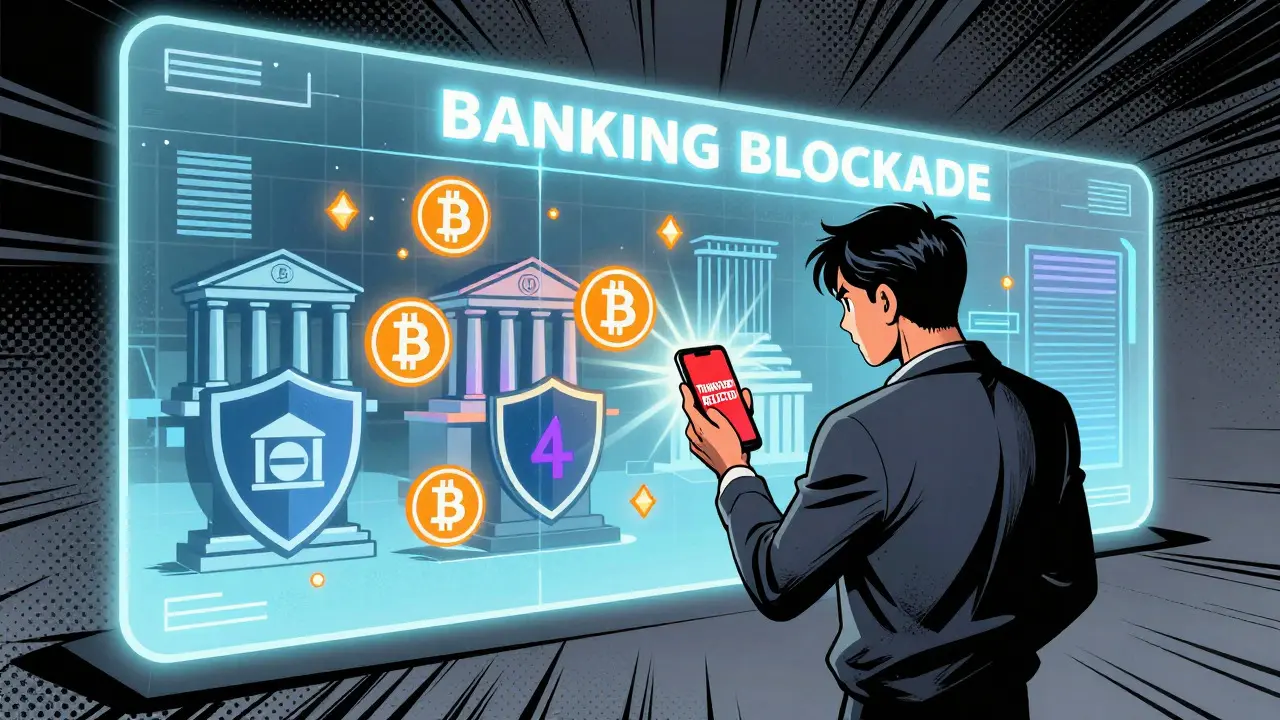
Imagine trying to buy your morning coffee with Bitcoin in Taipei. You pull out your phone, scan the QR code, and wait. Nothing happens. The merchant’s bank account rejects the transaction instantly. This isn’t a glitch; it is by design. If you are trading cryptocurrency in Taiwan, you are navigating one of the most specific regulatory environments in Asia. The government lets you own digital assets, but it strictly forbids traditional banks from touching them.
This selective approach creates a unique friction point for traders. While ownership is legal, moving money between your bank account and a crypto exchange is not straightforward. As we move through 2026, understanding these restrictions is no longer optional-it is essential for keeping your funds safe and compliant. The landscape shifted dramatically with new rules taking effect in early 2025, forcing every player to adapt or exit.
The Core Rule: Banks vs. Virtual Assets
To understand why your bank transfer gets rejected, you have to look back at how The Financial Supervisory Commission (FSC) defines cryptocurrency. Since December 2013, the FSC has classified Bitcoin and similar tokens as "virtual commodities," not currency. This distinction matters immensely. Because they are not legal tender, banks are prohibited from treating them like cash.
In 2014, the FSC issued a directive that explicitly banned local banks from accepting Bitcoin or providing services related to it. This included exchange services for fiat conversion. Fast forward to July 2022, when the restriction tightened further. The FSC instructed credit card acquirers to block transactions for crypto purchases. Essentially, buying crypto with a Visa or Mastercard issued by a Taiwanese bank became nearly impossible. The regulators treated these transactions similarly to online gambling or high-risk futures trading-activities they wanted to keep away from the mainstream banking system.
This separation means that if you hold a standard savings account at a major institution like China Development Bank or Taipei Fubon Commercial Bank, you cannot simply wire funds directly to an unregistered offshore exchange. The bank will likely flag the transaction as suspicious or reject it outright due to internal compliance protocols designed to avoid fines.
The 2025 Shift: Mandatory VASP Registration
For years, the industry operated under voluntary guidelines. That changed on January 1, 2025. The era of "wild west" exchanges ended with the enforcement of mandatory registration for Virtual Asset Service Providers (VASPs). Now, any entity operating in digital assets must secure governmental registration to conduct legal business. If they don’t, the penalties are steep: fines up to NT$5 million (approximately $155,900) and potential criminal charges carrying up to two years in prison.
This shift was driven by the need for stricter Anti-Money Laundering (AML) controls. The Central Bank of the Republic of China (Taiwan) (CBC) worked closely with the FSC to ensure that every dollar entering the crypto space could be traced. By late 2024, exactly 23 VASPs had completed this rigorous registration process. These platforms are now the only legitimate gateways for most retail investors.
The largest of these is MaiCoin. Handling roughly $70 million in daily trading volume, MaiCoin dominates the local market. In fact, the company announced plans in 2023 to become the first Taiwanese crypto firm to go public on the local stock exchange, signaling a level of institutional acceptance that was unthinkable just five years ago. For users, sticking to registered VASPs like MaiCoin is the safest way to navigate the banking restrictions, as these platforms have established approved channels for fiat on-ramps.
| Feature | Pre-2025 Framework | Current Framework (2025-2026) |
|---|---|---|
| VASP Status | Voluntary Compliance | Mandatory Registration Required |
| Bank Interaction | Loosely Enforced Bans | Strict Prohibition on Direct Services |
| Penalties for Non-Compliance | Warnings / Minor Fines | Up to NT$5M Fine + Criminal Charges |
| Credit Card Usage | Sometimes Allowed | Banned for Crypto Purchases |
| Stablecoin Regulation | Unregulated | Draft Legislation for TWD-Pegged Coins |
Navigating the Banking Blockade
If direct bank transfers are blocked and credit cards are useless, how do people actually buy crypto? The answer lies in workarounds that have become standard practice among the estimated 2.3 million Taiwanese citizens who own cryptocurrencies. This represents about 10% of the population, proving that restrictions haven't killed demand-they've just changed the mechanics.
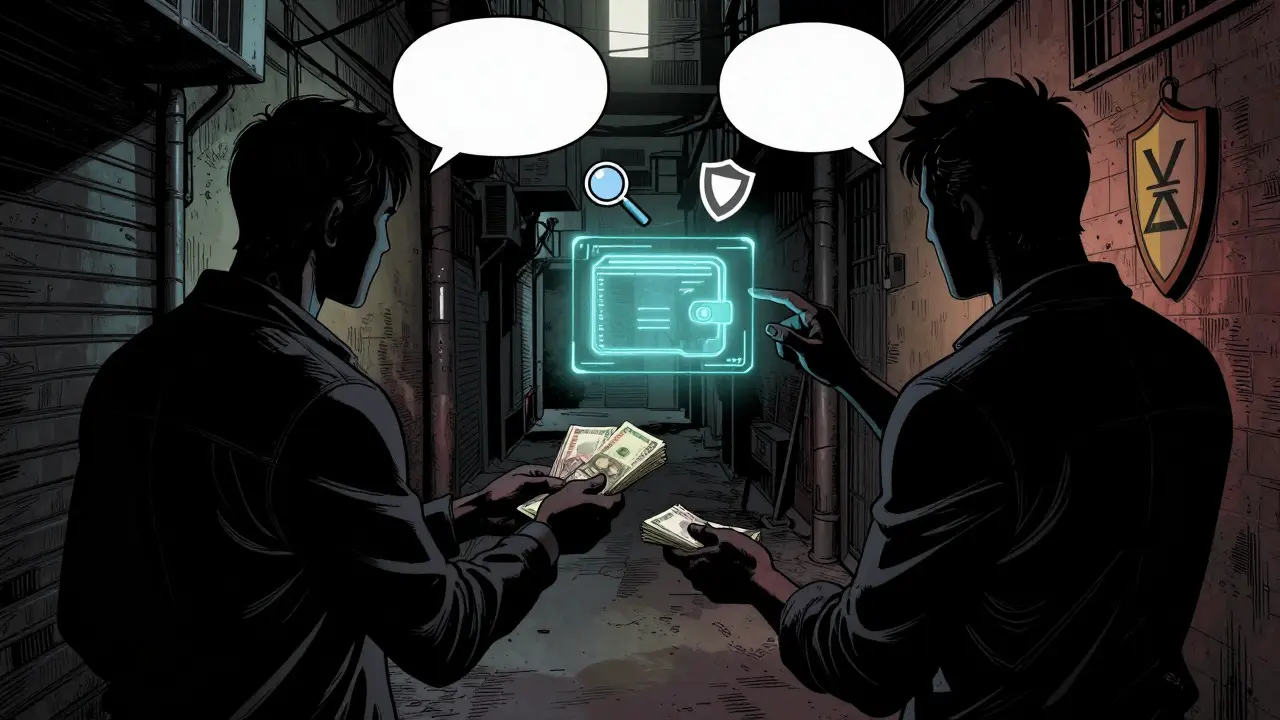
First, many users rely on peer-to-peer (P2P) trading platforms. On these sites, you find another individual willing to sell you Bitcoin. You send them New Taiwan Dollars (TWD) via a standard bank transfer to their personal account, and they release the crypto to your wallet. It sounds risky, but registered VASPs often host escrow services to protect both parties. This method bypasses the corporate banking restrictions because the transaction looks like a normal person-to-person payment.
Second, some traders use third-party payment processors that have negotiated special arrangements with financial institutions. These processors act as intermediaries, allowing users to fund their exchange accounts without triggering the automatic blocks placed on direct crypto-related keywords. However, these services often come with higher fees compared to standard bank wires.
Third, cash deposits remain a viable option for those wary of digital trails. Some local exchanges offer physical locations or partner with convenience store chains where users can deposit cash in exchange for credited exchange balances. While old-school, it effectively sidesteps the digital banking firewall entirely.
What’s Coming: Stablecoins and CBDCs
The regulatory story doesn’t end with restrictions. In June 2025, the FSC unveiled draft legislation for a new framework specifically targeting stablecoins pegged to the New Taiwan Dollar. This is a significant pivot. The goal is to create regulated, government-backed alternatives to unregulated options like USDC and USDT. Under this plan, licensed financial institutions could issue these stablecoins, potentially softening the current banking prohibitions for this specific asset class.
Simultaneously, the Central Bank of the Republic of China (Taiwan) completed a feasibility study for a Central Bank Digital Currency (CBDC) in December 2023. Prototype testing began in collaboration with the Ministry of Digital Affairs, leveraging existing digital voucher infrastructure. If successful, a CBDC could bridge the gap between traditional banking and digital assets. Imagine a future where your bank account holds a digital version of the TWD that can seamlessly interact with blockchain networks. This would represent a fundamental shift from the current "separation" model to an "integration" model.
However, experts warn that changes will be incremental. The FSC remains committed to balancing innovation with risk mitigation. Any relaxation of banking restrictions will likely apply only to highly supervised digital assets, while speculative cryptocurrencies like Bitcoin will remain walled off from the traditional banking system.
Practical Tips for Traders in 2026
Operating in this environment requires patience and diligence. Here is how to stay compliant and efficient:
- Stick to Registered VASPs: Only trade on platforms that appear on the official FSC registry. With only 23 registered entities as of late 2024, the list is short. Using an unregistered platform risks losing your funds with no legal recourse.
- Avoid Direct Wire Mentions: When using P2P methods or third-party processors, ensure your transaction descriptions do not contain words like "Bitcoin," "Crypto," or "Exchange." Generic descriptions reduce the chance of manual review by bank compliance officers.
- Watch for Stablecoin Updates: Keep an eye on the June 2025 stablecoin legislation. If you are a business owner looking to accept payments, a TWD-pegged stablecoin might soon offer a smoother banking integration than Bitcoin.
- Prepare for Tax Reporting: The increased scrutiny on VASPs means better data sharing with tax authorities. Ensure your capital gains records are accurate. The National Taxation Bureau has been tightening its grip on undeclared crypto income.
The setup costs for new crypto companies range from NT$2-5 million for compliance infrastructure, and it takes 3-6 months to navigate the VASP registration. This barrier to entry keeps the market relatively clean but limits competition. As a user, this means fewer choices but higher security standards across the board.
Conclusion: A Cautious Balance
Taiwan’s approach is neither fully prohibitive nor completely open. It is a calculated middle ground. The government wants to prevent systemic risk to the banking sector while acknowledging the reality of digital asset adoption. For the average trader, this means more steps to get started, but also greater protection against fraud and money laundering schemes.
As we look ahead, the introduction of regulated stablecoins and the potential rollout of a CBDC suggest that the walls between traditional finance and crypto may eventually crumble-but only under strict supervision. Until then, mastering the workarounds and respecting the boundaries set by the FSC and CBC is the key to successful trading in Taiwan.
Can I use my Taiwanese bank card to buy crypto?
Generally, no. Since July 2022, the FSC has prohibited credit card acquirers from processing crypto purchases. Most attempts to buy crypto directly with a Visa or Mastercard issued by a local bank will be declined. You typically need to use bank transfers to registered VASPs or P2P methods.
Is owning cryptocurrency illegal in Taiwan?
No, owning cryptocurrency is legal. The FSC classifies it as a virtual commodity. However, businesses must register as VASPs to operate legally, and banks are restricted from providing direct services for these assets.
Which exchanges are legal in Taiwan?
Only exchanges registered as Virtual Asset Service Providers (VASPs) with the FSC are legal. As of late 2024, there are 23 registered entities, with MaiCoin being the largest. Always check the official FSC website for the current list.
What happens if I use an unregistered exchange?
While owning crypto isn't illegal, using an unregistered service provider exposes you to higher risks. These platforms may lack proper consumer protections, and if the exchange fails or engages in fraud, you have limited legal recourse. Additionally, the exchange itself faces heavy fines and criminal charges.
Will the banking restrictions change soon?
Changes are expected to be gradual. The upcoming regulations for TWD-pegged stablecoins in 2025 and the development of a Central Bank Digital Currency (CBDC) may allow for more integrated banking services for specific types of digital assets, but speculative cryptocurrencies like Bitcoin will likely remain separated from traditional banks for the foreseeable future.