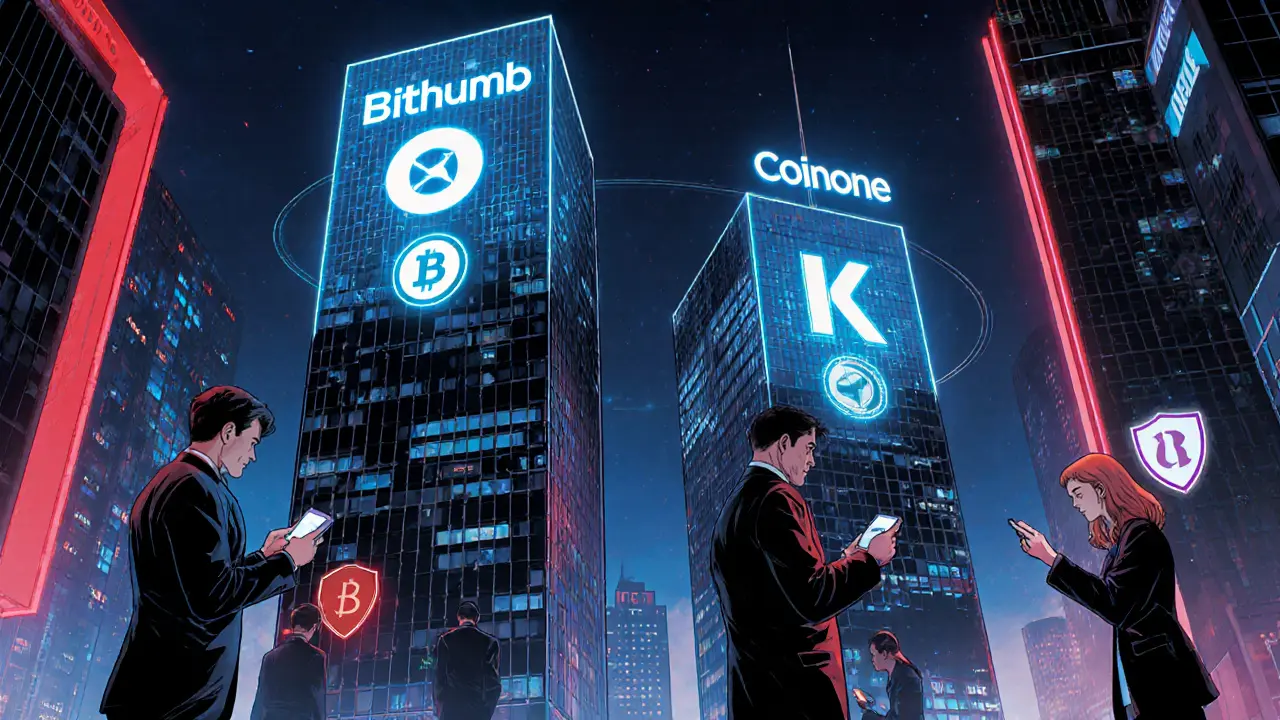
Crypto Exchange Compliance in Korea: Rules, Risks, and What You Must Know
When it comes to crypto exchange compliance in Korea, the legal framework enforced by Korea’s Financial Services Commission and Korea Financial Intelligence Unit to ensure crypto platforms operate transparently and securely. Also known as Korea’s crypto licensing rules, it’s one of the most tightly controlled systems in Asia—no gray areas, no loopholes. If you’re trading on a Korean exchange or using one that serves Korean users, you’re under these rules whether you know it or not.
This isn’t just about paperwork. KFTC, Korea’s Financial Intelligence Unit that monitors crypto transactions for money laundering and fraud requires every exchange to register, keep user funds in cold storage, verify every customer’s identity with government ID, and report suspicious activity in real time. Failure means shutdown—like what happened to Coinhub.io and BITKER, both flagged as unlicensed and later exposed as scams. Even global platforms like BTCC, which offer high leverage, can’t legally accept Korean won deposits because they don’t meet local compliance standards. That’s why Korean traders often face restricted access, frozen withdrawals, or sudden platform closures if the exchange skips a step.
KYC crypto Korea, the mandatory identity verification process that all licensed exchanges must enforce for every user isn’t optional. You can’t skip it. You need a Korean phone number, a national ID, and sometimes even proof of address. This is why many users turn to offshore platforms—but that’s risky. If you deposit funds into an unlicensed exchange, you have zero legal protection if it vanishes. The Payment Services Act and other regulations mean exchanges must now follow the Travel Rule, track every transaction over $1,000, and store records for five years. It’s not just about security—it’s about accountability.
And it’s not just exchanges. Even token projects trying to launch in Korea must navigate these rules. Airdrops like the PKR or ZOO Crypto World events can’t legally target Korean users unless the project is registered and compliant. That’s why so many airdrop guides mention "not available in Korea"—it’s not a technical limit, it’s a legal one. Blockchain forensics tools like Chainalysis and Elliptic are used by Korean regulators to trace funds, making it nearly impossible to hide illicit activity. HSM key management and cloud HSMs aren’t just tech buzzwords here—they’re legal requirements for any exchange holding more than a few million in assets.
What you’ll find below are real cases—scam exchanges that got shut down, platforms that tried to bypass rules and failed, and the exact compliance steps that separate legal Korean exchanges from dangerous ones. No fluff. No hype. Just what you need to know to trade safely under Korea’s strict crypto rules.
South Korea's FSC has created one of Asia's strictest yet most advanced crypto regulatory frameworks. Learn how real-name accounts, the FATF Travel Rule, corporate crypto holdings, and upcoming ETFs shape the market in 2025.