Living under economic sanctions doesn't mean being cut off from the global financial system entirely. For citizens in countries like Iran, Russia, and North Korea, cryptocurrency has become a lifeline. It’s a way to send money home, pay for imports, or simply save wealth away from collapsing local currencies. But accessing these digital assets isn’t as simple as downloading an app. Major exchanges like Coinbase or Binance block users based on IP addresses and national ID checks. So, how do people actually get their hands on Bitcoin or stablecoins when the world says they can’t?
The answer lies in a complex, high-stakes game of cat and mouse between sanctioned users and enforcement agencies like the U.S. Office of Foreign Assets Control (OFAC). As of 2025, this battle is intensifying. OFAC has sanctioned 57 individuals and entities specifically for illicit cryptocurrency activities. The landscape is shifting fast, with new tools emerging every time regulators close an old door.
Why Sanctions Are Tightening on Crypto
To understand how people bypass restrictions, you first need to know who is trying to stop them. The primary enforcer here is OFAC, which stands for the Office of Foreign Assets Control, a bureau within the U.S. Department of the Treasury responsible for administering and enforcing economic and trade sanctions. Since its first crypto-related designation in 2018, OFAC’s reach has expanded dramatically. In 2024 alone, 23% of all new sanctions designations were crypto-related, up from 17% the year before.
The data shows where the focus lies. North Korea remains the most sanctioned country for crypto-related offenses, accounting for 38% of OFAC's actions in 2024. Russia and Iran follow closely behind. This isn't just about stopping terrorists; it's about preventing sanctioned regimes from funding military operations or evading broader economic penalties. When you see news about frozen wallets or seized domains, it’s usually part of this larger strategy. The stakes are high, with penalties imposed on crypto businesses for violations totaling $430 million in 2024-a 40% increase over 2023.
The Technical Workarounds: From Centralized to Decentralized
When direct access to centralized exchanges is blocked, users turn to technical workarounds. These methods range from simple privacy tricks to sophisticated use of decentralized finance (DeFi) protocols.
1. Peer-to-Peer (P2P) Trading
- How it works: Users find another individual willing to trade fiat currency for crypto directly. Payments might happen via local bank transfers, cash deposits, or even gift cards.
- The risk: High scam rates and potential legal trouble if the counterparty is linked to illicit activity. However, it remains one of the most common entry points because it requires no KYC (Know Your Customer) verification on the exchange side.
2. Decentralized Exchanges (DEXs)
- How it works: Platforms like Uniswap or PancakeSwap allow users to swap tokens without an intermediary company holding their funds. You connect your own wallet (like MetaMask) and trade directly from the blockchain.
- The advantage: No central authority means no one can ban you based on your location. If you have crypto, you can swap it for anything else available on the network.
3. Privacy Coins and Mixers
- How it works: Users move funds through services that obscure the trail of transactions. Tornado Cash-style mixers were popular, but they are now heavily targeted. In 2024, five major enforcement actions hit mixer services.
- The shift: With mixers under scrutiny, users are increasingly using Layer-2 networks like Polygon to swap into privacy-focused stablecoins like DAI, which offer some degree of anonymity compared to fully transparent chains.
Case Study: The Iranian Adaptation Strategy
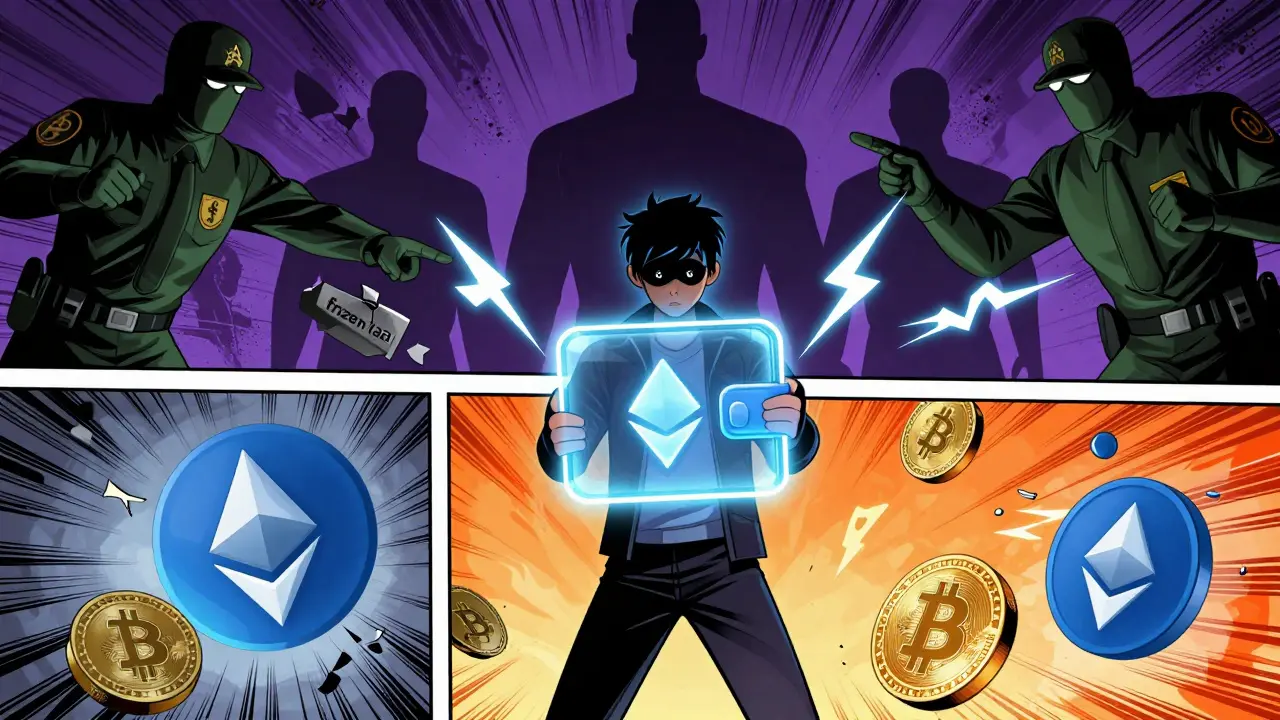
Iran provides a textbook example of how quickly sanctioned communities adapt. On July 2, 2025, Tether-the issuer of the USDT stablecoin-conducted its largest-ever freeze of Iranian-linked funds. They froze 42 cryptocurrency addresses with substantial exposure to the Iranian exchange Nobitex.
In a normal market, this would cause panic and a total halt in trading. Instead, it triggered a rapid pivot. Coordinated by domestic crypto influencers and government-aligned channels, Iranian users immediately began offloading USDT. They swapped their holdings into DAI via the Polygon network. Why? Because DAI is a decentralized stablecoin not controlled by a single entity like Tether, making it harder to freeze. This agility shows that while enforcement can disrupt specific platforms, it rarely stops the underlying demand for liquidity.
The Iranian government also responded by enacting the Law on Taxation of Speculation and Profiteering in August 2025. This law imposes a capital gains tax on crypto trading, positioning it alongside gold and real estate. This move signals an attempt to bring crypto into the formal economy rather than banning it outright, recognizing its role in circumventing sanctions.
The Rise of Successor Platforms
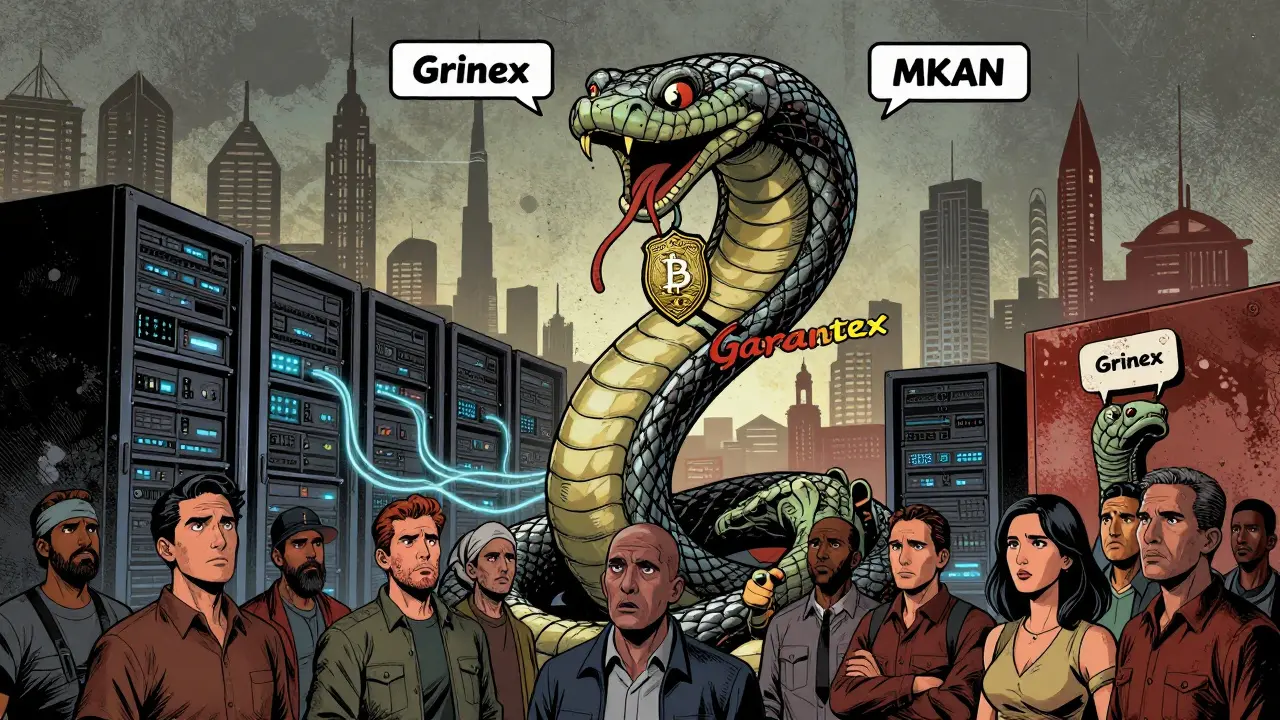
When a major exchange gets shut down, it doesn’t always disappear. It often morphs. The case of Garantex illustrates this perfectly. Garantex was a Russian cryptocurrency exchange sanctioned by OFAC in 2022 for processing millions in illicit transactions. On March 6, 2025, after partnerships between the U.S. Secret Service and European law enforcement seized its domain and froze $26 million in crypto, Garantex didn’t just vanish.
It moved. The customer base and funds were shifted to a successor platform called Grinex. Furthermore, Garantex evolved into a decentralized money laundering system supported by entities like Exved (a cross-border payment processor) and MKAN Coin, a Telegram-based exchange operating out of Dubai. Transparency International Russia exposed this infrastructure in September 2025, revealing how these entities replicate core functions despite sanctions. This "hydra" effect-cut off one head, two more appear-is a major challenge for regulators.
| Method | Anonymity Level | Ease of Use | Primary Risk |
|---|---|---|---|
| P2P Trading | Medium | High | Scams, Counterparty Fraud |
| Decentralized Exchanges (DEX) | High | Low (Technical Skill Required) | Smart Contract Bugs, Rug Pulls |
| Privacy Mixers | Very High | Medium | Asset Freezes, Legal Prosecution |
| Successor Platforms | Low | Medium | Sudden Shutdowns, Fund Loss |
Compliance Failures and Exchange Liability
Not all access comes from clever user workarounds. Sometimes, it happens because exchanges fail to check who their customers are. The ShapeShift case is a stark reminder. In 2025, the defunct Swiss exchange paid $750,000 to OFAC for allowing users from Cuba, Iran, Sudan, and Syria to use its platform. OFAC found that ShapeShift had no sanctions compliance program whatsoever.
This highlights a critical point: many non-U.S. exchanges operate in gray areas. They may not be subject to U.S. law directly, but if they handle dollars or interact with U.S. persons, they risk severe penalties. This creates a fragmented landscape where some platforms are strictly compliant, while others turn a blind eye to attract users from sanctioned regions.
The Role of Crypto-Friendly Jurisdictions
Citizens in sanctioned countries often route their activities through jurisdictions with lax regulations or favorable tax laws. These places act as bridges to the global crypto ecosystem.
- Dubai, UAE: Home to over 1,000 crypto firms under the VARA regulatory authority. It offers a tax-free environment for personal crypto income, attracting both legitimate businesses and those seeking opacity.
- El Salvador: By making Bitcoin legal tender and offering 0% tax on foreign crypto income, it attracts users looking for a neutral ground.
- Singapore: While having strong Anti-Money Laundering (AML) rules, it has no capital gains tax, and 43% of young adults own crypto, creating a dense network of potential P2P partners.
These jurisdictions don’t necessarily facilitate illegal activity directly, but their open ecosystems provide the infrastructure that sanctioned users exploit. A user in Tehran might send crypto to a friend in Dubai, who then trades it on a local exchange, effectively washing the transaction’s origin.
Risks for Individual Users
If you are considering accessing crypto from a sanctioned region, you must understand the dangers. It’s not just about losing money to scams.
- Asset Freezes: As seen with Tether and OFAC, your funds can be frozen instantly. If your wallet address is tagged as high-risk, other exchanges will refuse to accept deposits from you.
- Legal Consequences: Engaging with sanctioned entities can lead to criminal charges in multiple countries. The U.S. Department of State has offered up to $5 million for information leading to the arrest of Garantex executives. They are watching.
- Platform Instability: Successor platforms like Grinex or MKAN Coin operate without regulatory oversight. There is no insurance for your funds. If the platform disappears, your money goes with it.
The scale of illicit activity is massive-$6.9 billion in transactions linked to sanctioned entities over 24 months-but this doesn't mean it's safe. It means the black market is lucrative, and therefore dangerous.
Future Outlook: An Arms Race
The future of crypto access for sanctioned countries looks like an escalating arms race. On one side, regulators are getting smarter. OFAC issued its first-ever sanction against a DeFi protocol in January 2025, freezing $150 million in assets. This marks a significant expansion, showing that decentralization is no longer a shield against enforcement.
On the other side, users are becoming more technical. The shift from centralized exchanges to self-custody wallets and Layer-2 solutions like Polygon indicates a trend toward greater autonomy. However, complete prevention of access remains challenging. As long as there is economic pressure, innovation in evasion techniques will continue. The key takeaway is that while access is possible, it comes with increasing complexity and risk.
Can I use a VPN to access crypto exchanges from a sanctioned country?
Using a VPN might hide your IP address, but it does not solve the KYC (Know Your Customer) requirement. Most reputable exchanges require government-issued ID. If you submit an ID from a sanctioned country, the exchange will likely reject your application or report you to authorities. Furthermore, using a VPN to evade sanctions can itself be a violation of international law.
What happened to Garantex after it was sanctioned?
After OFAC sanctioned Garantex in 2022 and law enforcement seized its domain in 2025, the platform did not shut down completely. It migrated its users to a successor platform called Grinex and evolved into a decentralized network involving entities like Exved and MKAN Coin. This demonstrates how sanctioned exchanges adapt to survive enforcement actions.
Are decentralized exchanges (DEXs) safe from sanctions?
DEXs are harder to shut down because they have no central headquarters. However, they are not immune to sanctions. In January 2025, OFAC sanctioned a DeFi protocol, proving that regulators can target the smart contracts or the developers behind them. Additionally, if you bridge funds from a sanctioned wallet to a DEX, your assets can still be flagged and frozen by integrated services.
Why did Iranian users switch from USDT to DAI?
In July 2025, Tether froze numerous Iranian-linked addresses. Since USDT is centralized, Tether can blacklist wallets. DAI, however, is a decentralized stablecoin governed by a community and smart contracts, making it much harder for any single entity to freeze. Users switched to DAI to preserve access to liquid stablecoins despite sanctions pressure.
What are the biggest risks for individuals trading crypto in sanctioned countries?
The primary risks include asset freezes by entities like Tether or OFAC, loss of funds due to unregulated platforms shutting down, and severe legal consequences including criminal prosecution. Additionally, the high prevalence of scams in peer-to-peer markets poses a significant financial threat.