Running a decentralized organization used to mean fighting with clunky interfaces and paying exorbitant gas fees just to vote on a simple proposal. In 2026, that frustration is largely behind us. The landscape for DAO governance tools has matured significantly, offering specialized platforms that cater to everything from early-stage community groups to massive protocol treasuries managing billions in assets.
The challenge today isn't finding a tool; it's picking the right one for your specific organizational structure. Do you need granular permission controls? Are you coordinating votes across multiple blockchains? Or do you just want a simple way for members to join and exit without drama? Each major platform takes a different architectural approach, and choosing wrong can lead to security risks or operational bottlenecks.
Why Your Governance Stack Matters More Than Ever
Governance is no longer just about voting tokens. It’s about treasury management, role assignment, cross-chain execution, and user experience. If your voters can’t easily delegate their votes or if your treasurers struggle to batch transactions, participation drops. Dead proposals pile up, and the DAO stalls.
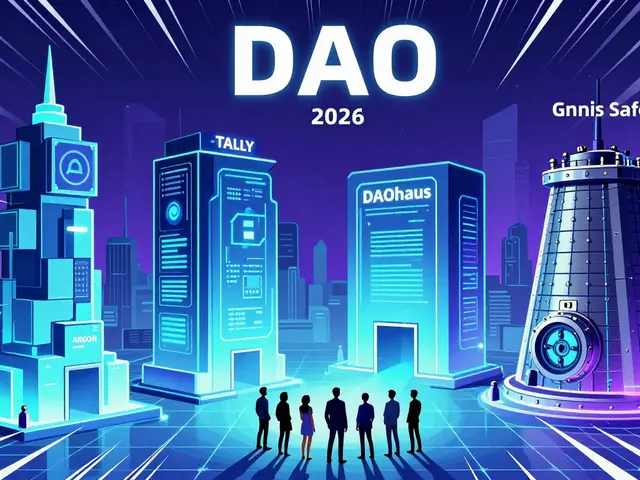
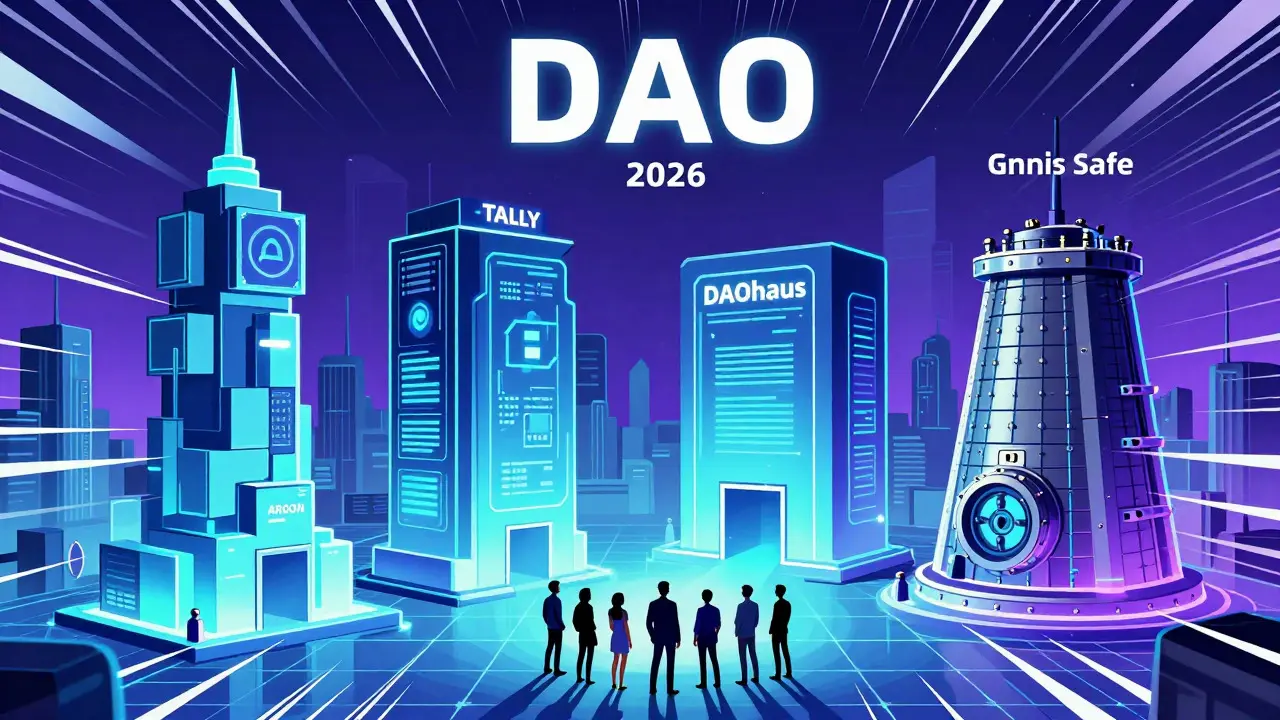
In 2026, the ecosystem has consolidated around four primary architectural philosophies. Understanding these categories helps you map your needs to the right solution without getting lost in feature lists.
- Modular Frameworks: Systems like Aragon OSx that separate core permissions from governance plugins, allowing you to swap models without redeploying contracts.
- Governance Interfaces: Tools like Tally that provide production-grade UX for existing smart contract standards, focusing on analytics and delegation.
- Membership-Centric Platforms: Solutions like DAOhaus that prioritize simplicity, flexible membership tokens, and clean exit patterns for early communities.
- Treasury-First Architectures: Stacks combining Gnosis Safe with Zodiac modules, enabling progressive decentralization from multisig foundations.
Aragon OSx: The Modular Powerhouse for Protocols
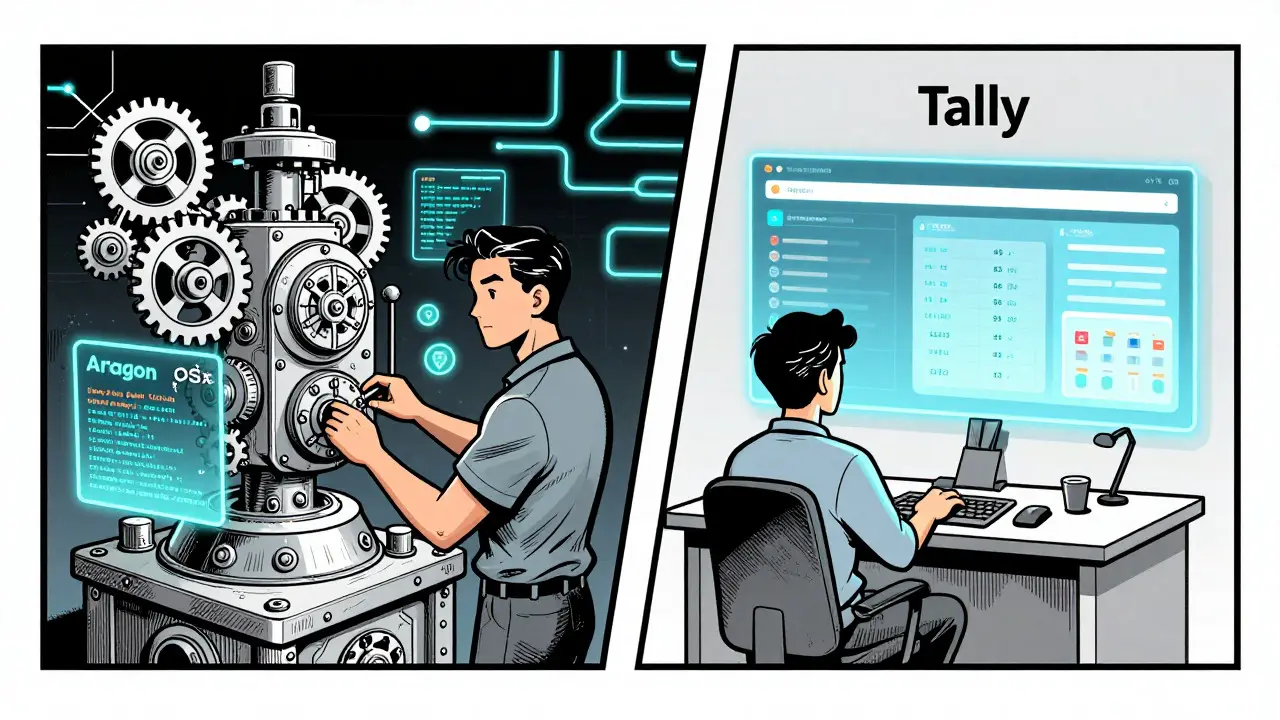
If you are building a complex protocol or a product team that requires programmable governance, Aragon OSx is often the top choice. Unlike older monolithic systems, Aragon OSx uses a plugin architecture. This means you can install token voting, dual governance, or optimistic governance as separate modules. You aren't locked into one model forever.
The standout feature here is the fine-grained permission system. You can define roles with precise scopes, set time delays for critical actions, and use allowlists to restrict who can execute certain functions. This level of control is crucial for teams handling significant treasury assets or integrating with other DeFi protocols.
Aragon also supports multichain vote aggregation natively through its plugins. If your community is spread across Ethereum, Arbitrum, and Optimism, Aragon can aggregate those votes into a single decision process. However, this flexibility comes with integration complexity. While they offer no-code options via their app interface, customizing plugins requires developer resources and audited contracts.
Tally: The Interface for Governor-Style DAOs
Many established DAOs already run on OpenZeppelin Governor smart contracts. For these organizations, rewriting their entire stack is unnecessary. Tally serves as the premier on-chain governance interface for these setups. It doesn't replace your contracts; it enhances how humans interact with them.
Tally excels at reducing friction. It provides a consolidated dashboard for proposal creation, delegation management, voting, and treasury visibility. For delegates-who are often the backbone of active DAO participation-Tally offers robust analytics and voter history tracking. This transparency builds trust and encourages better stewardship.
Cross-chain coordination is another strong suit. Tally orchestrates governance across multiple networks, ensuring that vote failures due to logistical issues (like missing a deadline on one chain) don't derail the entire proposal. It’s ideal for mid-to-large token voting DAOs operating on Ethereum and EVM Layer 2 solutions who need production-quality UX without changing their underlying code.
DAOhaus: Simplicity for Early Communities
Not every group needs enterprise-grade permission systems. DAOhaus, built on the Moloch v3 framework, focuses on membership-centric governance. It’s designed for early-stage communities where simplicity and ease of entry/exit are paramount.
DAOhaus uses ERC20-based shares and loot tokens to manage membership. This allows for flexible structures where members can hold varying levels of influence. Crucially, it integrates seamlessly with Gnosis Safe treasuries through the Zodiac pattern. This means you get the security of Safe apps and modules within your governance workflow.
The platform supports arbitrary execution in proposals, including multisend batching. This is handy for operational workflows that require multiple steps. DAOhaus also features "shamans"-scoped permissions that add flexibility without overwhelming complexity. Its proven exit patterns (ragequit functionality) effectively de-risk early coordination, making it a safe bet for new projects testing their governance waters.
Gnosis Safe + Zodiac: The Treasury-First Pathway
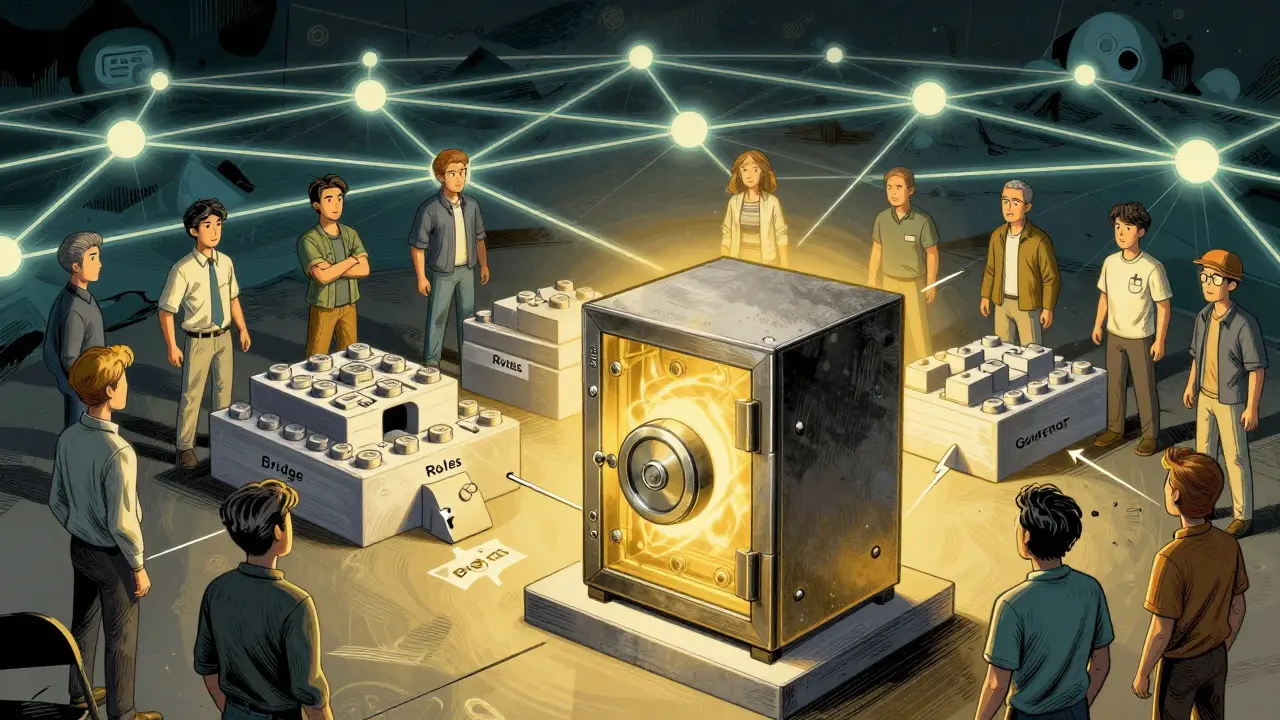
For many DAOs, the journey starts with a multisig wallet. Gnosis Safe remains the industry standard for secure treasury management. Adding Zodiac modules transforms this multisig into a modular governance layer.
This stack is perfect for teams seeking progressive decentralization. You start with a secure multisig and gradually add modules like Roles, Bridge, Reality, or Governor. The Roles module, for instance, allows you to assign specific permissions to addresses, moving away from equal-weight multisig signers. The Bridge module enables cross-chain governance, while the Governor module introduces token-based voting.
This approach is highly attractive for organizations that already have Safe infrastructure in place. It offers a clear path toward distributed governance without abandoning the security and familiarity of the Safe ecosystem. Integration complexity ranges from moderate to advanced, depending on which modules you activate.
| Platform | Best For | Voting Mechanism | Multichain Support | Permission Model | Integration Complexity |
|---|---|---|---|---|---|
| Aragon OSx | Protocol DAOs, Product Teams | Plugin-based (Token/Dual/Optimistic) | Native via Plugins | Fine-grained, Role-scoped | Moderate to High |
| Tally | Token Voting DAOs, Delegates | Governor-compatible | Coordination UI | Underlying Contract Dependent | Low to Moderate |
| DAOhaus | Early Communities, Membership Groups | Membership Tokens | Via Safe Modules | Shamans, Simple Roles | Moderate |
| Safe + Zodiac | Treasury-First, Progressive Decentralization | Governor Module | Via Bridge Module | Roles Modifier | Moderate to Advanced |
Cost Considerations and Hidden Fees
Pricing in the DAO space is rarely straightforward. Most platforms operate on open-source models, meaning the software itself is free. However, costs emerge in three areas: gas fees, service engagements, and optional SaaS layers.
Small community DAOs using DAOhaus typically incur only on-chain gas costs for proposals and membership updates. There’s usually no published SaaS pricing. Mid-size protocols using Aragon OSx or Safe + Zodiac face variable costs. These include gas for execution, audits for custom plugins, and potentially fees for professional service engagement if you’re hiring developers to configure complex permissions.
Tally may apply platform fees for certain hosted services, though exact metrics aren't always standardized. Always budget for gas spikes, especially during network congestion, as governance executions can be resource-intensive. Remember, security audits are non-negotiable for any custom implementation.
Choosing the Right Tool: A Decision Framework
Selecting a governance tool should align with your organizational maturity and technical capacity. Ask yourself these questions:
- What is your current infrastructure? If you’re already using Gnosis Safe, starting with Zodiac modules is the most logical step. If you’re building from scratch, consider Aragon OSx for maximum flexibility.
- How complex is your permission structure? Need granular, time-delayed roles? Aragon OSx leads. Need simple member/non-member distinctions? DAOhaus suffices.
- Are you multichain? Both Aragon and Tally offer native multichain support. If you’re primarily on Ethereum L2s, Tally’s coordination UI might be easier to implement.
- Who will manage the system? Do you have in-house developers? If not, avoid highly customizable frameworks like Aragon unless you hire consultants. Tally and DAOhaus offer more out-of-the-box usability.
The Future of DAO Governance
The trend in 2026 is clearly toward modularity. Monolithic governance systems are fading. Instead, we see composable components-voting engines, permission managers, and treasury connectors-that can be mixed and matched. This convergence suggests that the distinction between treasury-first and governance-first approaches will blur as platforms integrate more deeply.
Expect increased sophistication in cross-chain execution and delegation tools. Security infrastructure will become more bundled with governance execution, reducing the risk of isolated vulnerabilities. As the ecosystem matures, the focus will shift from "how do we vote" to "how do we govern efficiently and securely at scale."
Is Aragon OSx suitable for beginners?
Aragon OSx offers no-code options, but its true power lies in custom plugins, which require developer knowledge. For absolute beginners, DAOhaus or Tally (if using standard contracts) provide a gentler learning curve.
Can I switch from DAOhaus to Aragon later?
Yes, but it involves migrating your treasury and governance contracts. Since both can integrate with Gnosis Safe, your treasury remains secure, but you’ll need to deploy new governance logic and update member permissions.
Which platform has the best mobile experience?
Tally and DAOhaus generally offer more responsive web interfaces that work well on mobile browsers. Aragon’s interface is functional but can be dense for mobile users due to its complex permission settings.
Do I need to pay monthly fees for these tools?
Most core platforms are open-source and free. Costs come from blockchain gas fees and optional professional services for setup or auditing. Some hosted interfaces like Tally may introduce fees for advanced analytics or dedicated support.
How does multichain governance work in practice?
Platforms like Aragon and Tally aggregate votes from multiple chains into a single tally. When a proposal passes, execution happens on each relevant chain simultaneously or sequentially, ensuring consistent outcomes across your decentralized presence.