NFT Supply Chain: How Blockchain Tracks Ownership from Creation to Sale
When you buy an NFT, you’re not just buying a digital image—you’re buying a verified record of ownership that’s tracked from the moment it was created. This is the NFT supply chain, a transparent, tamper-proof path that records every step of an NFT’s life, from minting to resale. It’s not like buying a file off a website; it’s like owning a signed certificate that’s stored on a public ledger and can’t be forged. Without this system, NFTs would just be JPEGs with a fancy label. The NFT supply chain ensures that the artist who made it, the wallet that first bought it, and every owner since are all part of an open, unchangeable history.
Behind every NFT is a network of tools and processes that make this possible. Blockchain, a decentralized digital ledger that records transactions across many computers is the backbone. It doesn’t just store the image—it stores the metadata, the creator’s signature, the timestamp, and every transfer. NFT provenance, the official record of an NFT’s origin and ownership history is what lets buyers know if a piece is authentic or a copy. And NFT authenticity, the guarantee that an NFT hasn’t been duplicated or altered is enforced by smart contracts, not middlemen. These aren’t buzzwords—they’re the reason some NFTs hold value while others vanish.
Think of it like a car’s VIN number, but better. If a car gets stolen, you can trace its history. With an NFT, you can see if it was minted by the original artist, if it’s been flipped ten times, or if it’s sitting in a wallet that’s been flagged for scams. This matters because fraud is common in digital spaces. Scammers mint fake NFTs, copy popular collections, and trick buyers into thinking they’re getting the real thing. The NFT supply chain fights that by making every action visible and permanent.
What you’ll find in the posts below are real examples of how this system works—and sometimes, how it fails. You’ll read about platforms that track NFTs from creation to sale, projects that use blockchain to prove authenticity, and cases where the supply chain was broken. Some posts expose scams that slipped through. Others show how artists are using these tools to get paid fairly. There’s no fluff. Just facts about who owns what, how it got there, and why it matters.
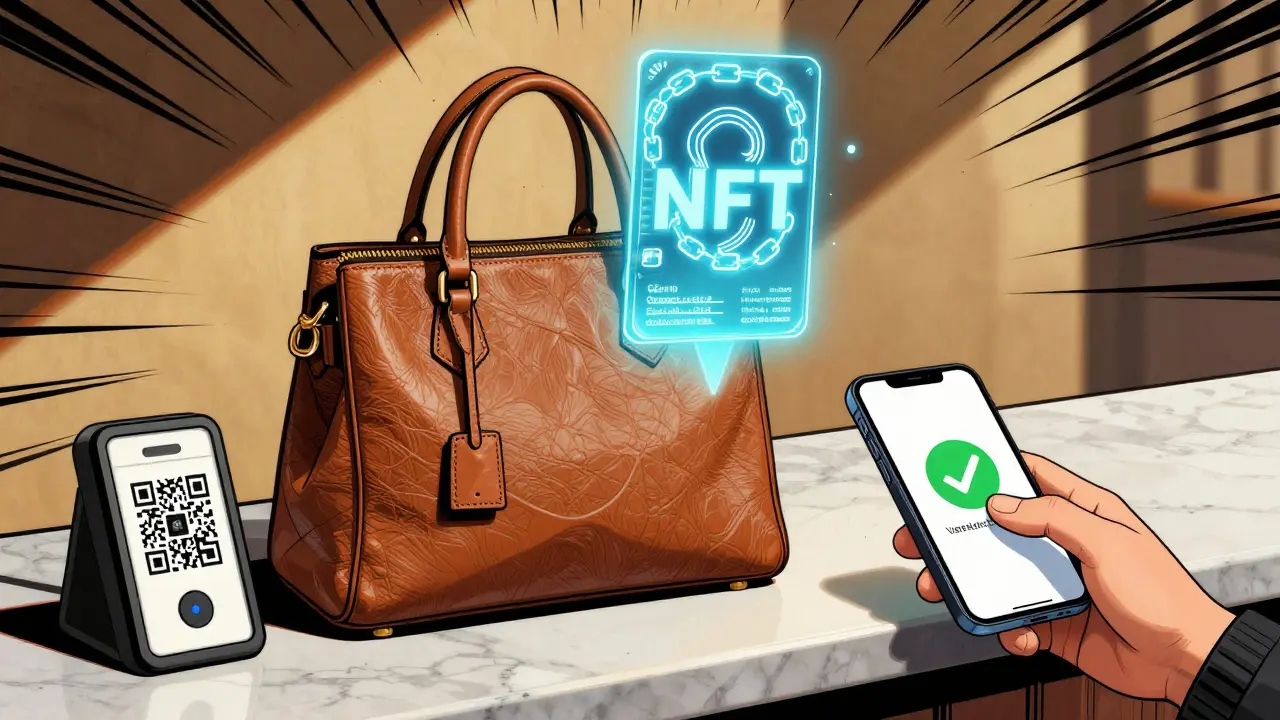
NFTs are transforming how we prove a product is real. By linking physical items to unchangeable digital certificates on the blockchain, they stop counterfeits, track origins, and build consumer trust like never before.