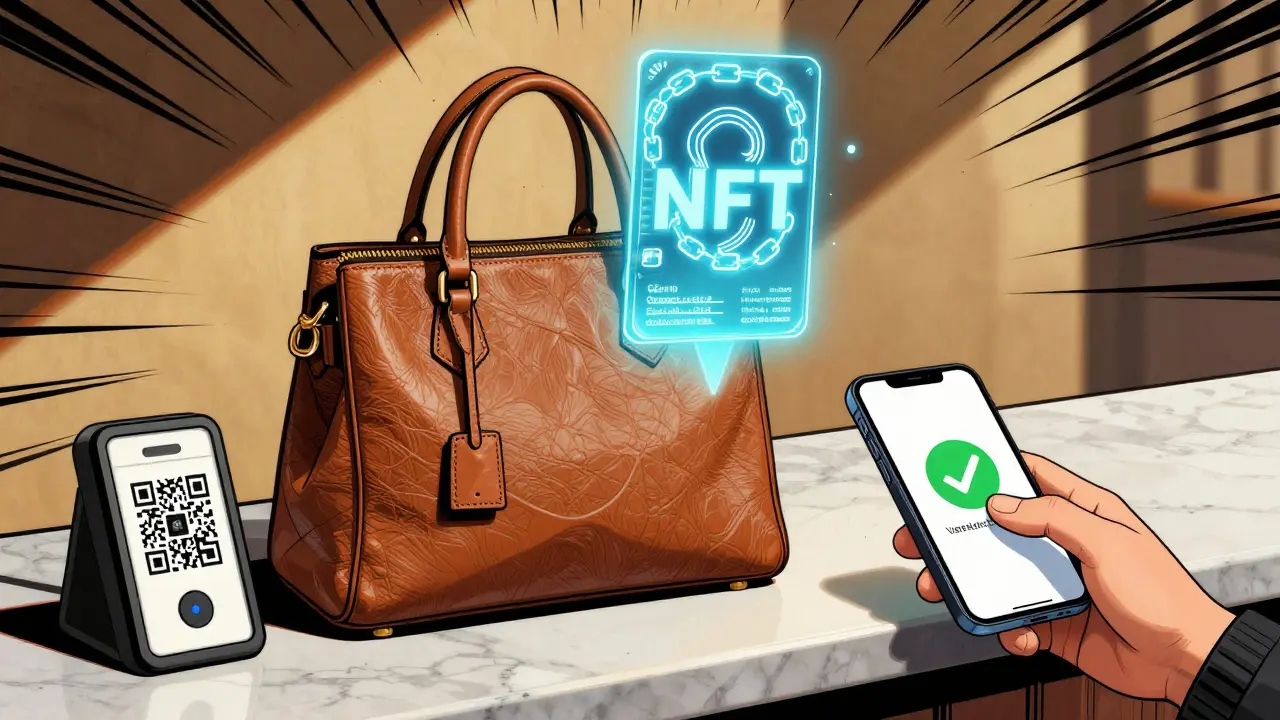
NFT Anti-Counterfeit: How Blockchain Stops Fake Digital Art
When you buy an NFT, you’re not just buying a file—you’re buying proof that it’s the NFT anti-counterfeit, a system using blockchain to verify the originality and ownership of digital assets. Also known as NFT provenance, it’s what stops someone from copying a digital artwork, renaming it, and selling it as the real thing. Without this, the whole NFT market would be a playground for fakes.
Every NFT is tied to a unique digital signature stored on a blockchain. That signature acts like a fingerprint—it can’t be copied, changed, or removed. When you check an NFT’s history, you see every owner, every sale, and every time it was transferred. This is blockchain NFT verification, the process of tracing an NFT’s origin and transaction history on a public ledger. It’s not magic—it’s math, cryptography, and open records. Platforms like OpenSea and Rarible now use this to flag suspicious listings, but many smaller marketplaces still don’t. That’s why you need to know how to verify yourself.
NFT authenticity, the assurance that a digital asset is original and not a replica isn’t just about the file. It’s about who created it, who owns it now, and whether the smart contract behind it is legitimate. Scammers often clone the art but change the contract address. Real NFTs come with metadata that links to the creator’s verified wallet. If you can’t trace it back to the original artist’s wallet, it’s not real. Tools like Etherscan let you check this yourself—no third party needed.
And it’s not just art. NFTs are used for concert tickets, collectibles, even real estate deeds. In each case, digital art fraud, the act of selling counterfeit or misrepresented digital assets as authentic NFTs costs people millions. The fix? Transparency. Every time an NFT is minted, the blockchain records it. No one can erase that. No central server can be hacked to delete proof. That’s why the most trusted NFTs are the ones with the longest, clearest chain of ownership.
What you’ll find below are real cases—some scams exposed, some systems that actually work. You’ll see how blockchain stopped a fake Bored Ape before it sold, how a musician verified his album NFTs, and why some platforms still fail. No fluff. Just what you need to spot a fake before you buy.
NFTs are transforming how we prove a product is real. By linking physical items to unchangeable digital certificates on the blockchain, they stop counterfeits, track origins, and build consumer trust like never before.